
 Save
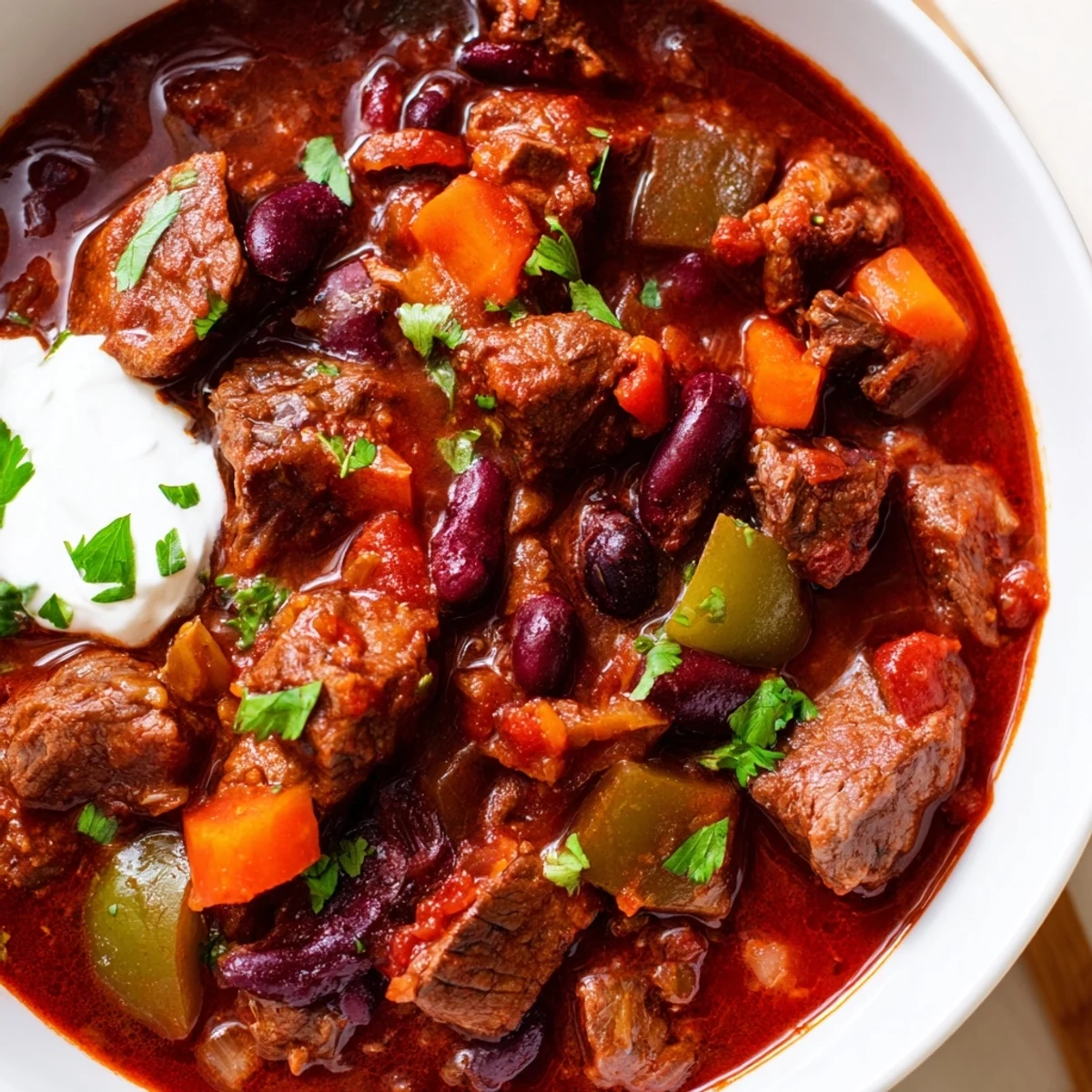
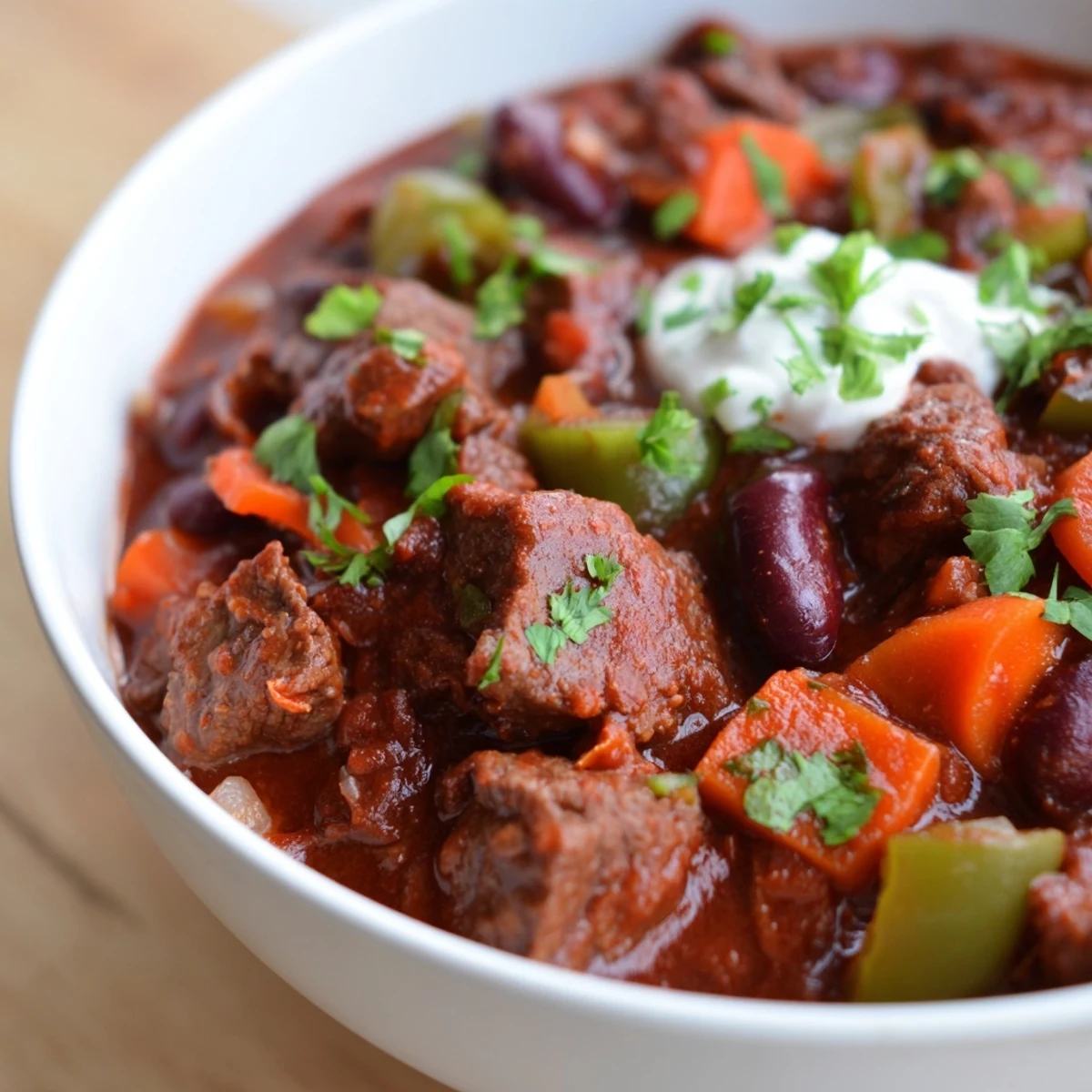
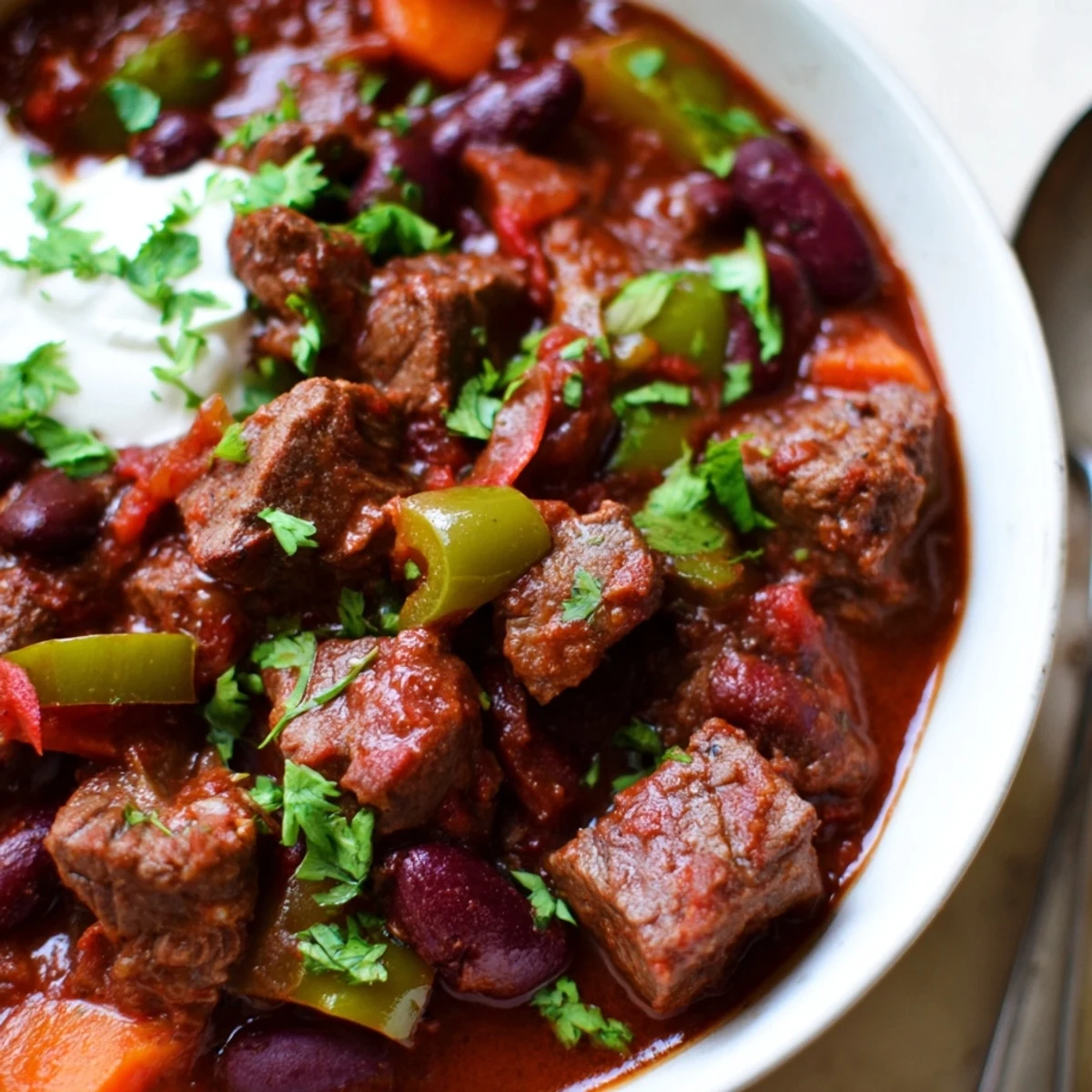
Save This beefy chili stew brings together tender chunks of beef chuck, kidney beans, black beans, and colorful vegetables in a deeply seasoned chili broth. Browned beef pairs with sautéed onions, bell peppers, and carrots, all slow-simmered with chili powder, cumin, and smoked paprika.
The extended cooking time ensures fork-tender beef and a thick, rich sauce that clings to every spoonful. Ready in about two hours, it feeds six generously and reheats beautifully the next day.
Customize the heat level with cayenne pepper, and serve with crusty bread, rice, or your favorite toppings like sour cream and shredded cheese.
A freezing rain was pelting the windows last January when I pulled into the driveway, fingers too numb to even grip the steering wheel properly. All I could think about was something thick and steaming that would make the whole kitchen smell like it had its own heartbeat. I had a chuck roast in the fridge that had been staring at me for two days, daring me to do something ambitious with it. That night, this chili stew came together almost on instinct, and six bowls later my family had stopped complaining about the weather entirely.
I made a double batch for a neighborhood potluck in March and watched a man who swore he hated beans go back for thirds without a shred of shame. His wife nudged me later and whispered that she needed the recipe before he divorced her over canned soup. Sometimes the loudest compliment is a silent, clean bowl.
Ingredients
- 2 lbs beef chuck, cut into 1 inch cubes: Chuck is the undisputed champion here because its marbling melts into the broth during the long simmer, making every bite tender without turning to mush.
- 1 large onion, chopped: A yellow onion builds the sweet foundational layer that balances the aggressive chili powder.
- 1 green bell pepper, diced: This adds a fresh brightness that keeps the stew from feeling one dimensional.
- 2 cloves garlic, minced: Fresh garlic only, and add it after the other vegetables have softened so it does not burn and turn bitter.
- 2 carrots, sliced: They bring a subtle sweetness and a pop of color that makes the bowl look as good as it smells.
- 1 can diced tomatoes: The acidity cuts through the richness of the beef and creates a more complex sauce.
- 1 can kidney beans, drained and rinsed: Rinsing removes the starchy liquid that can make the broth cloudy.
- 1 can black beans, drained and rinsed: These break down slightly during simmering and help thicken everything naturally.
- 3 tbsp chili powder: This sounds like a lot but it is the backbone of the entire flavor profile, so trust the measurement.
- 1 tsp ground cumin: Cumin adds an earthy warmth that makes the dish taste like it spent all day in a taqueria kitchen.
- 1/2 tsp smoked paprika: Just a whisper of smoke transforms the whole pot into something that tastes like it was cooked over a campfire.
- 1/4 tsp cayenne pepper: Entirely optional, but even a tiny pinch wakes up every other spice in the pot.
- Salt and pepper, to taste: Season in layers throughout cooking rather than all at once at the end.
- 4 cups beef broth: Low sodium gives you more control over the final salt level.
- 2 tbsp tomato paste: This concentrated hit of umami is what makes the broth taste rich instead of watery.
- 2 tbsp olive oil: Just enough to get a hard sear on the beef without burning.
Instructions
- Get a hard sear on the beef:
- Heat the olive oil in a large Dutch oven over medium high heat until it shimmers and just barely starts to smoke. Add the beef cubes in a single layer without crowding the pot, letting them develop a deep brown crust on each side before turning, then remove and set aside on a plate.
- Build the vegetable base:
- Toss the onion, bell pepper, carrots, and garlic into the same pot with all those gorgeous beef drippings, stirring until everything softens and the onions turn translucent with slightly golden edges.
- Bloom the spices:
- Stir in the tomato paste, chili powder, cumin, smoked paprika, cayenne, salt, and pepper, and let them toast for about two minutes until your kitchen smells like a spice market and the paste darkens a shade.
- Bring it all together:
- Return the browned beef and any juices that pooled on the plate back into the pot, pour in the diced tomatoes and beef broth, and bring everything up to a gentle simmer with the heat still at medium high.
- Let time do the work:
- Reduce the heat to low, cover the pot, and let it bubble away quietly for one full hour, stirring once or twice just to make sure nothing sticks to the bottom.
- Add beans and finish strong:
- Stir in both cans of rinsed beans, leave the lid off, and simmer for another 20 to 30 minutes until the broth coats the back of a spoon and the beef yields to a fork without resistance.
- Taste and serve:
- Give it a final taste and adjust salt and spice as needed, then ladle into deep bowls and top with whatever makes you happy, whether that is cilantro, sour cream, cheese, or all three piled high.
 Save
Save There is something quietly powerful about a pot of stew on the stove that makes people drift into the kitchen and linger. I have had some of the best conversations of my life standing over a Dutch oven, ladle in hand, watching snow fall outside.
Serving Suggestions That Actually Work
A thick slice of crusty sourdough torn by hand is all you really need to soak up every last drop of broth, though a scoop of white rice works surprisingly well if that is what you have. I once served it over baked potatoes on a whim and my guests acted like I had invented a new food group. A simple side salad with a sharp vinaigrette cuts through the richness if you want to pretend you are being balanced about it.
Making It Your Own
Half a pound of smoked sausage diced and browned alongside the beef will make the whole pot taste like it spent time in a Texas smokehouse. A diced sweet potato added with the beans brings unexpected creaminess and a gorgeous orange hue. My neighbor swears by a square of dark chocolate stirred in at the very end, and honestly she might be onto something.
Storage and Leftover Strategy
This stew is one of those rare dishes that genuinely improves overnight as the spices settle and the beef continues to absorb the broth. Let it cool completely before transferring to airtight containers, and it will keep in the fridge for up to four days or freeze beautifully for two months.
- Reheat gently on the stove over medium low rather than microwaving, which can make the beef tough.
- Freeze in individual portions so you never have to thaw more than you need.
- Add a splash of broth when reheating because it will thicken considerably in the fridge.
 Save
Save Some recipes feed people and some recipes feed the soul, and this one manages to do both without any fuss. Keep it in your back pocket for the next cold night and watch the bowls empty faster than you expect.
Recipe FAQs
- → What cut of beef works best for this stew?
-
Beef chuck is ideal because it becomes tender and flavorful during the long simmer. You could also use beef round or stew meat, but chuck delivers the richest taste and most satisfying texture.
- → Can I make this stew in a slow cooker?
-
Yes. Brown the beef and sauté the vegetables first, then transfer everything to a slow cooker. Cook on low for 6-8 hours or on high for 4-5 hours, adding the beans during the last hour of cooking.
- → How spicy is this chili stew?
-
The base heat is moderate from the chili powder and smoked paprika. The cayenne pepper is optional, so you can control the spice level by adjusting or omitting it to suit your preference.
- → Can I freeze leftover chili stew?
-
Absolutely. Let the stew cool completely, then store it in airtight containers. It freezes well for up to two months. Thaw overnight in the refrigerator and reheat gently on the stovetop.
- → What should I serve with this stew?
-
Crusty bread, steamed rice, or cornbread are all excellent choices. For toppings, try chopped cilantro, sour cream, shredded cheese, or sliced green onions to add freshness and creaminess.
- → Is this chili stew gluten-free?
-
Yes, as written it is gluten-free. Just be sure to check the labels on your beef broth and canned beans to confirm they are certified gluten-free, especially if you are highly sensitive.