
 Save
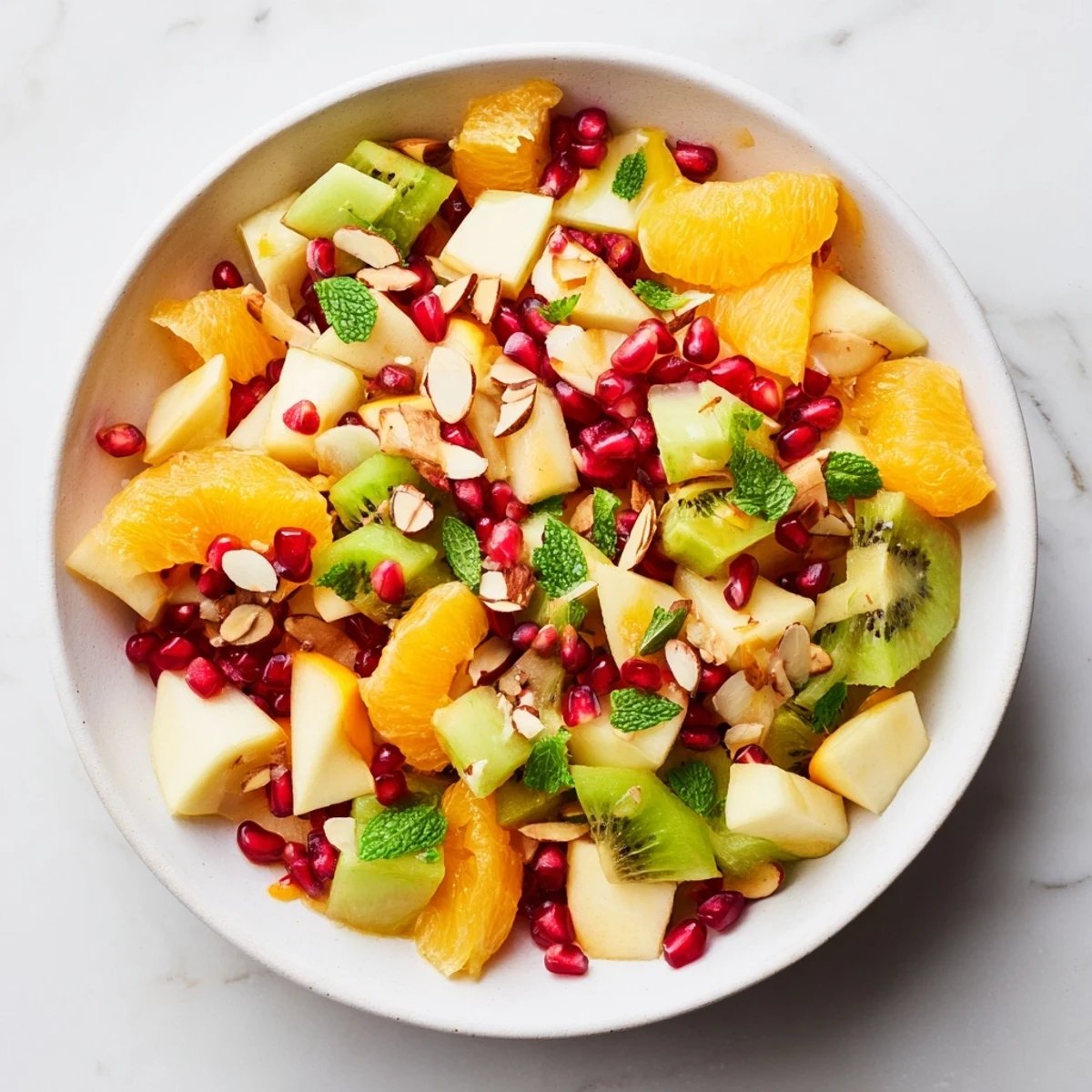
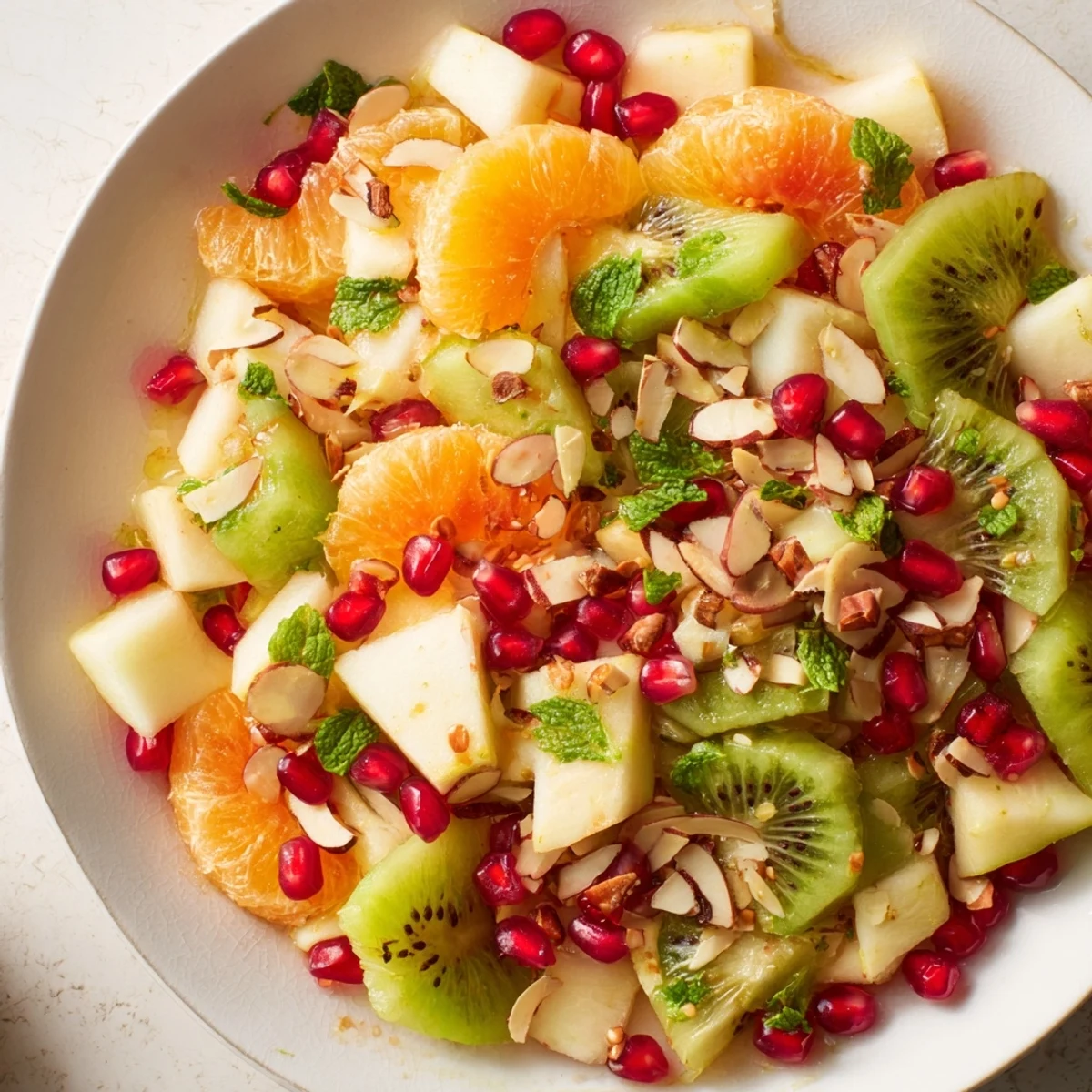
Save This vibrant bowl combines the best winter fruits—including oranges, pomegranate seeds, kiwis, apple, pear, and red grapes—with a tangy honey-lemon dressing. Prepared in just 15 minutes, it offers a fresh and naturally sweet flavor profile, enhanced with optional mint and toasted almonds. Perfect as a light start or refreshing treat, this dish embraces seasonal ingredients and simple techniques to highlight their natural taste and texture.
I discovered this winter fruit bowl on a crisp January morning when I found myself staring into an almost empty refrigerator, yet somehow surrounded by the most beautiful collection of seasonal fruits. There was something magical about how the oranges caught the light, how the pomegranate seeds gleamed like tiny rubies, and I realized I didn't need a complicated recipe—just these jewels and a simple touch of lemon and honey to let them shine. That breakfast changed how I think about eating seasonally, and now whenever winter arrives, this is the first thing I make.
I'll never forget serving this to my sister during a snowy afternoon in February. She'd been having a tough week, and when I placed that vibrant bowl in front of her, I watched her whole face change. She took one bite and actually closed her eyes, and suddenly we weren't just eating fruit—we were tasting winter at its most optimistic. That's when I understood that sometimes the simplest recipes carry the most meaning.
Ingredients
- Fresh oranges: Choose ones that feel heavy for their size—they'll be juicier and sweeter. Segmenting them by hand gives you control and prevents losing precious juice
- Pomegranate: This is the showstopper. Yes, it takes a few extra minutes to seed, but those jewel-like arils are worth every second. Work over a bowl to catch any juice that drips
- Kiwis: Their vibrant green and slight tartness balance the sweeter fruits beautifully. Wait until they're ripe but still firm—overripe ones become mushy when tossed
- Apple: A crisp variety like Honeycrisp or Granny Smith holds its texture better than softer apples. Toss with a little lemon juice right after cutting to prevent browning
- Pear: Look for one that yields slightly to pressure but isn't mushy. The subtle sweetness it brings is irreplaceable
- Red grapes: Halving them allows the dressing to coat them better and makes them easier to eat. They're also your little pops of concentrated sweetness
- Fresh lemon juice: Always use freshly squeezed—it makes an enormous difference in brightness. Bottled juice tastes flat by comparison
- Honey or maple syrup: This isn't just sweetening; it's creating a cohesive dressing that hugs each piece of fruit. Raw honey adds a floral note I adore
- Fresh mint: It should smell bright and alive when you pick or buy it. This is your finishing touch that makes people say, 'What is that?'
- Toasted sliced almonds: Toasting them yourself makes all the difference—they become fragrant and deeply flavorful rather than bland
Instructions
- Prepare Your Fruits:
- Gather all your fruits and cut them into similar-sized pieces—think bite-sized moments rather than chunks. Your hands will learn the rhythm quickly. Place everything into a large mixing bowl as you finish each fruit. This isn't about perfection; it's about creating a beautiful, edible collection of winter's best offerings
- Create Your Dressing:
- In a small bowl, pour fresh lemon juice and add your honey. Whisk them together with the kind of gentle attention you'd give to something delicate. The honey will want to cling to itself at first, but keep whisking and it'll eventually dissolve into a golden, silky dressing that smells like pure brightness
- Bring It Together:
- Pour that dressing over your fruit and gently toss—and I mean gently, with the kind of care that respects each piece of fruit. You're not mixing a salad; you're folding a symphony. Every fruit should get kissed by that lemon-honey mixture
- Transfer and Garnish:
- Move everything to your serving bowl with the same gentleness. Scatter the mint across the top like confetti, then sprinkle your toasted almonds over everything. This is where the bowl transforms from beautiful to stunning
- Serve:
- You can serve this immediately while it's still crisp and fresh, or let it chill for a bit if you prefer. Either way, the flavors will deepen and meld, becoming more of a complete whole with every passing hour
 Save
Save There's a moment I have every time I make this bowl where I pause before tossing it all together, just taking in the colors—the deep reds, the bright oranges, the green, the creamy yellows. It feels like holding autumn and spring in the middle of winter, and that's when I remember why cooking matters so much to me. It's not about nutrition or efficiency; it's about those moments when you can taste hope in a bowl.
Why Winter Fruits Matter Most
Winter gets a bad reputation in the produce world, but if you know where to look, it's when fruits reach their absolute peak. Citrus fruits are at their juiciest and most flavorful in winter months because of the cold nights. Pomegranates, pears, kiwis, and apples have been waiting in storage or are coming at just the right moment from the other side of the world. This isn't a limitation—it's an invitation to taste what the season actually offers rather than chasing berries in January that have traveled thousands of miles. There's something grounding about building a meal around what's actually meant to be here right now.
The Art of Fruit Preparation
The more you make this, the more you'll develop your own rhythm for cutting fruit. Some people are geometric about it, some people cut in a more flowing way. The secret isn't in achieving perfect uniformity—it's in finding pieces that feel right in your hand and pleasant to eat. I learned this after making hundreds of bowls and realizing that the ones that felt best were never the most perfect-looking ones. They were the ones that felt joyful to make. Also, a truly sharp knife makes all the difference. A dull one will slip on the skin of citrus and crush delicate fruit like kiwi. Invest in sharpening your knives regularly—it's one of the best things you can do for your kitchen.
Variations and Flexibility
Once you understand the structure of this recipe—fresh fruit plus a honey-lemon dressing plus a bright garnish—you'll realize how flexible it truly is. I've made versions with persimmons, with grapes of different colors, with pomegranate swapped for fresh figs, with different nuts. The core formula stays the same, but you're always working with what feels right for that moment, that market, that season. This flexibility is actually what makes it such a reliable recipe to return to again and again.
- Try substituting the honey with a touch of vanilla extract mixed into maple syrup for a different kind of warmth
- Swap almonds for pistachios or walnuts depending on what you have or what you're in the mood for
- Add a tiny pinch of cardamom or a whisper of ginger to the dressing if you want an unexpected hint of spice
 Save
Save This recipe became my favorite winter ritual because it reminds me that the simplest food can be the most nourishing—not just for the body, but for the spirit during the quietest season. Make this with love, and I promise people will taste it.
Recipe FAQs
- → What fruits are ideal for this winter bowl?
-
Use a mix like oranges, pomegranate seeds, kiwis, apples, pears, and red grapes for balanced sweetness and texture.
- → Can I substitute honey in the dressing?
-
Yes, maple syrup works well as a vegan-friendly alternative while keeping the dressing naturally sweet.
- → How should I prepare the fruit before assembling?
-
Peel, segment, and slice fruits as needed, then gently mix to maintain freshness and shape.
- → What optional garnishes enhance this bowl?
-
Fresh chopped mint adds brightness and toasted almonds contribute a crunchy texture.
- → Is this dish suitable for special diets?
-
Yes, it is vegetarian, gluten-free, and dairy-free, making it suitable for various dietary preferences.