
 Save
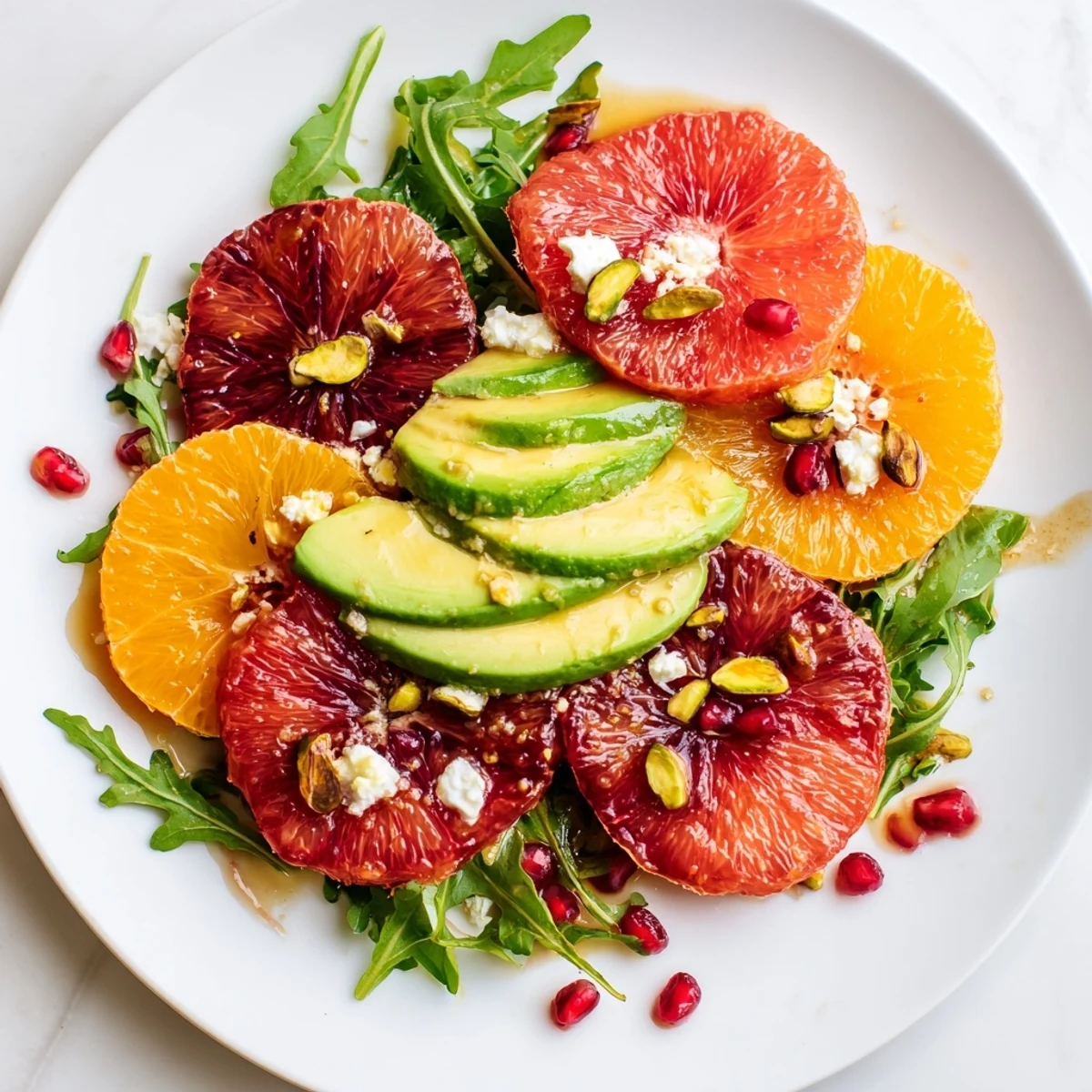
Save This bright winter salad combines juicy navel oranges, ruby grapefruit, and blood oranges with peppery arugula and creamy avocado slices. Toasted pistachios add crunch, while pomegranate seeds bring sweetness and texture. The dish is finished with a tangy pomegranate vinaigrette combining fresh juice, red wine vinegar, Dijon mustard, honey, and olive oil for balanced flavor. Perfect for a light, refreshing meal that wakes up the palate on chilly days.
I sliced into a blood orange one gray February morning and the juice practically glowed against the cutting board. That sharp, sweet smell cut through the winter fog in my brain, and I realized I'd been eating the same roasted vegetables for weeks. This salad came together that afternoon, half experiment and half desperation for color.
I brought this to a potluck once, worried it looked too simple next to casseroles and roasts. By the end of the night, the platter was scraped clean and three people asked for the recipe. One friend said it tasted like optimism, which made me laugh, but I knew what she meant.
Ingredients
- Navel oranges: Sweet and seedless, they slice beautifully and hold their shape on the plate without falling apart.
- Ruby grapefruit: The tartness balances the sweeter citrus, and the blush color adds drama you don't get from white grapefruit.
- Blood oranges: Their deep crimson flesh is stunning, though regular oranges work fine if you can't find them.
- Arugula or mixed baby greens: Arugula brings a peppery bite that plays well with the sweet fruit, but any tender green will do.
- Avocado: Creamy richness that softens the acid and makes the whole salad feel more filling.
- Pomegranate seeds: Little bursts of juice and crunch, they're worth the effort of seeding (or buy them pre-packed).
- Toasted pistachios: I toast them in a dry skillet for three minutes until fragrant, it makes all the difference.
- Feta cheese: Salty and crumbly, though I skip it half the time and never miss it.
- Pomegranate juice: The base of the vinaigrette, it should be 100% juice with no added sugar.
- Red wine vinegar: Sharpness that lifts the dressing without overpowering the fruit.
- Dijon mustard: Acts as an emulsifier and adds a subtle warmth.
- Honey or maple syrup: Just enough sweetness to round out the tartness.
- Extra-virgin olive oil: Use something fruity and green, it becomes half the flavor of the dressing.
Instructions
- Make the vinaigrette:
- Whisk the pomegranate juice, vinegar, mustard, honey, olive oil, salt, and pepper in a small bowl until it thickens and holds together. Taste it, the balance should feel bright but not harsh.
- Arrange the greens:
- Spread the arugula across a large platter or divide it among individual plates, leaving the leaves loose and airy.
- Layer the citrus:
- Peel the oranges and grapefruit, then slice them into rounds about a quarter-inch thick. Overlap them on the greens, alternating colors so it looks like something you'd see in a magazine.
- Add the avocado:
- Slice the avocado and tuck the pieces between the citrus rounds, they should look scattered, not lined up.
- Sprinkle the toppings:
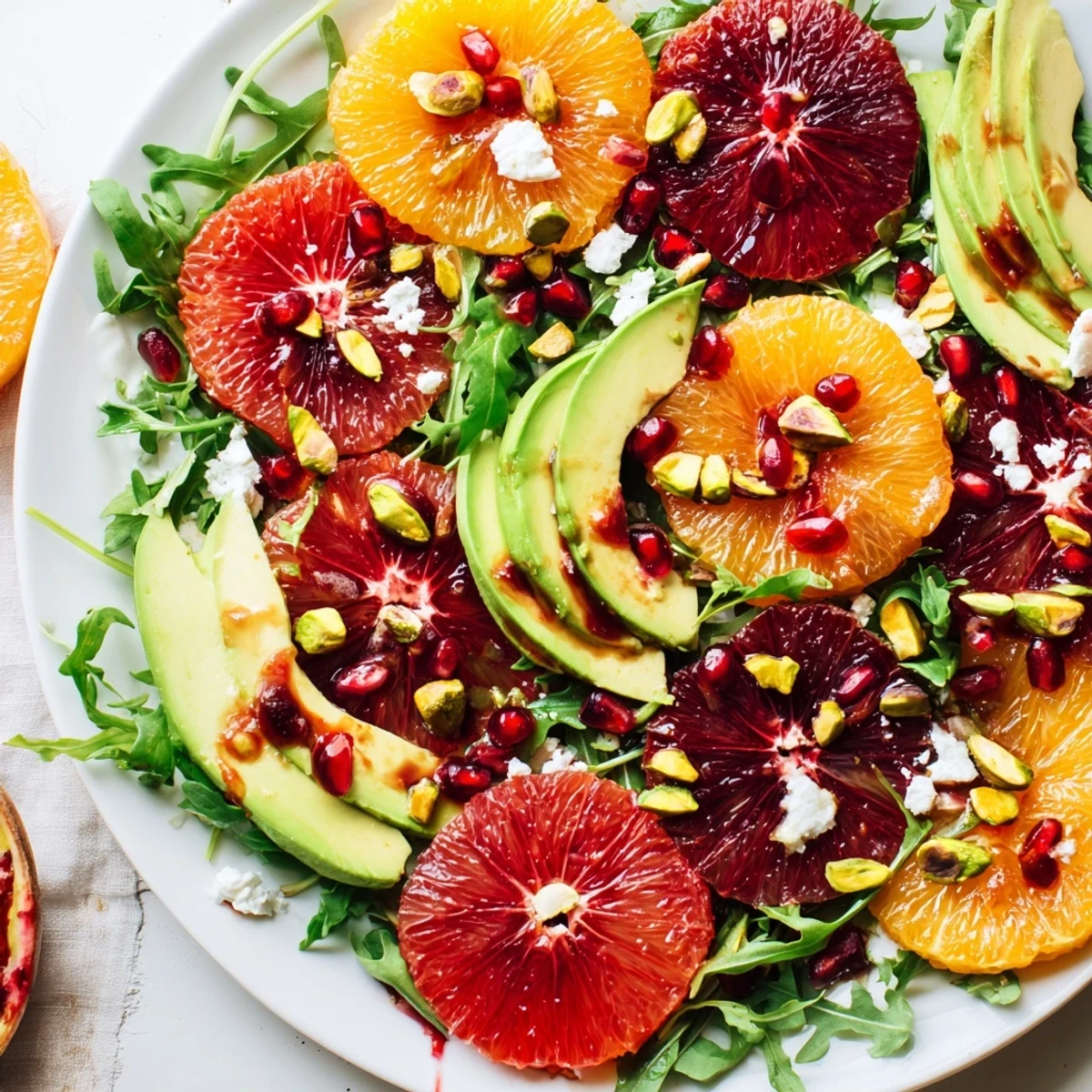
- Scatter the pomegranate seeds, toasted pistachios, and feta over everything, aiming for an even but casual distribution.
- Dress and serve:
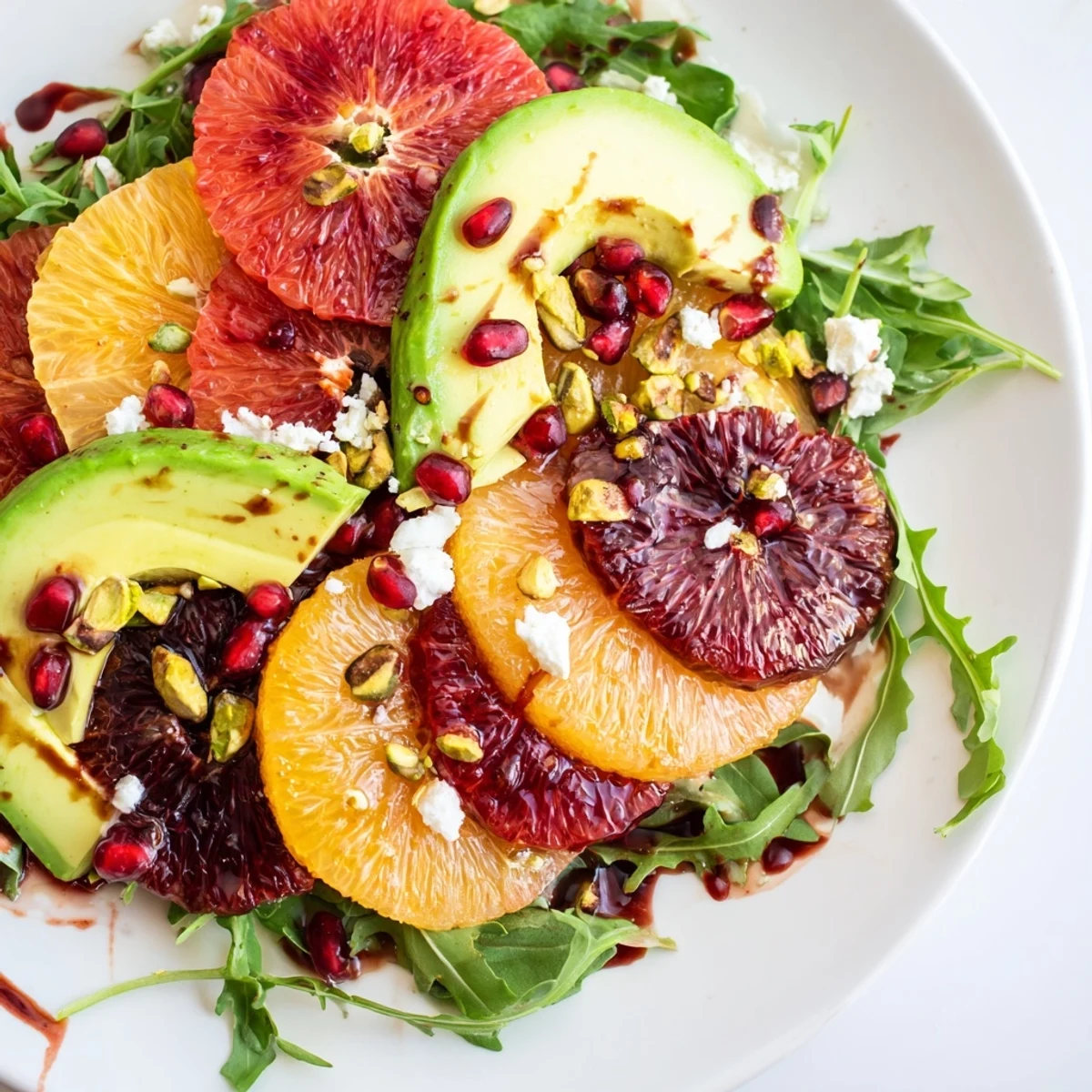
- Drizzle the vinaigrette over the salad just before serving, too early and the greens wilt. Serve immediately while everything is crisp and cold.
 Save
Save My neighbor stopped by one afternoon while I was making this, and she stood at the counter eating pomegranate seeds straight from the bowl. We ended up talking for an hour, and the salad sat half-assembled on the counter. When I finally finished it, she said it was the prettiest thing she'd seen all week.
Customizing Your Salad
Swap the pistachios for toasted walnuts or almonds if that's what you have, or leave them out entirely if nuts aren't your thing. I've used goat cheese instead of feta, and once I added thin slices of red onion that had been soaking in cold water to take the edge off. Grilled chicken turns this into a full meal, though I rarely bother.
Storing and Serving
This salad doesn't keep well once dressed, so only make what you'll eat. The vinaigrette, though, lasts in the fridge for a week and tastes good on almost anything. I've used it on roasted carrots, grain bowls, even as a marinade for chicken thighs.
Pairing and Presentation
I serve this on a big white platter because the colors deserve to be seen. It pairs beautifully with a crisp Sauvignon Blanc or a light Pinot Noir, though sparkling water with lemon works just as well. If you're serving it as a side, it goes with roasted fish, grilled lamb, or a simple roast chicken.
- Use a mix of citrus for visual contrast, even if you only have two types.
- Toast the nuts fresh each time, stale nuts ruin the texture.
- Taste the vinaigrette before you pour it, every batch is slightly different.
 Save
Save This salad has pulled me out of more winter slumps than I can count. It's proof that sometimes the simplest things, bright fruit, good oil, a handful of seeds, are enough to make a gray day feel a little lighter.
Recipe FAQs
- → What citrus fruits are best for this salad?
-
Navel oranges, ruby grapefruit, and blood oranges provide a balanced mix of sweetness and tartness perfect for this salad.
- → Can I substitute pistachios with other nuts?
-
Yes, toasted walnuts or almonds work well as substitutes, offering different textures and flavors.
- → Is it possible to make this salad dairy-free?
-
Omitting the feta cheese makes the salad dairy-free without compromising its flavor and texture.
- → How should the vinaigrette be prepared?
-
Whisk together pomegranate juice, red wine vinegar, Dijon mustard, honey or maple syrup, olive oil, salt, and pepper until emulsified.
- → What greens work best with the citrus and avocado?
-
Peppery greens like arugula or a mix of baby greens complement the salad’s flavor profile nicely.
- → Can I add protein to this salad?
-
Grilled chicken can be added for protein, enhancing this salad’s heartiness without overpowering the fresh citrus notes.