
 Save
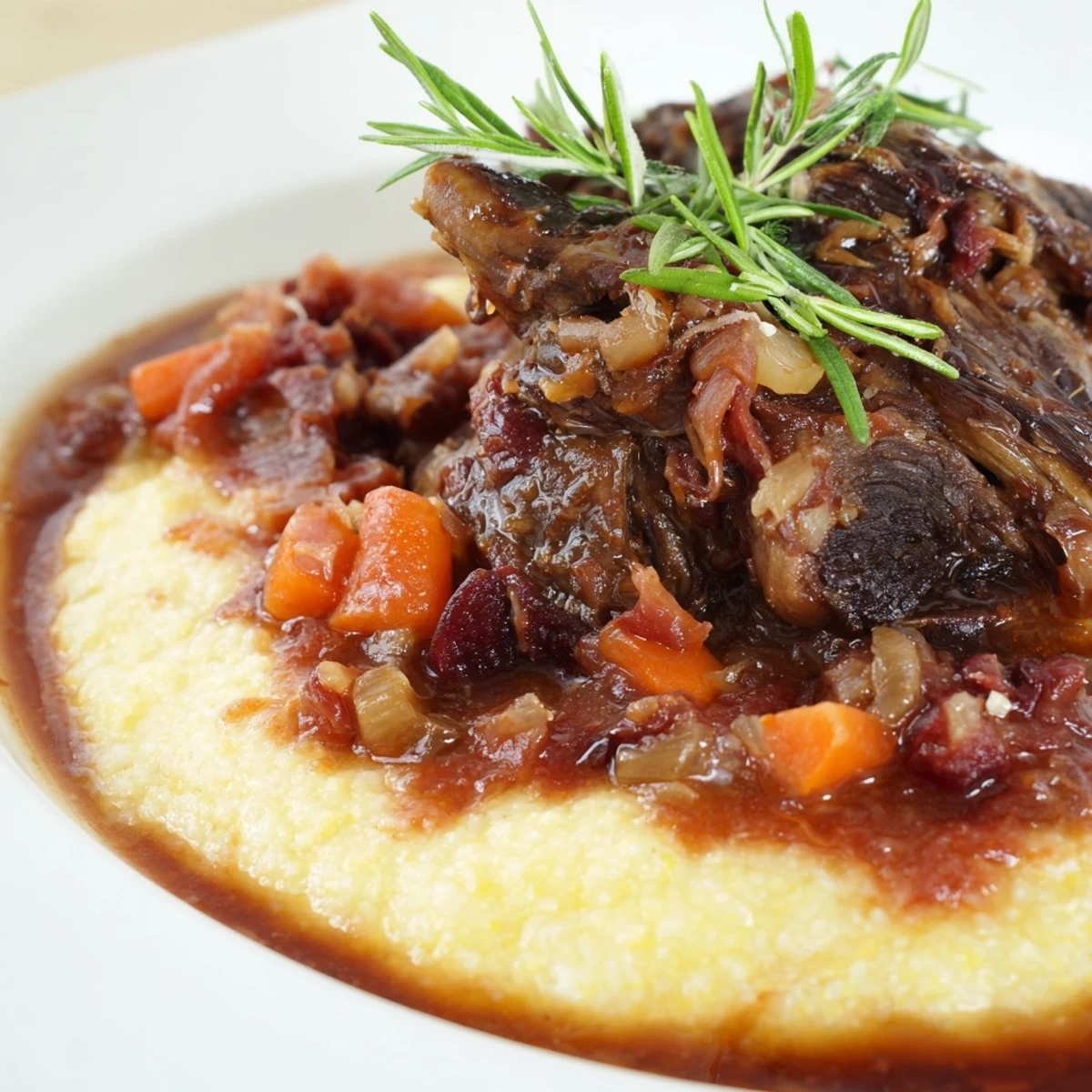
Save This dish features lamb shanks braised slowly in a rich sauce with garlic, herbs, and tomatoes until incredibly tender. The meat is served over creamy polenta infused with fresh rosemary and Parmesan, creating a warm and elegant plate. The long braise time softens the lamb to fall-off-the-bone perfection, while the polenta balances the robust flavors with its smooth texture. Ideal for a comforting main course with Italian-inspired aromatics and depth.
There's something about the smell of lamb braising low and slow that fills a kitchen with permission to slow down. I discovered this dish on a particularly grey afternoon when I had nowhere to be but the kitchen, and somehow three hours dissolved into pure comfort. The wine reduces into something almost mysterious, the vegetables melt away into the sauce, and those shanks—they become so tender you barely need a knife. It's the kind of meal that makes you understand why people call cooking meditative.
I made this for friends on a winter evening when conversation had grown lazy and the dining room felt too cold until the food arrived. Someone cut into their shank and just paused, watching it fall apart, and that moment—where a dish stops being just dinner and becomes an experience—that's what this recipe gives you every time.
Ingredients
- Lamb shanks (4, about 400 g each): The star that deserves respect; larger shanks give you more surface area for browning and deeper flavor in every bite.
- Olive oil (2 tbsp): High enough heat to properly sear and create that golden crust that holds all the promise.
- Onion, carrots, celery (1 large, 2, 2 stalks): The aromatic foundation that dissolves into the sauce and makes everything taste like home.
- Garlic (4 cloves, minced): Add it after the softer vegetables or it will burn and turn bitter—a small timing detail that matters enormously.
- Tomato paste (2 tbsp): Gives the sauce body and a subtle sweetness that balances the wine's acidity.
- Red wine (400 ml): Use something you'd actually drink; cheap wine makes cheap-tasting food, and this dish knows the difference.
- Beef or lamb stock (500 ml): Homemade is transcendent, but a quality store-bought version respects your effort.
- Chopped tomatoes (1 can, 400 g): They round out the braising liquid and add a subtle sweetness that deepens as it cooks.
- Fresh rosemary and thyme (2 sprigs each): These herbs infuse the whole dish; save some leaves for finishing if you want to feel fancy.
- Bay leaves (2): Subtle but essential; they add an earthy note that rounds out all the other flavors.
- Salt and black pepper: Season generously at the start and taste again at the end; the braising process mellows salt, so trust your palate.
- Water (1 liter): For the polenta, preferably filtered so nothing competes with the other flavors.
- Polenta or coarse cornmeal (250 g): The texture should be thick and creamy, never gluey or thin.
- Unsalted butter (2 tbsp): Added at the very end so it doesn't break down and lose its subtle richness.
- Parmesan cheese (60 g, grated): Adds a salty umami depth; grate it fresh if you have time, the flavor is noticeably brighter.
- Fresh rosemary for polenta (1 tbsp, finely chopped): Brightens the polenta and connects it visually to the braised meat above.
Instructions
- Set your oven and prepare the shanks:
- Preheat to 160°C (320°F)—slow and low is how lamb shanks learn to become tender. Pat the shanks completely dry with paper towels, then season them generously on all sides with salt and pepper, letting the seasoning sit while you gather everything else.
- Sear the lamb to golden:
- Heat olive oil in your Dutch oven over medium-high heat until it shimmers. The shanks should sizzle the moment they touch the pan; don't move them for a few minutes, letting them develop a deep golden crust on each side. This browning is flavor, precious and irreplaceable, so be patient.
- Build the aromatic base:
- Remove the shanks and set aside. In the same pot with all those lovely browned bits, add onion, carrots, and celery; let them soften for about five minutes, stirring occasionally. Add minced garlic and cook just long enough to smell it—about one minute—then add tomato paste and stir constantly for another minute.
- Deglaze and reduce:
- Pour in the red wine and use a wooden spoon to scrape up every browned bit from the bottom of the pot; these bits dissolve into the liquid and become pure flavor. Let it simmer for a couple of minutes, reducing slightly and cooking off some of the raw alcohol taste.
- Create the braising liquid:
- Add stock, chopped tomatoes, rosemary sprigs, thyme, and bay leaves. Return the shanks to the pot, nestling them so they're mostly covered by liquid; they'll release their own juices as they cook and the liquid level will rise slightly.
- Braise low and slow:
- Bring everything to a gentle simmer, cover the pot with its lid, and transfer to the oven. Let it cook for two and a half to three hours, turning the shanks once or twice halfway through, until the meat pulls away from the bone and the whole kitchen smells like patience rewarded.
- Meanwhile, prepare the polenta:
- About thirty minutes before the lamb should be done, bring water and salt to a rolling boil. Slowly whisk in the polenta in a thin stream, stirring constantly to avoid lumps; the mixture will thicken and splutter a bit, so stir from the side to protect your hands. Reduce heat to low and keep stirring frequently for twenty to twenty-five minutes until it's thick and creamy.
- Finish the polenta:
- Stir in butter, grated Parmesan, and finely chopped fresh rosemary. Taste and adjust salt if needed; remember that the lamb sauce above will add its own seasoning.
- Perfect the sauce:
- When the lamb is tender, remove it from the oven and discard the herb stems and bay leaves. If the braising liquid seems thin, simmer uncovered on the stovetop for a few minutes to concentrate the flavors and deepen the color.
- Plate with intention:
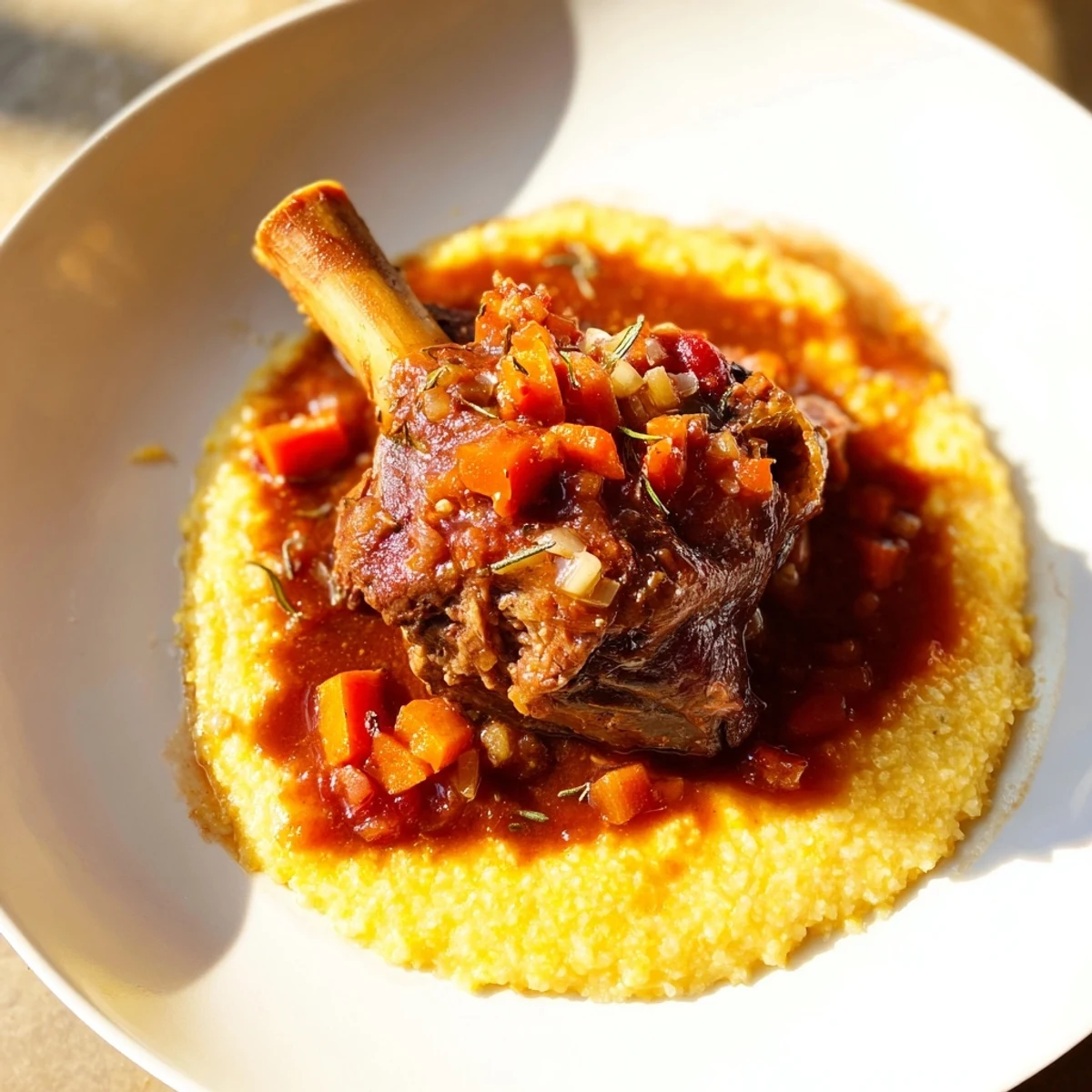
- Spoon creamy polenta onto each plate, nestle a shank on top, and ladle the rich sauce around and over everything. Serve while everything is still warm enough that steam rises from the plate.
 Save
Save I remember my grandmother saying that the best dishes are the ones that give you time to think while you're making them, time to notice small things. This recipe does that—the long braise forces you to slow down, and somewhere in that unhurried cooking, something shifts from ingredients into something that feeds more than just hunger.
Why This Dish Feels Special
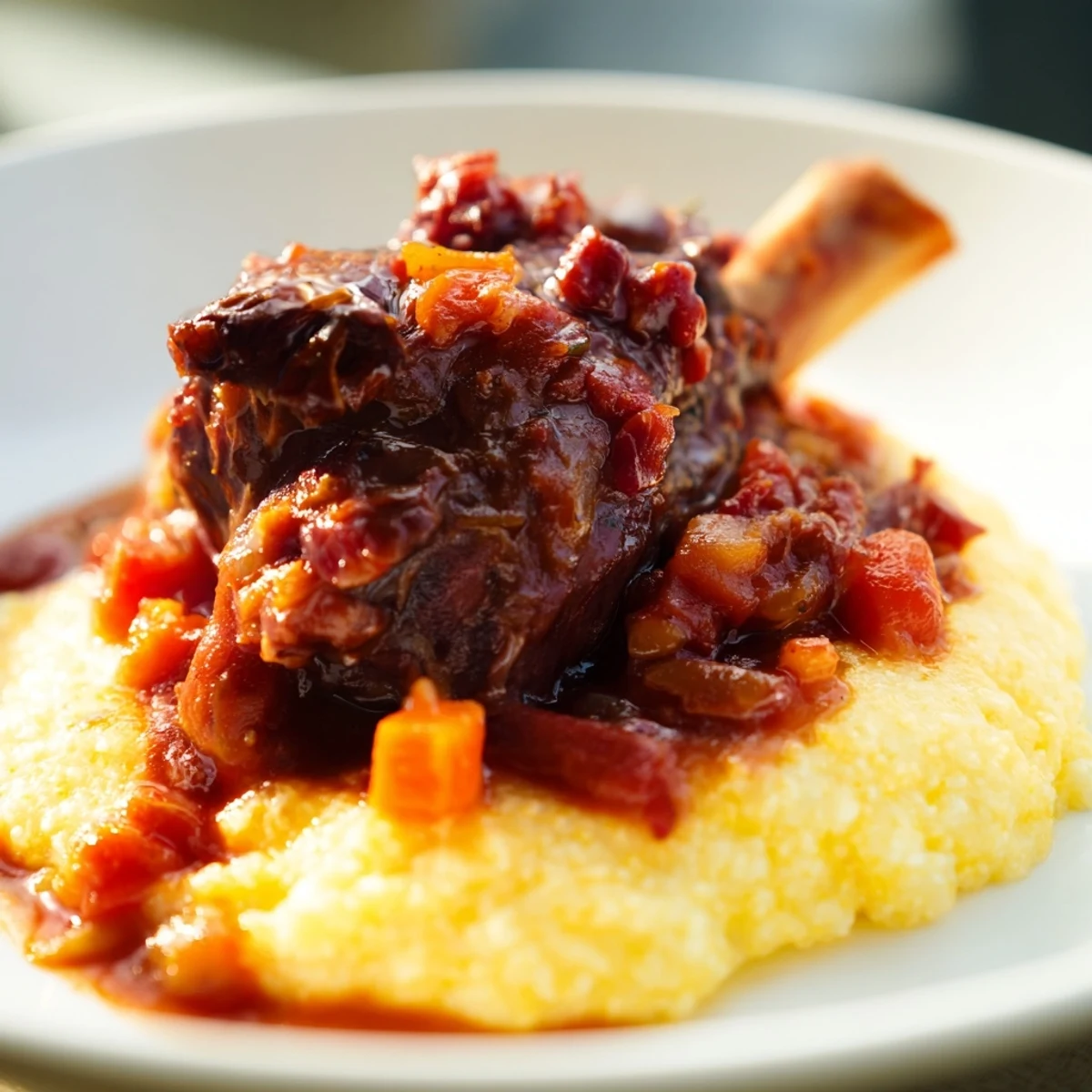
There's a quiet confidence to serving braised lamb shanks, a sense that you've taken time seriously and made something that matters. The visual drama of a whole shank on the plate, the way the meat yields beneath a gentle fork, the creamy polenta underneath catching all the sauce—it all comes together as a moment, not just a meal. This is food for people you want to linger with, for tables where conversation matters more than rushing to the next thing.
Variations and Whispered Secrets
Once you've made this dish, you'll start noticing small adjustments that become your version of it. A strip of orange zest adds a bright note that cuts through the richness beautifully, disappearing into the sauce and leaving only a subtle citrus memory. Some cooks swear by substituting half the Parmesan with Pecorino Romano for a sharper, more assertive cheese that stands up to the wine-braised meat. The wine itself matters too—a robust Chianti or Shiraz pairs so naturally that serving it alongside feels less like a pairing and more like completing a thought.
The Quiet Lessons This Recipe Teaches
Cooking lamb shanks teaches you that good food doesn't rush. It teaches you to trust time, to notice when something is ready rather than watching the clock, and to understand that some ingredients need to meld and transform before they become what they're meant to be. This dish is proof that patience in the kitchen returns exactly what you put into it, and then a little bit more.
- Always taste the sauce in the last five minutes and season boldly; the flavors have mellowed during the long braise and need you to taste and adjust.
- If your Dutch oven isn't ovenproof, you can braise this entirely on the stovetop at the lowest simmer, just check it more frequently so the bottom doesn't scorch.
- Leftover shanks in their sauce reheat beautifully, and sometimes they taste even better the next day once all the flavors have settled and deepened.
 Save
Save This is food that makes a home feel warm, that turns an ordinary evening into something you remember. Make it when you have time to be present, and let the kitchen fill with the smell of something becoming something better.
Recipe FAQs
- → What cut of meat is best for this dish?
-
Lamb shanks are ideal due to their connective tissue, which breaks down during slow cooking, resulting in tender, flavorful meat.
- → How do I achieve the perfect polenta consistency?
-
Whisk polenta gradually into boiling salted water and cook over low heat, stirring frequently until thick and creamy, roughly 20-25 minutes.
- → Can I substitute red wine in the braise?
-
Yes, a robust beef or lamb stock can be used to maintain rich flavor if avoiding alcohol.
- → How do I enhance the aromatic profile of the sauce?
-
Adding fresh rosemary, thyme, bay leaves, and a hint of tomato paste creates depth and complements the lamb well.
- → What side complements slow-cooked lamb shanks with polenta?
-
Light green vegetables or a simple salad balance the richness of the dish nicely.