
 Save
Save This Hawaiian-inspired dish features succulent cubes of tuna marinated in a spicy soy and sesame blend, served over perfectly cooked sushi rice. Crisp cucumber, avocado, carrot, and edamame add fresh texture, while creamy sriracha mayo adds a bold, tangy finish. A sprinkle of sesame seeds and nori strips enhances the umami profile. Quick to prepare, this flavorful bowl offers a balanced fusion of spice and creaminess perfect for a satisfying meal.
The first time I made a poke bowl at home, I was chasing the memory of a quiet lunch in Honolulu where the ocean breeze seemed to carry the scent of sesame and soy. I'd never worked with sushi-grade fish before, and there was something almost meditative about cutting those perfect cubes and watching them transform in the marinade. What started as an attempt to recreate that moment became something entirely my own—a weeknight ritual that somehow feels like a small vacation every time I make it.
I made this for my roommate on a Thursday night after she'd had a particularly brutal day at work, and watching her face light up when she tasted it was worth every minute of prep. She immediately asked for the recipe, then started texting me photos of her own versions. That's when I knew this wasn't just dinner—it was the kind of meal that makes people feel cared for.
Ingredients
- Sushi-grade tuna (400 g, cut into 1 cm cubes): Quality matters here more than anywhere else; ask your fishmonger directly and never use regular tuna.
- Soy sauce (2 tbsp): This is the backbone of your marinade, so use something you'd actually want to taste on its own.
- Sesame oil (1 tbsp): A little goes a long way—toasted sesame oil has that nutty depth that makes people wonder what your secret ingredient is.
- Rice vinegar (1 tbsp for marinade, plus 2 tbsp for rice): It adds brightness without overpowering, and it's gentler than regular vinegar.
- Sriracha (1 tbsp, plus 1-2 tbsp for mayo): Start with less if you're unsure; you can always add more heat but you can't take it out.
- Honey (1/2 tsp): This tiny amount balances the heat and saltiness in a way that makes the tuna taste almost sweet.
- Green onions (2 tbsp finely chopped): Add these at the last moment before serving for a fresh bite that won't get lost in the marinade.
- Toasted sesame seeds (1 tsp, plus extra for garnish): Toast them yourself if you have time—the difference is noticeable and worth it.
- Sushi rice (250 g): Use actual sushi rice if you can; the starch content is different and it makes a real difference in texture.
- Water (330 ml): The rice-to-water ratio is everything; too much and it's mushy, too little and it's crunchy.
- Sugar (1 tbsp): Just enough sweetness to balance the vinegar in the rice seasoning.
- Salt (1/2 tsp): A pinch in the rice vinegar mixture goes further than you'd think.
- Mayonnaise (4 tbsp, preferably Japanese Kewpie): Kewpie has more yolk and is slightly sweeter, which makes it perfect here, but regular mayo works if that's what you have.
- Lime juice (1 tsp): A squeeze of fresh lime brightens the mayo and cuts through the richness.
- Avocado (1 small, sliced): Add this right before serving or it'll turn brown and sad.
- Cucumber (1 small, thinly sliced): The cooling crunch is essential to balance the spicy tuna.
- Carrot (1 medium, julienned): Thin strips give you more surface area to enjoy that sweet, crunchy texture.
- Edamame (100 g, shelled and cooked): These add protein and a pleasant pop of texture that keeps every bite interesting.
- Pickled ginger (2 tbsp): A small amount is enough; it's there to reset your palate between bites.
- Nori (1 sheet, cut into strips): Toast it lightly if you want more flavor, but the raw version works too.
- Furikake (1 tbsp, optional): This Japanese seasoning blend adds umami and visual interest, but skip it if you can't find it.
Instructions
- Rinse and cook the rice:
- Run your sushi rice under cold water, stirring with your fingers until the water runs clear—this removes excess starch and prevents mushiness. Combine with 330 ml of water in a saucepan, bring to a boil, then cover and drop the heat to low for exactly 10 minutes.
- Let the rice rest:
- This step is non-negotiable; remove from heat and leave it covered and undisturbed for another 10 minutes. The grains need this time to finish cooking and set properly.
- Season the rice:
- While it's still warm, gently fold in the mixture of rice vinegar, sugar, and salt using a rice paddle or wooden spoon. Work slowly and let the rice cool slightly before assembly.
- Build your marinade:
- In a separate bowl, whisk together soy sauce, sesame oil, rice vinegar, sriracha, and honey until the honey dissolves completely. This is where the magic starts—the liquid should be glossy and smell incredible.
- Marinate the tuna:
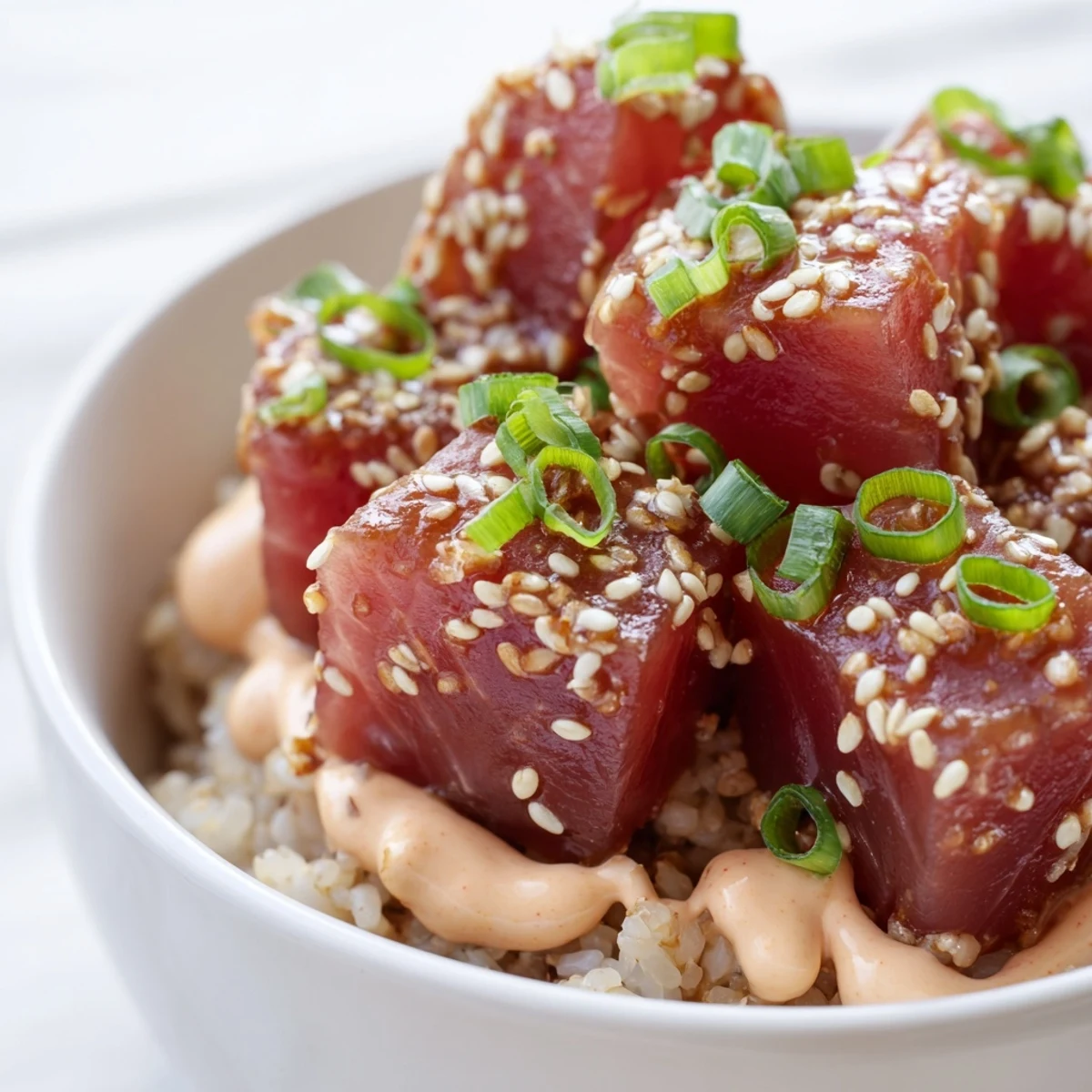
- Add your cubed tuna to the marinade along with the green onions and sesame seeds, then toss gently but thoroughly so every cube gets coated. Refrigerate for 10 minutes while you prep your vegetables—this gives the fish time to absorb the flavors without getting overwhelmed.
- Make the spicy mayo:
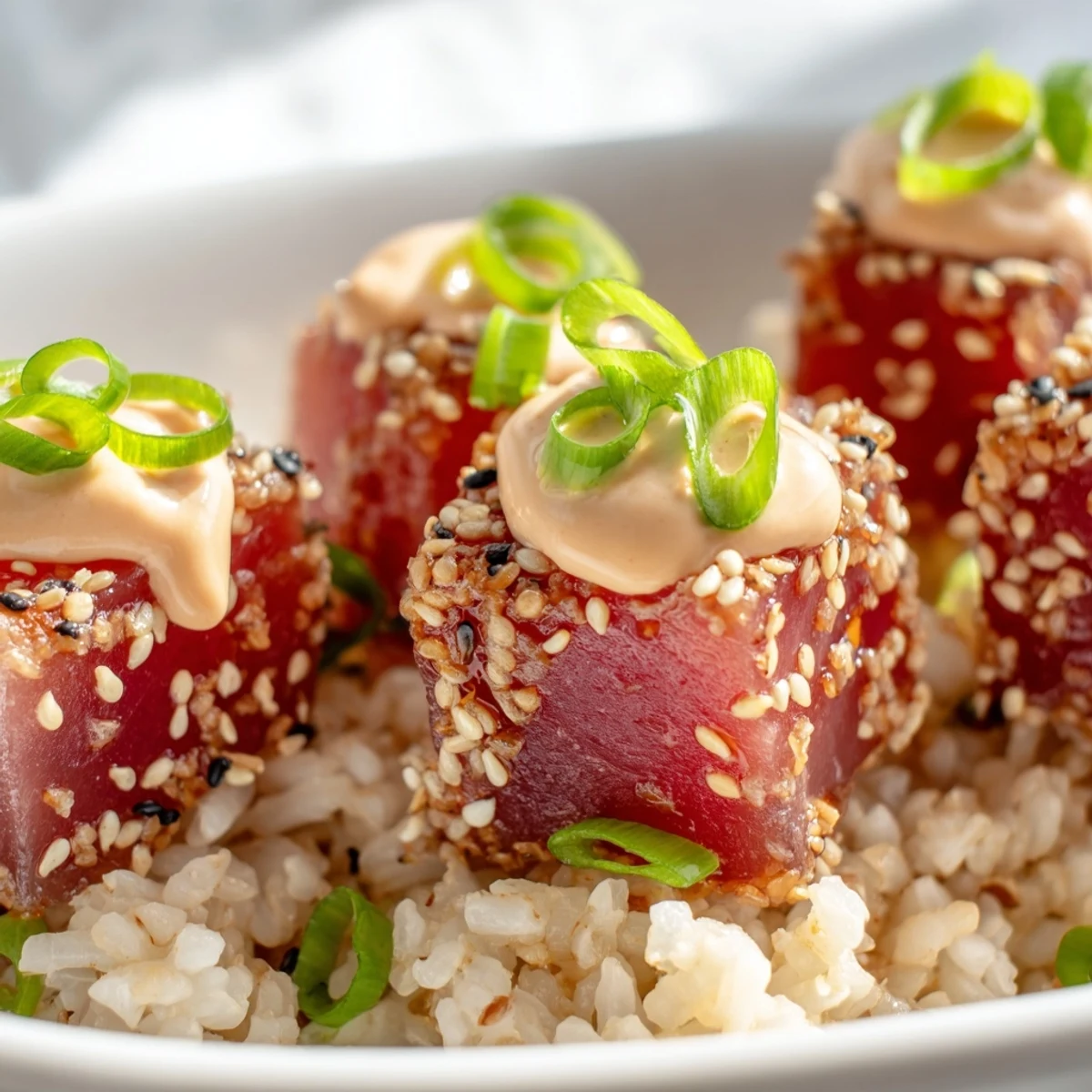
- Whisk mayonnaise with sriracha and lime juice until completely smooth and uniform in color. Start with 1 tbsp of sriracha and taste before adding more; you can always go hotter.
- Assemble your bowls:
- Divide the cooled rice among four bowls, then arrange your tuna, avocado, cucumber, carrot, and edamame on top in whatever pattern makes you happy. Drizzle generously with sriracha mayo, scatter pickled ginger and nori strips over everything, then finish with furikake and extra sesame seeds.
- Serve and enjoy:
- Bring the bowls to the table immediately and let everyone mix as they eat—this is half the fun, and it keeps the rice from getting soggy.
 Save
Save I learned the real value of this dish when I made it for a group of friends who were all stressed about different things, and somehow in the space of 20 minutes, everyone's shoulders dropped a little. There's something about a bowl you can customize, color with your own hands, and make exactly how you want it that feels like control when everything else feels chaotic.
The Story Behind Poke
Poke started as a way for Hawaiian fishermen to use their catch immediately, combining fresh fish with whatever was at hand. It's evolved into something that exists everywhere now, but there's a reason it's stood the test of time—it works. The simplicity is intentional, and every ingredient serves a purpose.
How to Choose Your Tuna
This is genuinely where the whole dish lives or dies. Talk to your fishmonger directly and ask what's fresh that day. Sushi-grade means it's been handled and frozen properly to kill parasites, so it's safe to eat raw, but it also means it should taste clean and slightly sweet. If it smells fishy in an aggressive way, that's a sign to walk away and come back another day.
Building Flavor Layers
The genius of a poke bowl is that you're not relying on one component to carry the whole meal—instead you've got brightness from the vinegar, heat from the sriracha, richness from the mayo and sesame oil, and cooling freshness from the cucumber and pickled ginger. Every bite should feel balanced because you've layered different tastes and textures intentionally.
- Taste your sriracha mayo before you use it and adjust the heat level to your actual preference, not what you think you should like.
- Slice your avocado at the last possible moment, and if it's not perfectly ripe, it's better to skip it than to serve bruised pieces.
- Make extra sriracha mayo because people will want to drizzle more on their second bite, and you'll want it on your third.
 Save
Save This bowl became something I make when I want to feel like I'm taking care of myself, or when someone I love needs reminding that they're worth taking time for. It's simple enough for a weeknight and impressive enough for company.
Recipe FAQs
- → How do I properly cook sushi rice for this dish?
-
Rinse the sushi rice until the water runs clear to remove excess starch. Cook it covered at a simmer for 10 minutes, then let it rest covered for another 10 minutes to absorb moisture and become tender.
- → Can I substitute any ingredient for tuna?
-
Yes, salmon can be used instead of tuna. Ensure it is sushi-grade and cut into uniform cubes for best texture and flavor absorption.
- → What adds the spicy flavor in the marinade?
-
Sriracha combined with soy sauce, sesame oil, and a hint of honey balances heat and sweetness, providing the signature spicy marinade for the tuna.
- → How is the creamy topping made?
-
The creamy drizzle is a mixture of mayonnaise, sriracha, and lime juice, blended until smooth to add a tangy and spicy finish to the bowl.
- → Are there any alternative toppings suggested?
-
Additional toppings like mango cubes or radish slices can be added to enhance flavor and visual appeal without altering the core profile.