
 Save
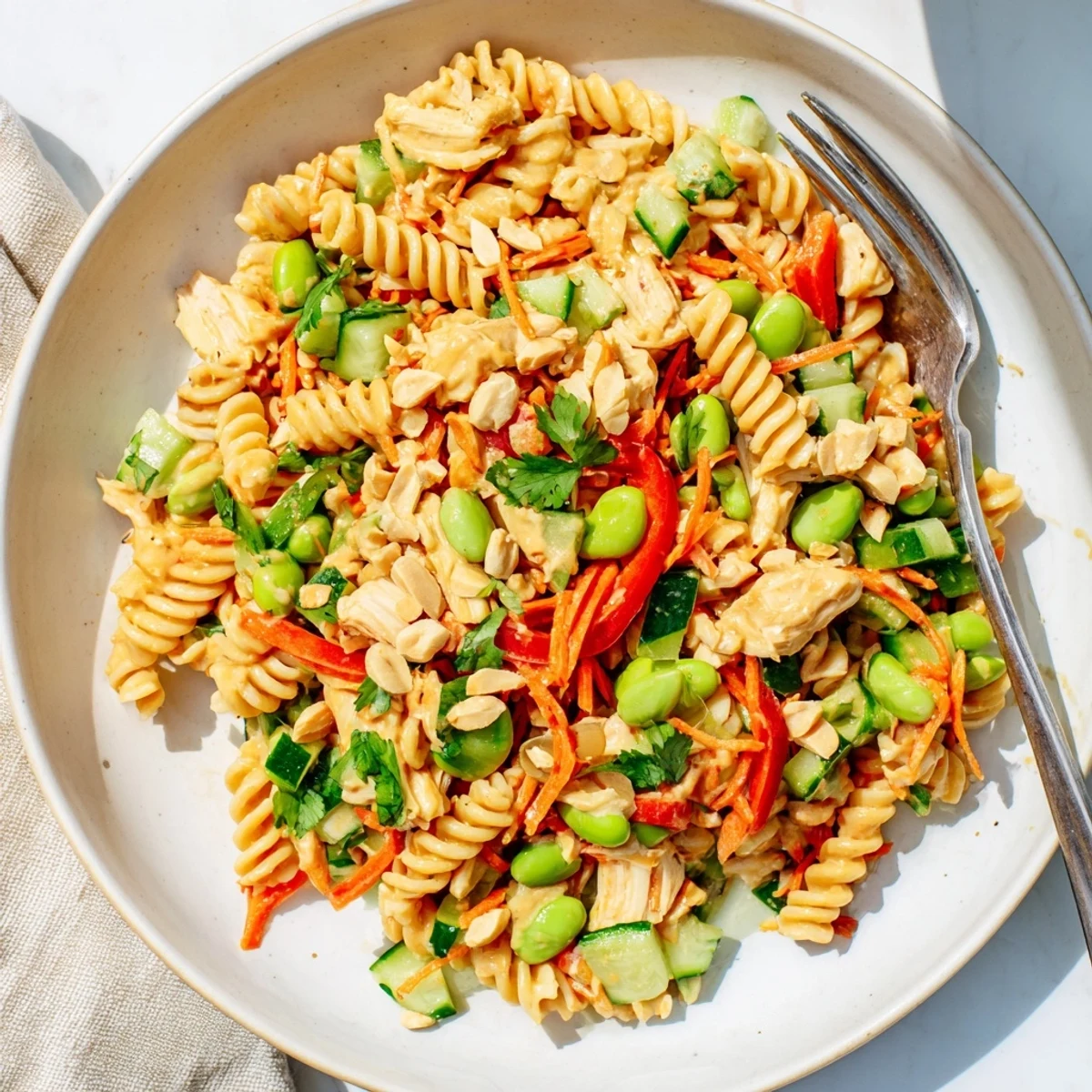
Save This protein-packed Thai pasta salad brings together tender penne, juicy chicken breast, and edamame for a satisfying 36 grams of protein per serving. A velvety peanut-lime dressing coats every bite with bold Southeast Asian flavors.
Ready in just 30 minutes with minimal cooking, it's an ideal make-ahead option for weekly lunches or light dinners. The combination of crunchy bell peppers, shredded carrots, and fresh cilantro keeps every forkful bright and textured.
Easily adaptable for vegetarian or gluten-free diets by swapping chicken for tofu and using tamari with gluten-free pasta.
The scent of toasted sesame oil hit me before I even opened the fridge, and suddenly I was back in my cramped apartment kitchen wondering what to do with leftover chicken and half a jar of peanut butter. That random Tuesday experiment turned into the most requested dish at every potluck I have attended since. Friends now text me asking for the recipe before they even confirm the date of the gathering.
I brought a massive bowl of this to a picnic last summer and watched three people skip the burgers entirely just to go back for seconds. My friend Marcus stood over the bowl with his fork and said nothing for a full minute, which is the highest compliment that man has ever paid anyone.
Ingredients
- Chicken breast or firm tofu: Two cups of cooked, diced protein anchors the whole dish, and leftover rotisserie chicken works like a charm here.
- Shelled edamame: One cup adds a chewy, satisfying bite and pushes the protein count even higher.
- Whole wheat or high-protein pasta: Use 250 grams of penne, fusilli, or rotini because those shapes trap dressing in every crevice.
- Red bell pepper: One julienned pepper brings a sweetness that balances the salty, tangy dressing.
- Shredded carrots: One cup gives crunch and a bright orange pop against the greens.
- Sliced cucumber: Half a cup keeps everything refreshing, especially on warm days.
- Spring onions: Three sliced onions add a mild bite without overpowering the peanut flavor.
- Fresh cilantro: One third cup, chopped, lifts the entire salad with a citrusy freshness.
- Natural peanut butter: One third cup forms the base of the dressing, and the natural kind blends smoother than the sweetened varieties.
- Soy sauce or tamari: Two tablespoons provide the salty umami backbone.
- Lime juice: Two tablespoons cut through the richness of the peanut butter perfectly.
- Maple syrup or honey: One tablespoon rounds out the acidity and salt with gentle sweetness.
- Toasted sesame oil: One tablespoon is the secret ingredient that makes everything taste vaguely restaurant-quality.
- Garlic and ginger: One minced clove and one teaspoon of grated ginger give the dressing its aromatic depth.
- Crushed red pepper flakes: Half a teaspoon is optional, but I always add them for a slow, pleasant warmth.
- Roasted peanuts and lime wedges: A quarter cup of chopped peanuts for garnish and lime wedges for squeezing at the end.
Instructions
- Cook and cool the pasta:
- Boil the pasta according to the package until just al dente, then drain and rinse under cold water immediately so the noodles stop cooking and stay firm.
- Build the salad base:
- Toss the cooled pasta into a large bowl with the chicken or tofu, edamame, bell pepper, carrots, cucumber, spring onions, and cilantro, and give it a gentle mix so the colors start to distribute evenly.
- Whisk the dressing:
- In a separate bowl, whisk the peanut butter, soy sauce, lime juice, maple syrup, sesame oil, garlic, ginger, and red pepper flakes until completely smooth, adding water one tablespoon at a time until it pours like a creamy sauce.
- Bring it all together:
- Pour the dressing over the pasta mixture and toss thoroughly, making sure every noodle and vegetable gets coated in that golden, peanutty glaze.
- Garnish and serve:
- Transfer to a serving platter or individual bowls, scatter the chopped peanuts on top, and set lime wedges alongside for squeezing. You can serve it right away or chill it for an hour to let the flavors settle into something even better.
 Save
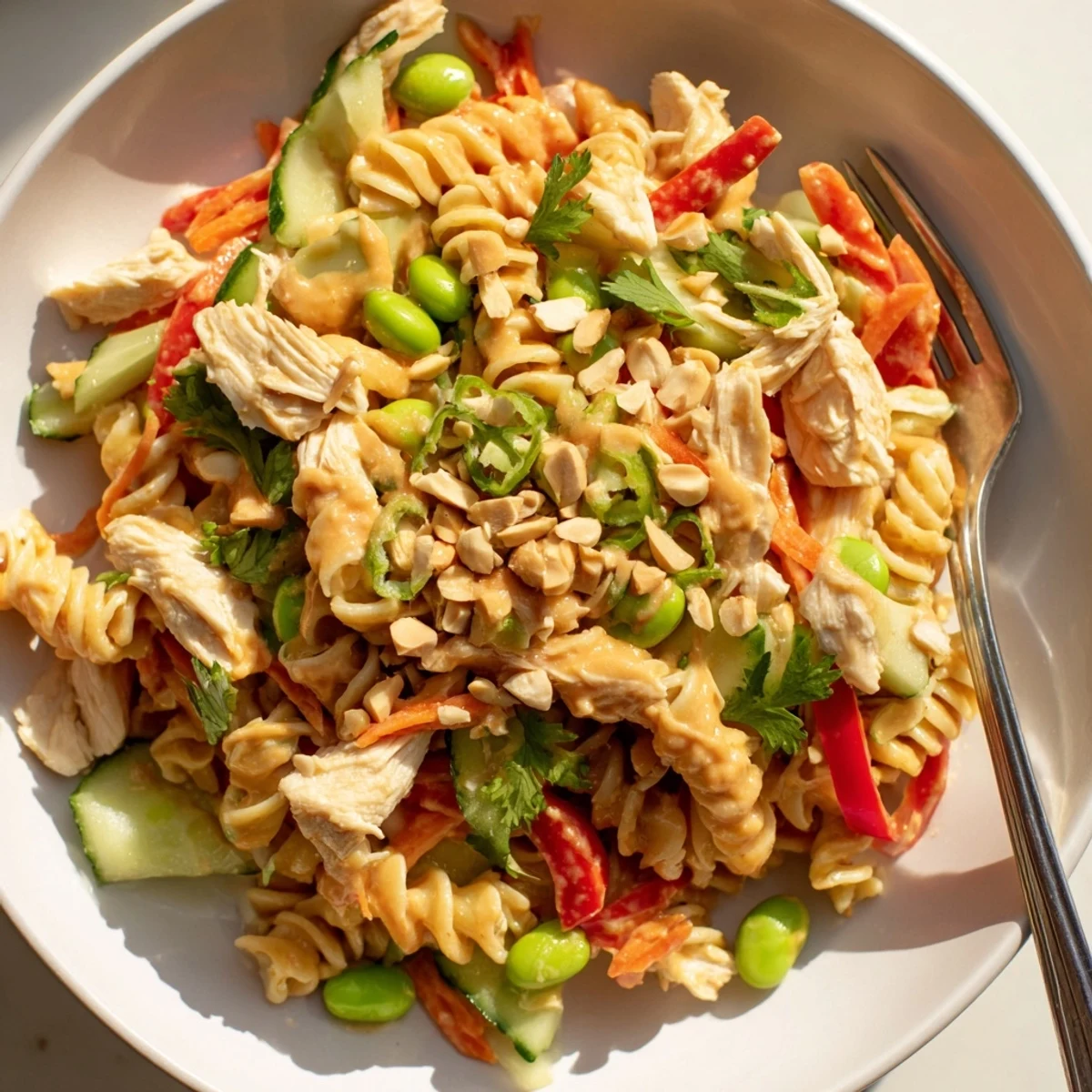
Save One evening I packed this salad into mason jars for a week of lunches and caught myself looking forward to Monday morning, which is not a sentence I ever expected to write about anything.
Making It Your Own
The beauty of this recipe is how forgiving it is when you start substituting. Shredded red cabbage adds a gorgeous purple hue and extra crunch, snap peas work beautifully in place of cucumber, and I have even tossed in leftover grilled shrimp when chicken felt too predictable.
Storage and Leftovers
This salad keeps well for up to two days in the refrigerator, though the vegetables will soften slightly overnight and the peanuts will lose some of their crunch. If you are meal prepping, store the dressing separately and toss everything together the morning you plan to eat it for the freshest result.
Allergen Friendly Swaps
Since this recipe contains peanuts, soy, and potentially gluten, there are a few swaps worth knowing about if you are cooking for a crowd with dietary restrictions.
- Swap peanut butter for sunflower seed butter to make it nut-free, though the flavor will shift toward earthy rather than rich.
- Use tamari and gluten-free pasta to eliminate gluten entirely without changing the character of the dish.
- Always check labels on sauces and pasta, since hidden allergens show up in unexpected places.
 Save
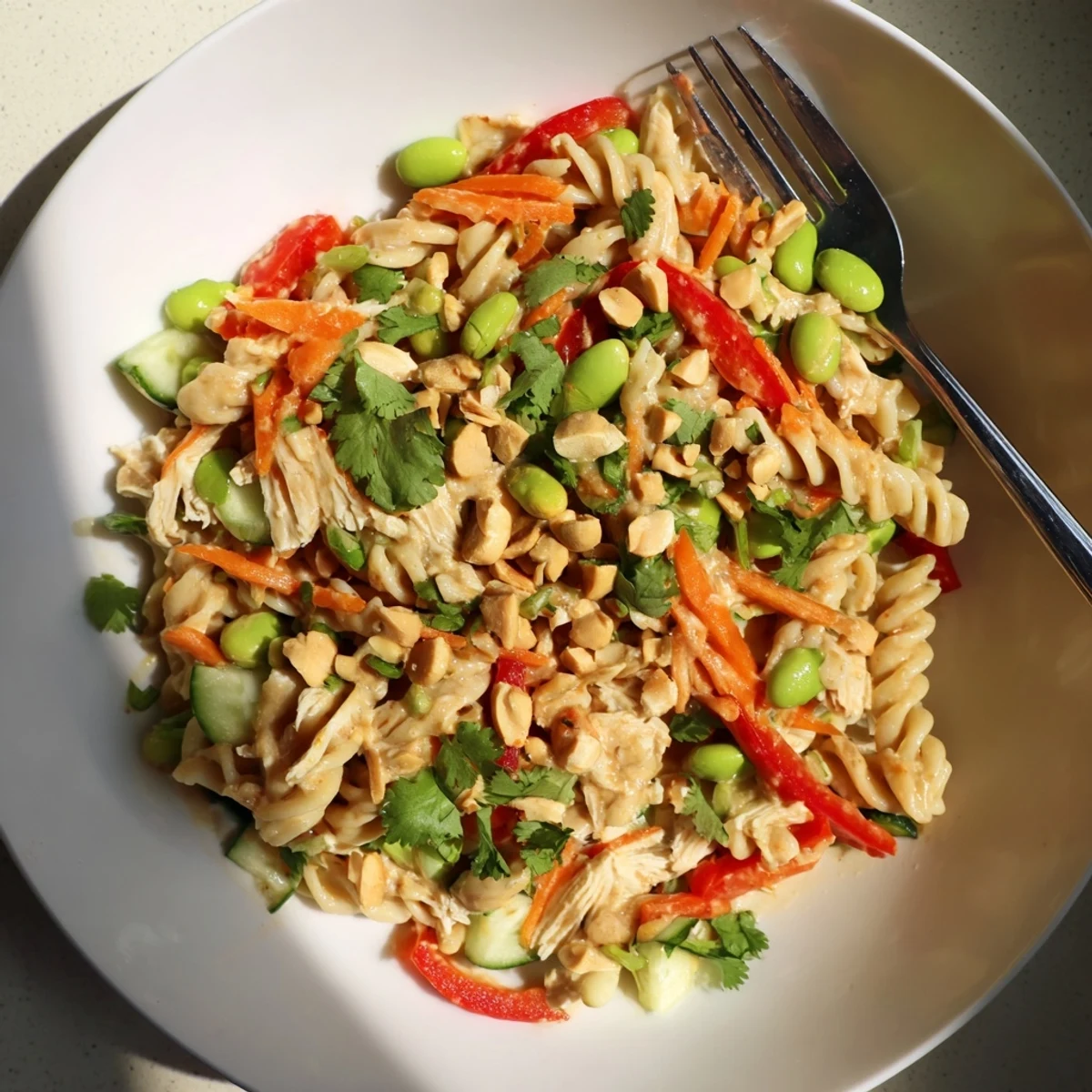
Save This is the kind of recipe that makes you feel like a genius in the kitchen without requiring any real skill, and that is the best kind of cooking there is. Share it with someone who thinks salads are boring and watch them change their mind.
Recipe FAQs
- → Can I make this Thai pasta salad ahead of time?
-
Yes, this salad actually benefits from resting. You can prepare it up to 24 hours in advance and refrigerate it. The peanut dressing continues to flavor the pasta and vegetables as it sits. Give it a good toss before serving and add a splash of water if the dressing has thickened too much.
- → What can I substitute for peanut butter in the dressing?
-
Almond butter or sunflower seed butter work well as peanut-free alternatives. Sunflower seed butter is particularly good for nut-allergy-friendly versions. Keep in mind that each alternative will subtly shift the flavor profile, so you may want to adjust the lime juice or soy sauce to balance the taste.
- → How do I keep the pasta from getting mushy?
-
Cook the pasta until just al dente, then immediately drain and rinse under cold water to halt the cooking process. This firm texture holds up better against the dressing and during refrigeration. Whole wheat or high-protein pasta varieties tend to maintain their structure particularly well in cold salads.
- → Is this dish suitable for meal prep?
-
Absolutely. Portion it into individual containers and it will stay fresh in the refrigerator for up to two days. Store any extra dressing separately and toss it in right before eating for the best consistency. The vegetables retain their crunch and the protein stays tender throughout this window.
- → How can I increase the protein content even further?
-
Add a cup of shelled edamame beyond what the dish already calls for, or toss in a handful of hemp seeds before serving. Using a legume-based pasta like chickpea or lentil penne can significantly boost the protein count. Crumbled tempeh is another excellent addition that blends well with the Thai flavors.
- → What's the best way to adjust the spice level?
-
The crushed red pepper flakes control the heat. Start with half a teaspoon for mild warmth or go up to a full teaspoon for a noticeable kick. You can also add a dab of sriracha or a squeeze of fresh chili paste directly into the dressing for a more complex, layered heat.