
 Save
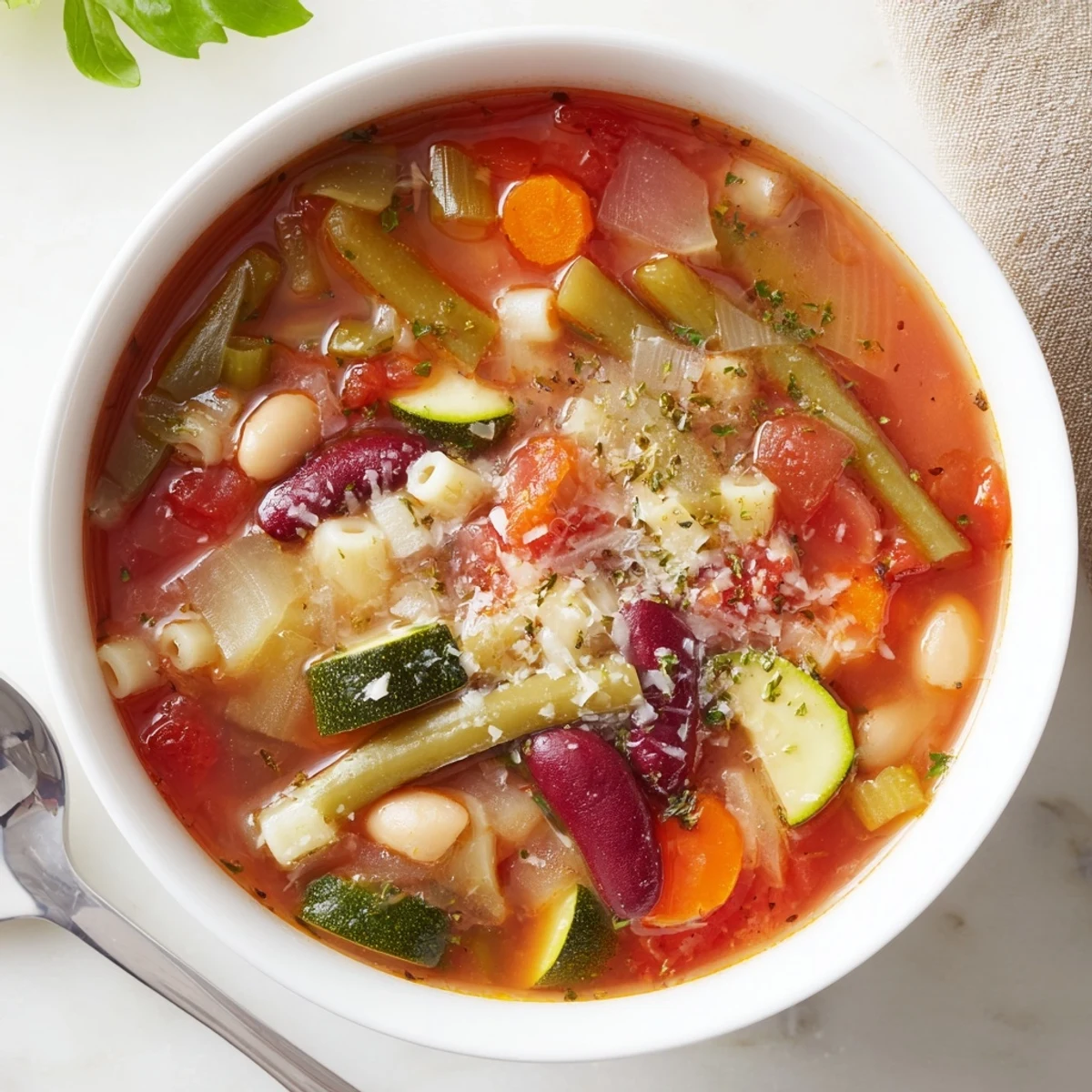
Save Begin by sweating onion, carrot and celery in olive oil until tender, then add garlic, zucchini and diced potato. Stir in chopped green beans and canned tomatoes, pour in vegetable broth and add cannellini and kidney beans with oregano, basil and a bay leaf. Let the pot simmer gently to meld flavors.
Finish by stirring in small pasta until al dente, remove the bay leaf, adjust salt and pepper, and serve hot with chopped parsley and grated Parmesan or a plant-based alternative.
The rain was hammering against the kitchen window and my grandmother stood at the stove, humming along to the radio, stirring a pot that smelled like every good thing Italy ever invented. She never measured anything, just tossed handfuls of vegetables into the pot with the confidence of someone who had done it a thousand times. That pot of minestrone fed our entire family for days, and somehow it tasted better with every reheated bowl. I finally wrote down what I could remember, and after dozens of attempts, this version comes remarkably close to hers.
My friend Marco came over one October evening with a bottle of wine and zero expectations, and I had this soup waiting on the stove. He sat at my kitchen counter, dunking crusty bread into his bowl, and told me it reminded him of his nonnas kitchen in Bologna. We stayed at that table for three hours, refilling our bowls until the pot was empty and the wine was gone.
Ingredients
- Olive oil: Use a good quality extra virgin here because the flavor really carries through the entire soup.
- Onion, carrots, and celery: This classic soffritto trio is the backbone of the broth, so do not rush cooking them down.
- Garlic: Fresh cloves only, minced finely so they melt into the broth without clumping.
- Zucchini: Adds a gentle sweetness and soft texture that balances the heartier vegetables beautifully.
- Potato: Peeled and diced small so it breaks down slightly and thickens the soup naturally.
- Green beans: Cut them into bite sized pieces so every spoonful feels considered and easy to eat.
- Diced tomatoes: One can with all its juices brings acidity and body to the broth.
- Vegetable broth: A rich, good quality broth makes all the difference, so taste yours before you start.
- Cannellini beans: Creamy and mild, they soak up the herb flavors while adding satisfying protein.
- Red kidney beans: Their slightly firmer texture and earthy taste give the soup more depth and color contrast.
- Small pasta: Ditalini is traditional and perfect, but elbow macaroni works just as well in a pinch.
- Dried oregano and basil: These dried herbs infuse the broth slowly, so add them early and let them bloom.
- Bay leaf: Just one adds a subtle savory note that you will miss if you forget it.
- Salt and pepper: Season gradually and taste often because the broth concentrates as it simmers.
- Fresh parsley: Optional but highly recommended for a bright finish on each bowl.
- Parmesan cheese: A generous shower at the end turns a great bowl of soup into something unforgettable.
Instructions
- Build the flavor base:
- Warm the olive oil in a large heavy pot over medium heat and add the onion, carrots, and celery, stirring until they soften and glisten, about five minutes. You want them tender and fragrant but not browned.
- Add the hearty vegetables:
- Stir in the garlic, zucchini, and potato, letting them cook together for about three minutes so the garlic blooms without burning. The kitchen should already smell incredible at this point.
- Bring in the tomatoes and green beans:
- Pour in the diced tomatoes with all their juices and add the chopped green beans, stirring everything together so the flavors start mingling. Let the mixture bubble gently for a minute.
- Create the soup:
- Pour in the vegetable broth and add both cans of drained beans along with the oregano, basil, bay leaf, salt, and pepper, stirring well. Bring everything to a full boil, then lower the heat so the soup simmers peacefully for fifteen minutes.
- Cook the pasta:
- Drop the small pasta directly into the simmering soup and cook for about ten more minutes until the pasta is tender and the vegetables are perfectly soft. Stir occasionally so the pasta does not stick to the bottom.
- Finish and serve:
- Fish out the bay leaf and discard it, then taste the broth and adjust the salt and pepper as needed. Ladle into warm bowls, scatter with fresh parsley, and pass the Parmesan at the table.
 Save
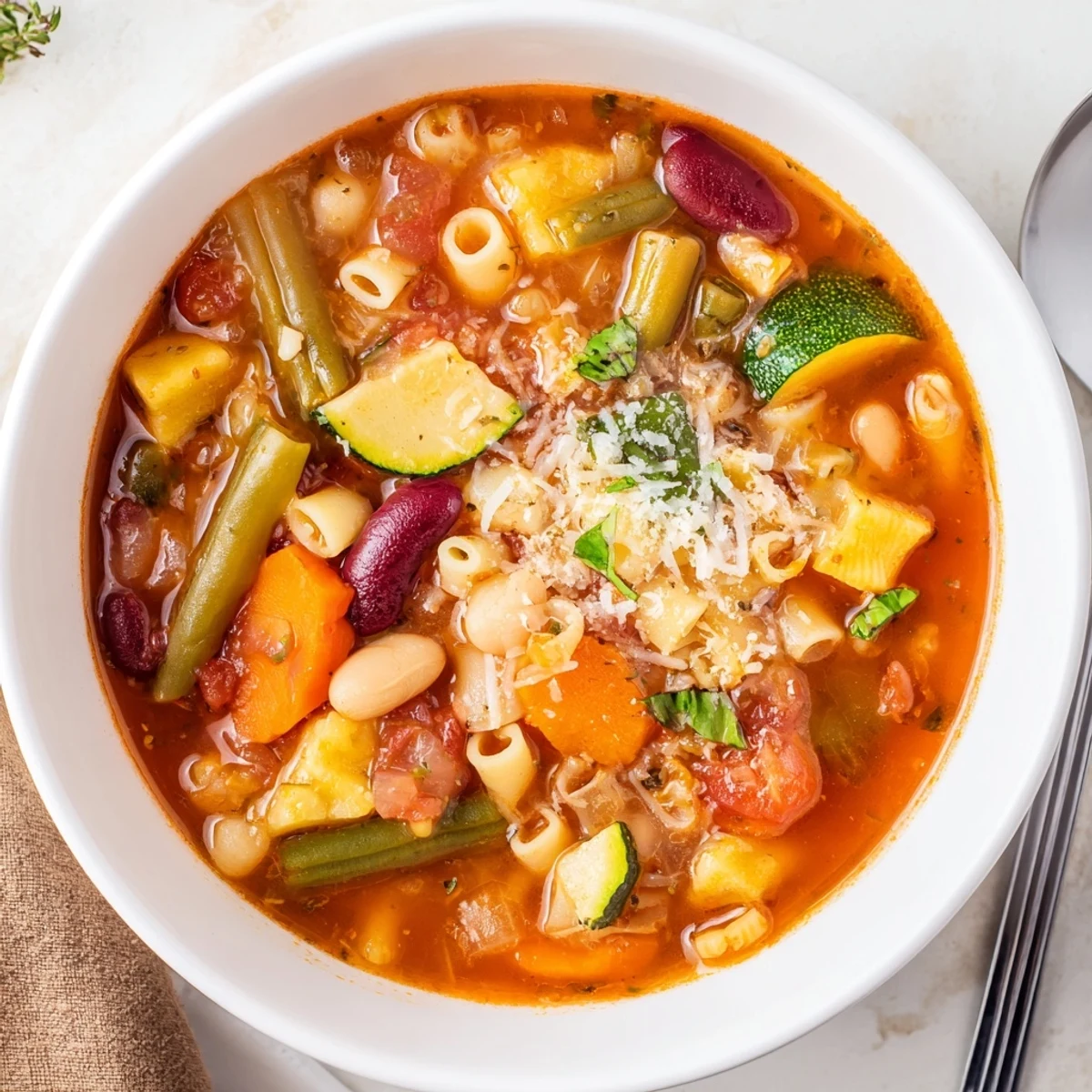
Save One winter I made a massive batch and brought containers of it to my neighbor Helen, who had just come home from the hospital. She called me that evening, voice cracking, saying it was the first thing she had been able to taste in weeks. Food does that sometimes, becomes more than sustenance.
Making It Your Own
The beauty of minestrone is that no two pots ever have to be the same. In spring I toss in fresh peas and asparagus tips, and in late summer handfuls of chopped tomatoes and basil go right in at the end. Use whatever is sitting in your crisper drawer that needs a purpose and the soup will reward you for it.
Tools You Will Need
A large, heavy bottomed soup pot is really the only essential tool here, something that distributes heat evenly and gives the soup room to bubble without overflowing. Beyond that, a sturdy wooden spoon, a sharp knife, a cutting board, and a ladle are all you need to pull this together. Nothing fancy required.
Allergen and Dietary Notes
This recipe is vegetarian as written and easily adapted for vegan or gluten free diets with simple swaps.
- Use gluten free pasta to make it safe for anyone avoiding wheat.
- Skip the Parmesan or use a dairy free alternative to keep the entire pot vegan friendly.
- Always double check your broth and canned bean labels for hidden allergens.
 Save
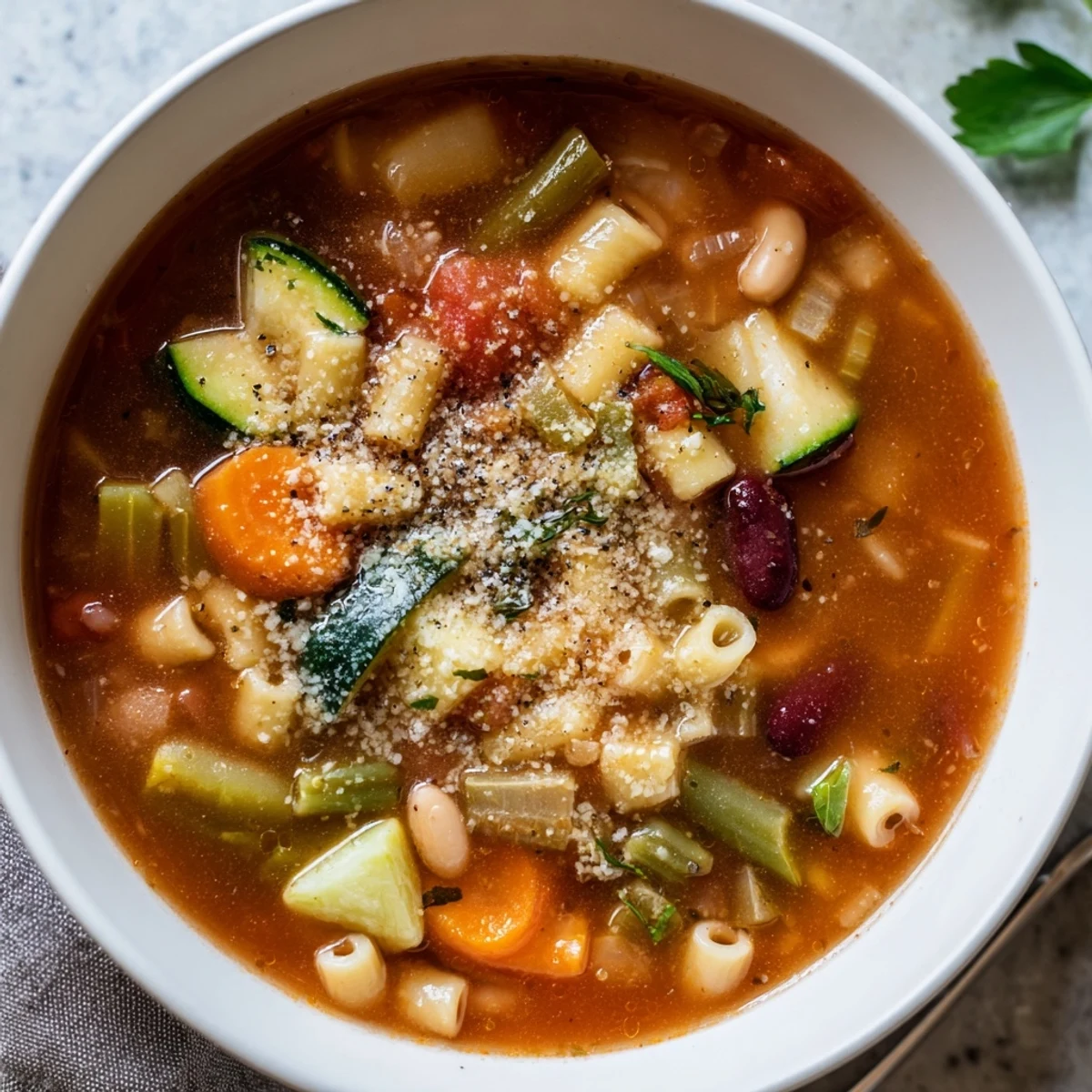
Save Keep this recipe close because you will come back to it again and again, pot after pot, season after season. Some soups are just like that.
Recipe FAQs
- → Can I make this gluten-free?
-
Yes. Swap the small pasta for a certified gluten-free variety or omit the pasta and serve with extra vegetables or cooked grains like rice or quinoa.
- → How do I prevent the pasta from overcooking?
-
Add the pasta toward the end of the simmering time and cook only until al dente. If planning leftovers, slightly undercook the pasta so it doesn’t turn mushy after reheating.
- → What are good seasonal vegetable swaps?
-
Use spinach, kale, thinly sliced cabbage, diced butternut squash, or peas depending on the season. Adjust cook times for tender greens versus root vegetables.
- → Can this be made vegan?
-
Absolutely. Omit the grated Parmesan or use a plant-based alternative and confirm the broth is vegetable-based to keep the dish fully vegan.
- → How should I store leftovers?
-
Cool to room temperature, refrigerate in an airtight container for up to 4 days, or freeze portions for up to 3 months. Reheat gently, adding a splash of broth if needed.
- → How can I boost the flavor?
-
Brown the base vegetables slightly for deeper flavor, use good-quality canned tomatoes, add a pinch of red pepper flakes, or finish with a drizzle of olive oil and fresh herbs to brighten the dish.