
 Save
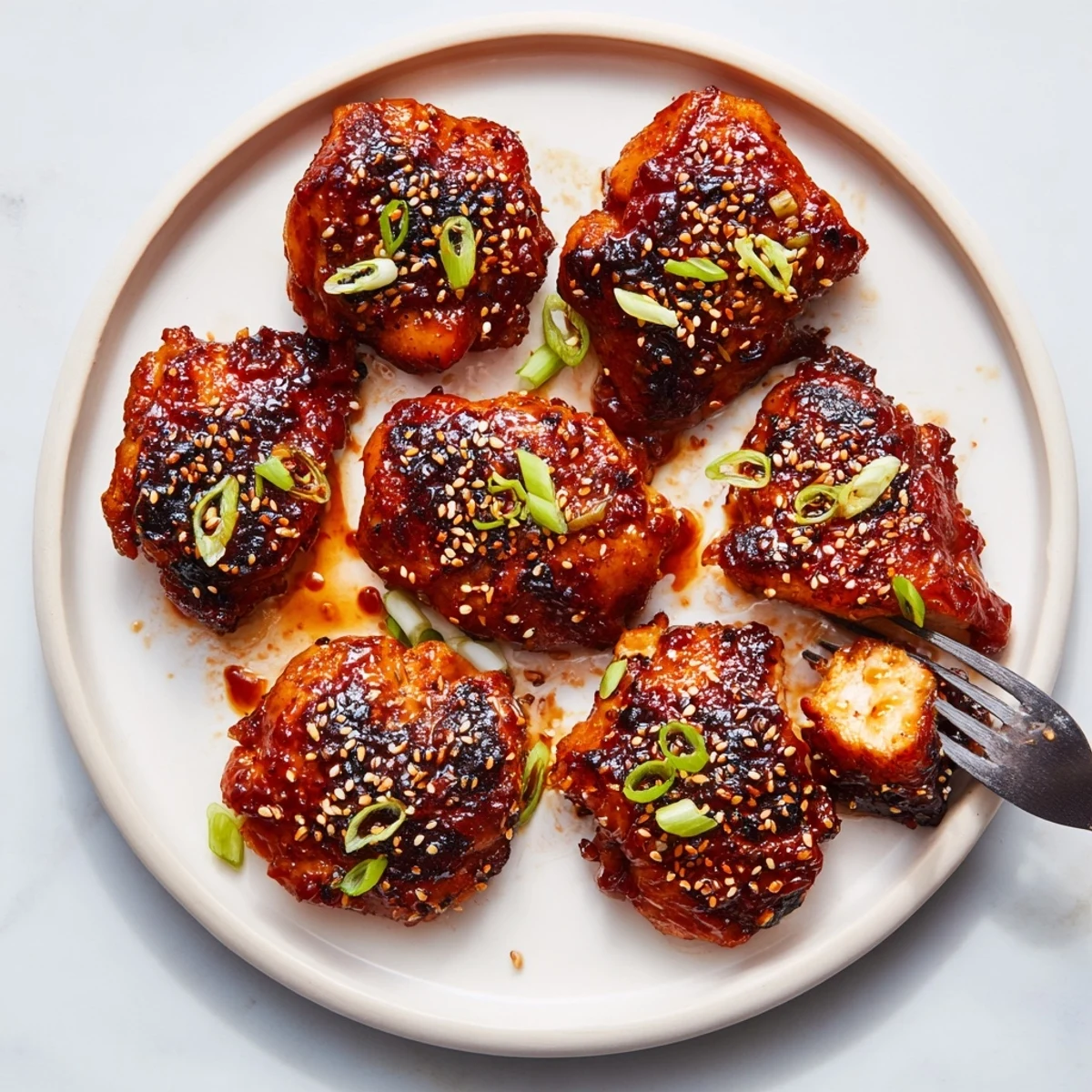
Save These juicy Korean chicken thighs are marinated in soy, honey, sesame oil, garlic, ginger and gochujang, then cooked at high heat—grilled or baked at 425°F—until caramelized and tender. Marinate 30 minutes to 6 hours, cook 20-25 minutes until 165°F, then rest briefly. Finish with sesame seeds and sliced green onions; broil 1-2 minutes for extra char.
The sizzle of chicken hitting a scorching pan on a weeknight in my tiny apartment kitchen taught me more about Korean flavors than any cookbook ever could. My neighbor Seo yeon had slipped a jar of homemade gochujang under my door with a scribbled note: trust me, just add garlic and ginger. That jar sat untouched for two weeks until a rainy Tuesday pushed me toward experimentation, and the smell that filled the hallway brought Seo yeon knocking, asking what sorcery was happening behind my door.
I made this for a backyard gathering last summer when the grill was already hot and people were hovering around hungry. Eight thighs vanished in under ten minutes, and my friend David stood over the platter using tongs to pick up every last remnant of caramelized edges while pretending he was saving some for others.
Ingredients
- Chicken thighs (8 boneless, skinless, about 1.2 kg): Thighs are the forgiving cut here, they stay juicy even if you lose track of time, unlike breasts which turn to cardboard the moment you glance away.
- Soy sauce (1/4 cup): This is your salt and your umami backbone all at once, so reach for a good quality bottle if you have one.
- Honey (2 tablespoons): The sugar content helps create that lacquered, sticky exterior that makes you close your eyes on the first bite.
- Sesame oil (2 tablespoons): Toasted sesame oil specifically, because the raw version will not give you that nutty depth this dish relies on.
- Garlic, minced (3 cloves): Fresh is non negotiable here, the jarred stuff tastes flat against the other bold flavors.
- Fresh ginger, minced (1 tablespoon): Peel it with the edge of a spoon, it is faster than a peeler and wastes far less.
- Gochujang (1 tablespoon): This fermented Korean chili paste brings gentle heat and a subtle sweetness that sriracha simply cannot replicate, though sriracha works in a pinch.
- Rice vinegar (1 tablespoon): Just a splash to brighten everything and keep the sweetness from taking over completely.
- Toasted sesame seeds (1 teaspoon for marinade, plus 1 tablespoon for garnish): Toast them yourself in a dry pan for thirty seconds and you will understand why the pre toasted version tastes like cardboard dust.
- Black pepper (1/2 teaspoon): Freshly cracked makes a noticeable difference when the ingredient list is this short.
- Green onions, finely sliced (2 for marinade, plus 2 for garnish): Slice them on a sharp diagonal so they look as good as they taste scattered over the top.
Instructions
- Build the marinade:
- Whisk together the soy sauce, honey, sesame oil, garlic, ginger, gochujang, rice vinegar, sesame seeds, black pepper, and sliced green onions in a bowl until the honey dissolves completely and everything smells like a Korean street market at dusk.
- Coat the chicken:
- Toss the chicken thighs into a large resealable bag or a bowl and pour the marinade over them, using your hands to massage it into every fold and crevice so nothing is left bare.
- Let time do its work:
- Refrigerate for at least thirty minutes, though if you can wait two to six hours the flavor penetrates so deeply that you will never bother with a shorter marinade again.
- Get your heat ready:
- Preheat your oven to 425 degrees Fahrenheit or fire up a grill to medium high, making sure the grate or baking sheet is hot before the chicken touches it.
- Cook until caramelized:
- Shake off excess marinade and arrange the thighs on a parchment lined sheet or directly on the grill, cooking for twenty to twenty five minutes and flipping halfway through until the internal temperature hits 165 degrees Fahrenheit and the edges turn dark amber.
- Finish and serve:
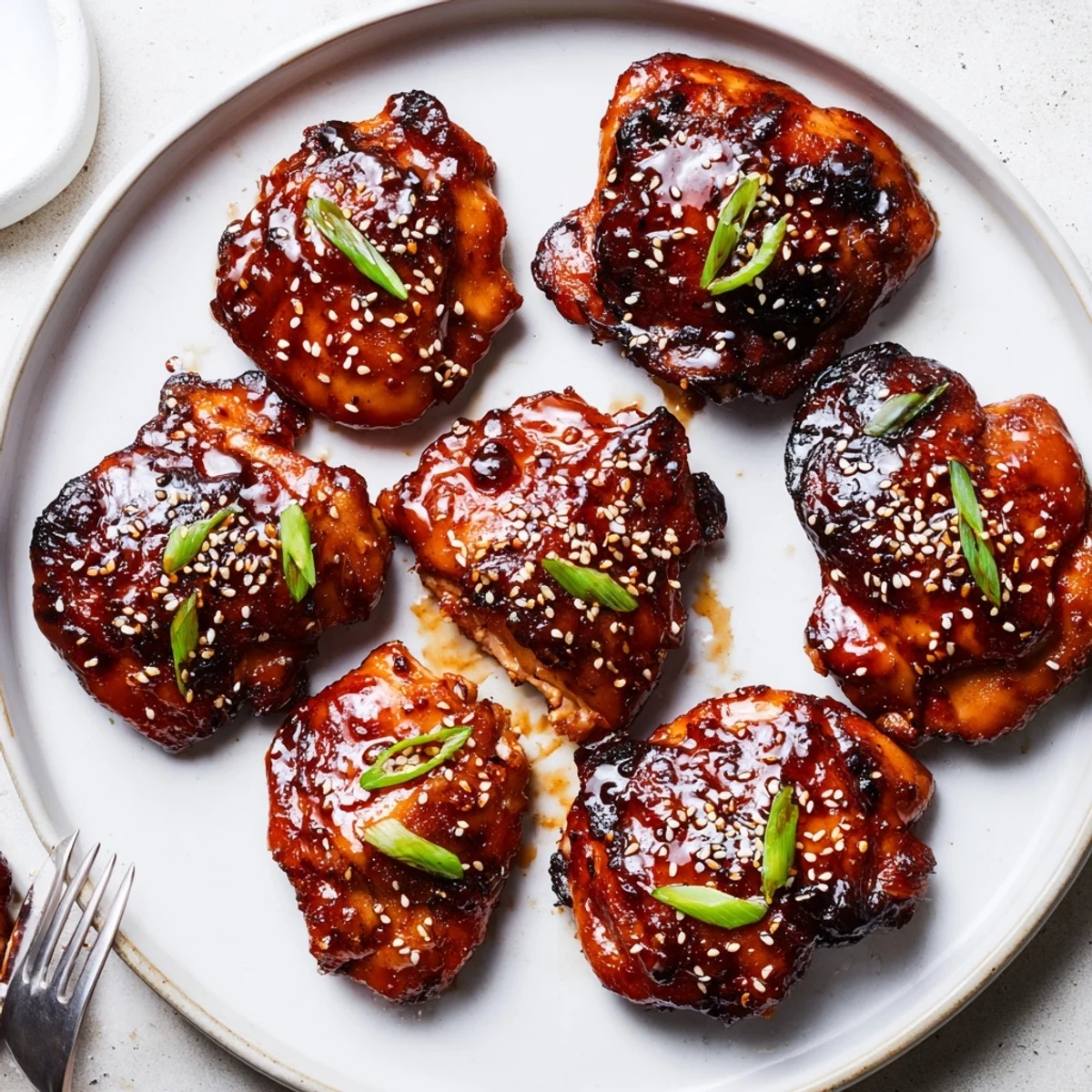
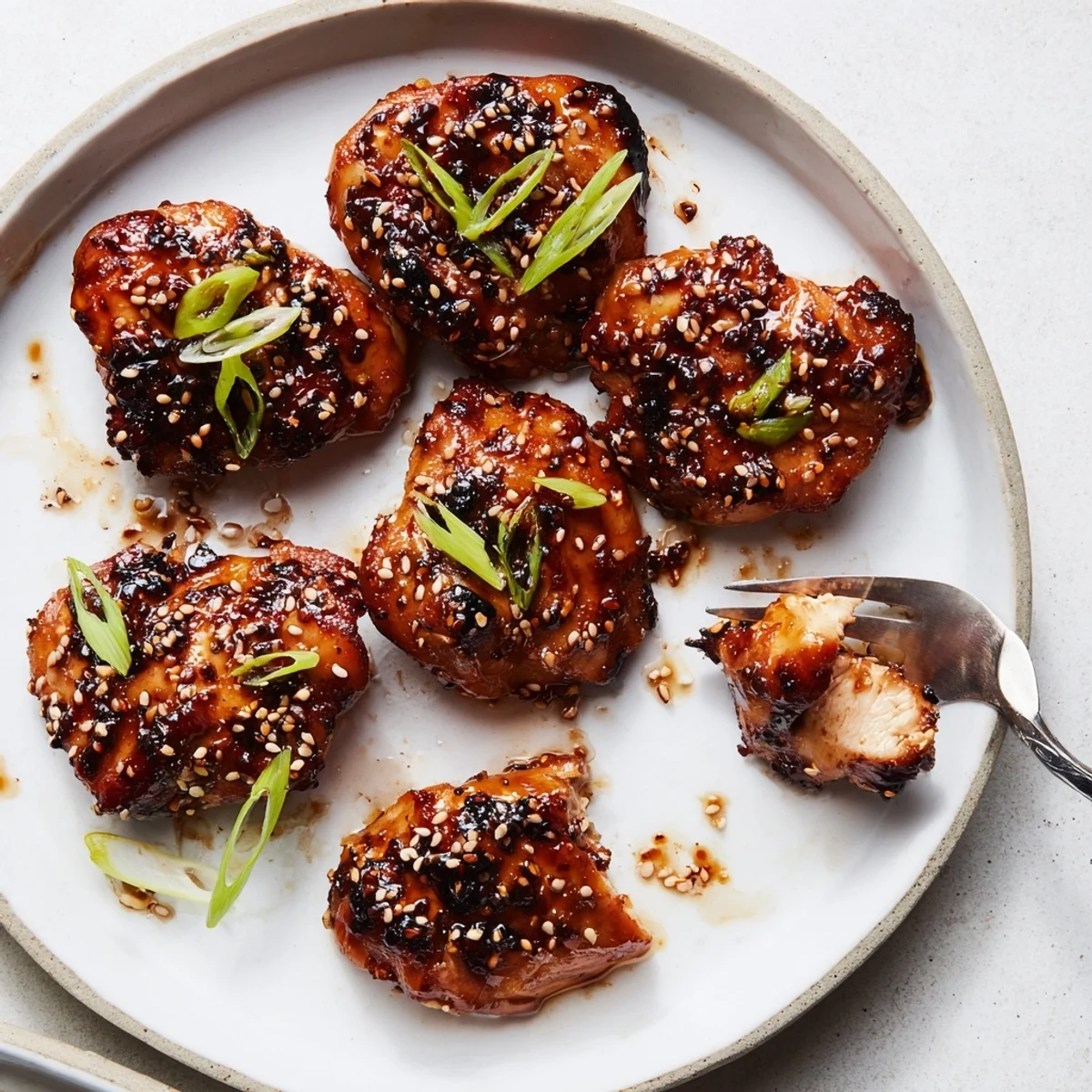
- Transfer to a platter, scatter with extra sesame seeds and fresh green onion slices, and serve immediately while the edges still have that slight chew from caramelization.
 Save
Save The night I served this to my family, my mother in law who never asks for recipes pulled me aside and wrote it down on a napkin in tiny handwriting, and that napkin is still magnetized to her refrigerator door.
What to Serve Alongside
Steamed white rice is the obvious choice and for good reason, it catches every drop of the sticky sauce that pools on the plate. Kimchi on the side brings acidity and funk that cuts through the richness of the chicken thighs perfectly. A simple cucumber salad with sesame dressing and a scattering of salted peanuts also works wonders when you want something crunchy and cold against the warm glaze.
Grill or Oven, Both Work Beautifully
The oven method is foolproof and consistent, which makes it my go-to on busy weeknights when I cannot babysit a grill. That said, live fire adds a smoky dimension that transforms the dish into something you would pay good money for at a restaurant. If you choose the grill, oil the grates well because the honey in the marinade wants to stick, and use tongs with confidence rather than a spatula.
Storage and Reheating Advice
Leftovers keep beautifully in the refrigerator for up to three days, and I have been known to eat them cold straight from the container with my fingers while standing at the open fridge. Reheating works best in a skillet over medium heat rather than the microwave, which turns the edges rubbery.
- Store the chicken and any leftover marinade juices together in an airtight container so nothing dries out.
- Freeze cooked thighs in a single layer on a sheet pan before transferring to a bag so they do not clump together.
- Always check that internal temperature reaches 165 degrees Fahrenheit no matter which cooking method you choose.
 Save
Save This is the kind of recipe that earns a permanent spot in your rotation, not because it is fancy, but because it reliably produces something greater than the sum of its humble parts. Make it once and you will find yourself reaching for gochujang without even thinking about it.
Recipe FAQs
- → Which cut works best?
-
Boneless, skinless chicken thighs give the best balance of juiciness and quick cooking; use bone-in thighs for deeper flavor but allow longer cook time.
- → How long should I marinate the chicken?
-
Marinate at least 30 minutes for surface flavor, or up to 6 hours for deeper penetration. Avoid overnight with high-salt marinades to prevent a cured texture.
- → Can I bake instead of grilling?
-
Yes. Bake at 425°F on a rimmed sheet until caramelized, about 20-25 minutes, turning once. Finish under the broiler for char if desired.
- → How do I get a good caramelized exterior?
-
Pat pieces dry before cooking, cook at high heat, and avoid overcrowding. A brief broil or direct grill contact for the last 1-2 minutes boosts color and caramelization.
- → What can I substitute for gochujang?
-
Use sriracha mixed with a touch of brown sugar and soy sauce for a similar sweet-spicy depth, or a chili bean paste if available.
- → What internal temperature indicates doneness?
-
Cook to an internal temperature of 165°F (74°C) measured at the thickest part. Let the thighs rest a few minutes to redistribute juices before serving.
- → How should leftovers be stored and reheated?
-
Refrigerate in an airtight container up to 3 days. Reheat in a hot oven or on a grill to maintain exterior glaze; avoid microwave reheating to prevent sogginess.