
 Save
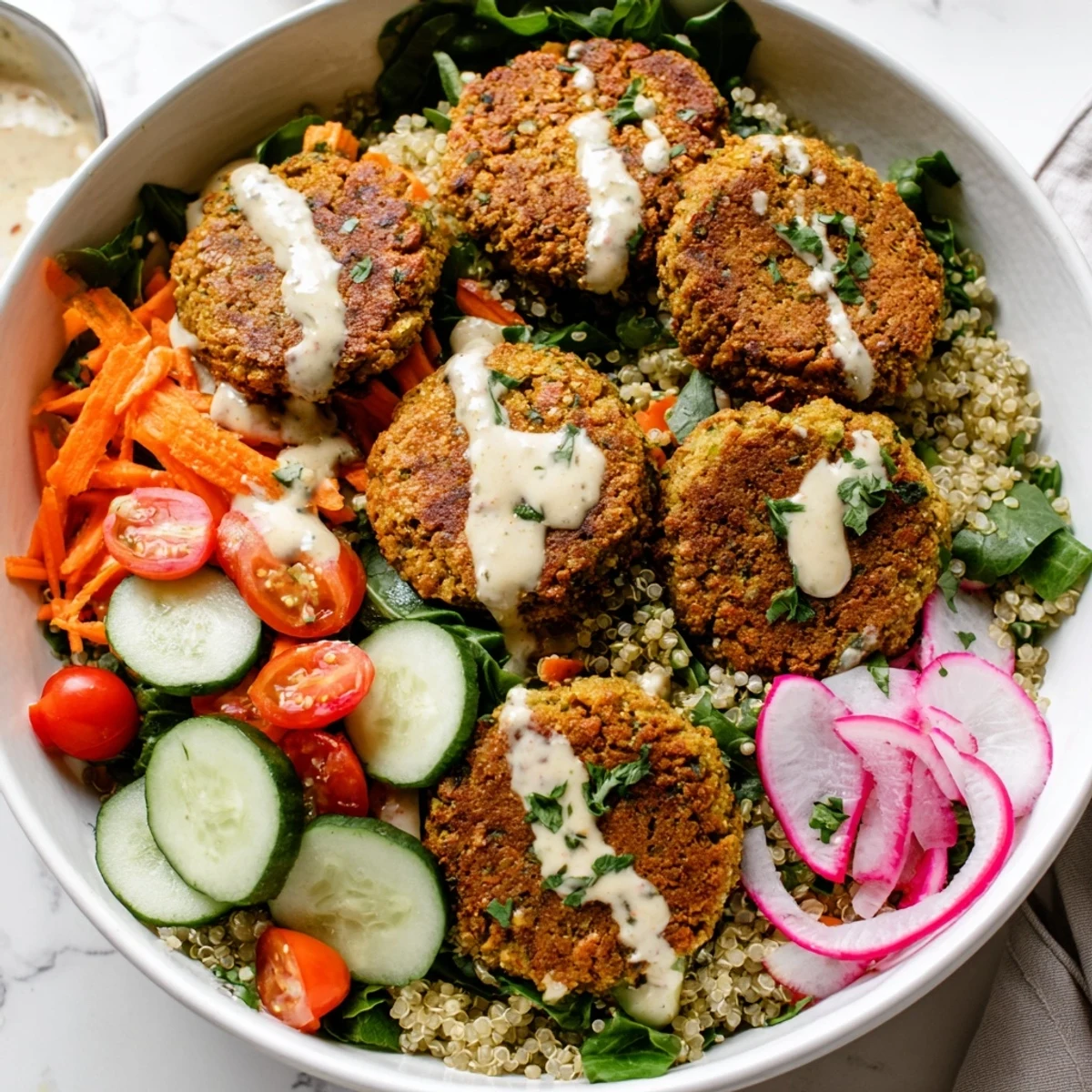
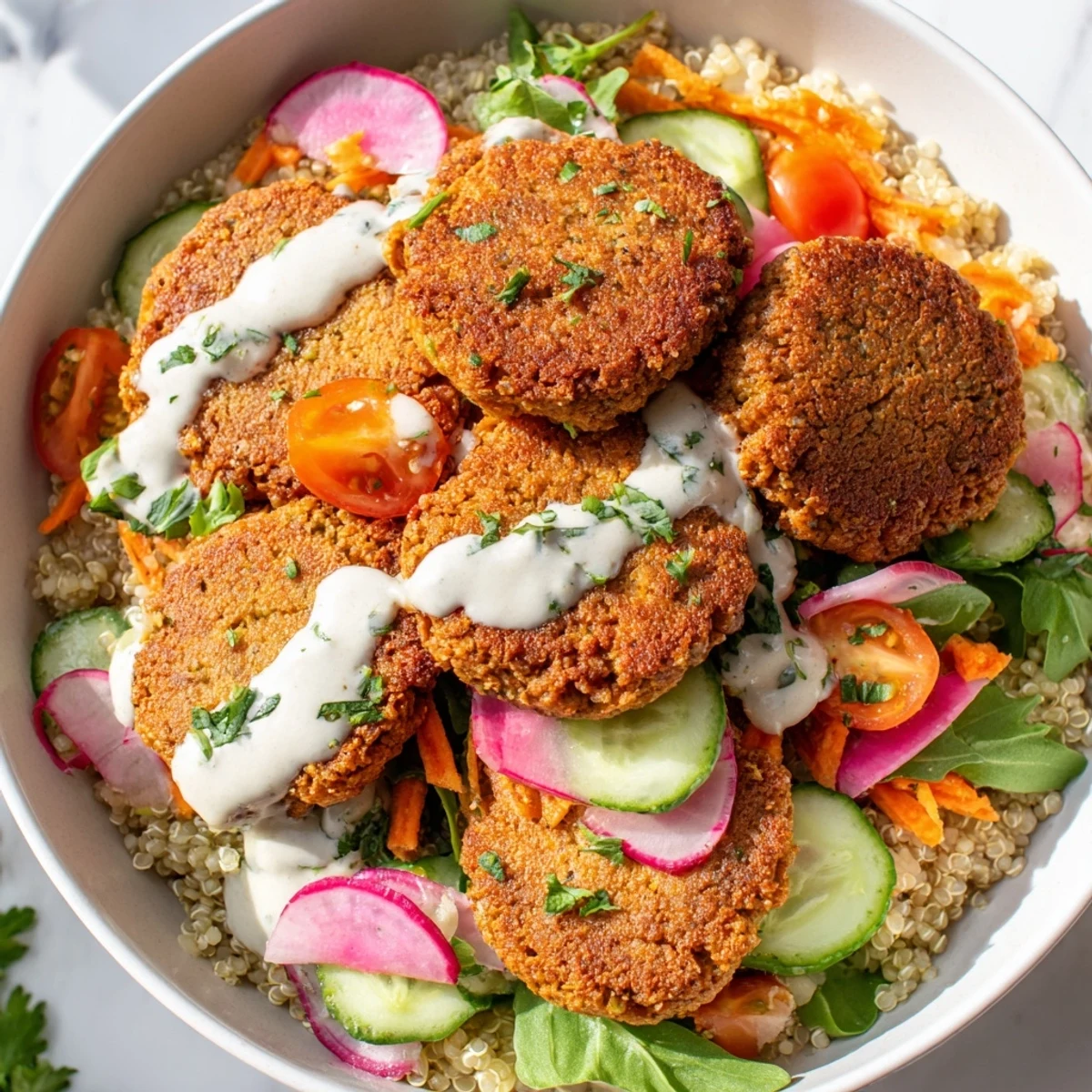
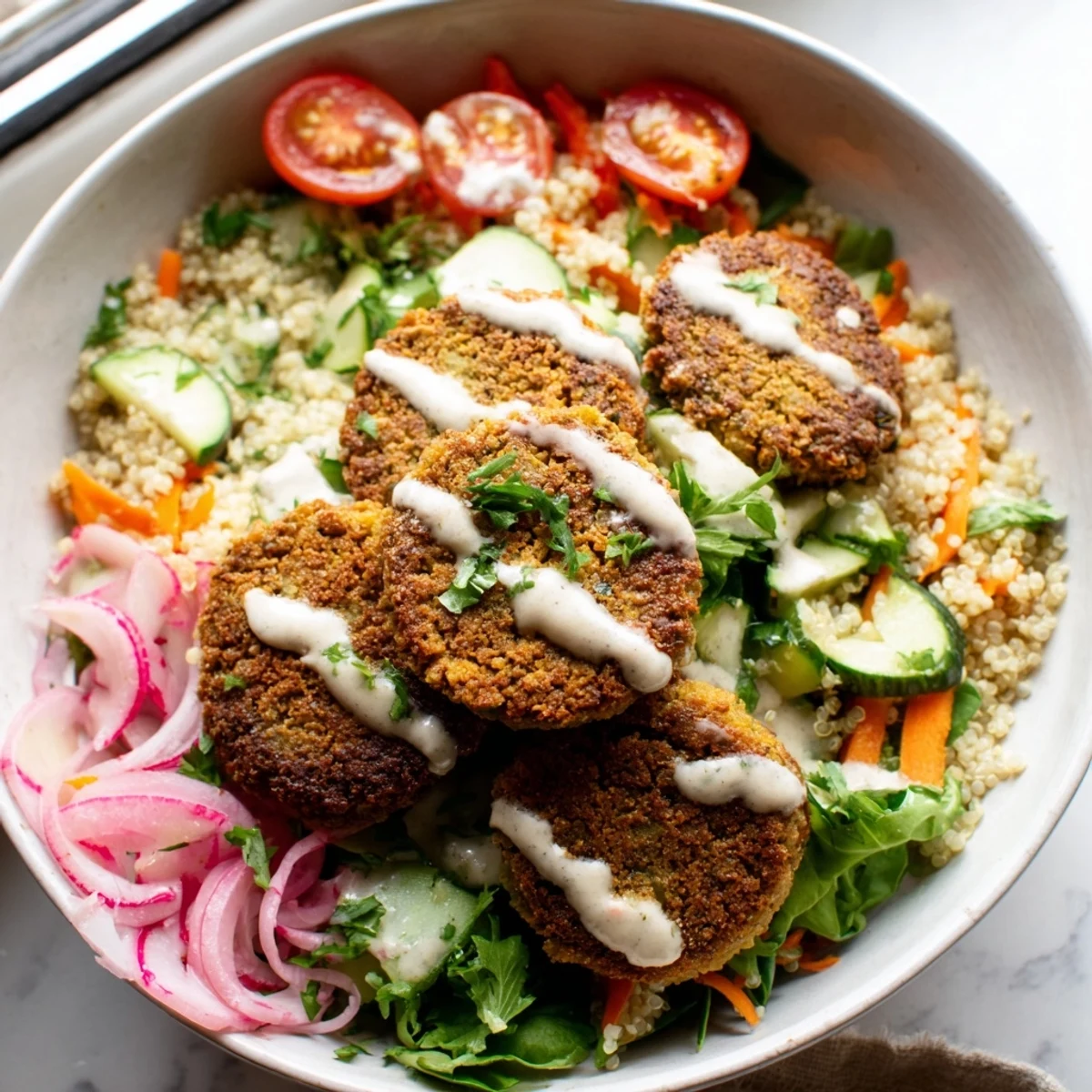
Save This falafel grain bowl brings together golden, pan-fried chickpea falafel with fluffy quinoa or brown rice and a rainbow of fresh vegetables. Seasoned with cumin and coriander, the falafel develops a satisfying crunch while staying tender inside.
Each bowl is layered with mixed greens, juicy cherry tomatoes, cool cucumber, shredded carrot, and tangy pickled turnips. A drizzle of homemade tahini-lemon dressing ties everything together with creamy, garlicky goodness.
Ready in about 50 minutes, this Middle Eastern-inspired dish serves four and works beautifully for meal prep throughout the week.
The sizzle of falafel hitting a hot pan is one of those sounds that instantly makes a kitchen feel alive, and on a rainy Tuesday last March, that sizzle turned a dreary evening into something worth remembering. I had a can of chickpeas sitting in the pantry and a bunch of cilantro wilting in the fridge, and somewhere between those two things, dinner happened. The grain bowl idea came together out of pure necessity, but now it shows up on our table at least twice a month. My roommate walked in, took one bite, and declared it better than the place down the street.
I started making these bowls for batch lunches during a particularly busy stretch at work, packing them in containers and eating cold falafel at my desk without complaint. Then one weekend a friend stopped by unexpectedly and I threw everything together on real plates with extra dressing, and we sat on the kitchen floor eating because the table was covered in mail. That version, warm grains and crispy falafel and crunchy vegetables piled high, was somehow the best thing I had made all month.
Ingredients
- Chickpeas (1 1/2 cups cooked): Canned works beautifully here, just drain and rinse them well because excess liquid makes the falafel fall apart.
- Onion (1/2 small, roughly chopped): Any yellow or white onion adds sweetness and moisture to the falafel mixture.
- Garlic (2 cloves): Raw garlic in the falafel and in the dressing gives the whole bowl a savory backbone.
- Fresh parsley and cilantro (1/4 cup each): These herbs are what make falafel taste like falafel, so do not skip or skimp on them.
- Ground cumin (1 tsp) and coriander (1/2 tsp): Together they create that warm, earthy Middle Eastern flavor profile.
- Baking powder (1/2 tsp): A small amount keeps the falafel light rather than dense.
- Flour (1/4 cup): All purpose flour binds the mixture, or use chickpea flour for a gluten free version that actually tastes better.
- Salt (1/2 tsp) and black pepper (1/4 tsp): Seasoning the falafel mixture well before frying makes all the difference.
- Olive oil (3 tbsp for frying): Just enough to get a golden crust without deep frying.
- Quinoa or brown rice (1 cup uncooked): Quinoa cooks faster and adds protein, but brown rice has a chewier heartiness.
- Water or vegetable broth (2 cups): Broth adds another layer of flavor to the grains.
- Cherry tomatoes (1 cup, halved): Their slight acidity balances the rich tahini dressing.
- Cucumber (1, diced): Cool crunch that contrasts the warm falafel beautifully.
- Mixed greens (2 cups): Arugula is my favorite because its peppery bite plays well with the other flavors.
- Carrot (1 medium, shredded): Adds color and a faint sweetness.
- Red onion (1/4, thinly sliced): Sharpness that cuts through the creamy elements.
- Pickled turnips or radishes (1/4 cup, optional): Tangy and pink and absolutely worth adding if you have them.
- Tahini (3 tbsp): The star of the dressing, use a good quality brand that is smooth and pourable.
- Lemon juice (2 tbsp): Fresh is nonnegotiable here, the bottled stuff tastes flat.
- Extra virgin olive oil (1 tbsp, for dressing): Adds richness to the tahini sauce.
- Water (1 tbsp in dressing): Thins the tahini to a drizzleable consistency, add more as needed.
Instructions
- Cook the grains first:
- Rinse quinoa or brown rice under cold water until it runs clear, then combine with broth or water and salt in a saucepan. Bring it to a boil, reduce the heat, cover, and let it simmer until tender, 15 minutes for quinoa or about 35 for brown rice, then fluff with a fork.
- Build the falafel mixture:
- Add chickpeas, onion, garlic, parsley, cilantro, cumin, coriander, baking powder, flour, salt, and pepper to a food processor and pulse until the texture looks like coarse wet sand. You want it to hold together when squeezed but still see flecks of herb, not a smooth paste.
- Shape and fry the falafel:
- Roll the mixture into small balls or flatten into patties using about 2 tablespoons each, then heat olive oil in a large skillet over medium heat. Cook for 3 to 4 minutes per side until deeply golden and crispy, then transfer to a paper towel lined plate to drain.
- Whisk the tahini dressing:
- In a small bowl, combine tahini, lemon juice, olive oil, water, minced garlic, salt, and pepper, then whisk until smooth and creamy. If it seems too thick, add another splash of water until it drizzles off a spoon easily.
- Assemble the bowls:
- Divide warm grains among four bowls, then arrange greens, tomatoes, cucumber, shredded carrot, red onion, and pickled vegetables on top. Nestle the falafel into each bowl, drizzle generously with dressing, and serve right away while the falafel is still crisp.
 Save
Save One evening I brought a big batch of these bowls to a potluck and watched a woman who said she hated chickpeas go back for seconds without realizing what she was eating. That is the quiet power of good falafel, transformed in a food processor and crisped in a pan until it becomes something entirely new.
Making It Your Own
The beauty of a grain bowl is how forgiving it is, so treat this recipe as a blueprint rather than a rulebook. Swap farro or bulgur for the quinoa if you want something chewier, or add roasted sweet potatoes when the weather turns cold. Crumbled feta, a handful of kalamata olives, or a generous shower of zaatar on top will push the whole thing into territory that feels celebratory rather than weeknight routine.
Gluten Free and Allergen Notes
This recipe contains sesame from the tahini and wheat if you use all purpose flour, but swapping to chickpea flour makes it entirely gluten free and honestly improves the flavor. Always check labels on packaged ingredients like baking powder and broth, since hidden gluten shows up in surprising places. If sesame is a concern, a lemon garlic yogurt dressing works as a substitute, though the bowl loses some of its Middle Eastern character.
Storage and Leftovers
Store each component separately in airtight containers and the falafel will keep its texture for up to three days in the refrigerator. The grains and vegetables last even longer, so you can prep a big batch on Sunday and eat well through Wednesday without getting bored. Reheat the falafel in a dry skillet over medium heat for a few minutes per side to bring back the crust, because microwaving turns them soggy and sad.
- Keep the dressing in its own jar and shake well before using, since tahini separates as it sits.
- Raw vegetables can be prepped and stored together, but wait to halve the tomatoes until the day you eat them.
- Frozen falafel patties can go straight from freezer to pan with an extra minute of cooking time per side.
 Save
Save There is something deeply satisfying about building a bowl from scratch, watching each component come together into a meal that is greater than the sum of its parts. Make it once and it will become part of your regular rotation without even trying.
Recipe FAQs
- → Can I bake the falafel instead of pan-frying?
-
Yes, you can bake falafel at 375°F (190°C) for about 20–25 minutes, flipping halfway through. Brush or spray them lightly with olive oil to help achieve a golden, crispy exterior without the need for pan-frying.
- → What grains work best for this bowl?
-
Quinoa and brown rice are both excellent choices. You can also use farro, bulgur, or couscous depending on your preference and dietary needs. Each grain brings a slightly different texture and flavor to the bowl.
- → How should I store leftovers?
-
Store the components separately in airtight containers in the refrigerator for up to 3 days. Keep the falafel, grains, vegetables, and dressing in separate containers to maintain freshness and prevent sogginess. Reheat falafel in a skillet or oven to restore crispness.
- → Can I make the falafel mixture ahead of time?
-
Absolutely. The falafel mixture can be prepared and shaped into patties or balls up to a day in advance. Store covered in the refrigerator and pan-fry when ready to serve for the best texture and flavor.
- → Is this bowl suitable for vegans?
-
Yes, this falafel grain bowl is naturally vegan as written. It contains no dairy, eggs, or animal products. Just be sure to use a plant-based flour and check that your tahini and other packaged ingredients are free from animal-derived additives.
- → What can I substitute for tahini in the dressing?
-
If you have a sesame allergy or prefer an alternative, you can use a garlic-lemon vinaigrette made with olive oil, lemon juice, Dijon mustard, and a touch of maple syrup. A dairy-free yogurt-based dressing also works well as a creamy substitute.