
 Save
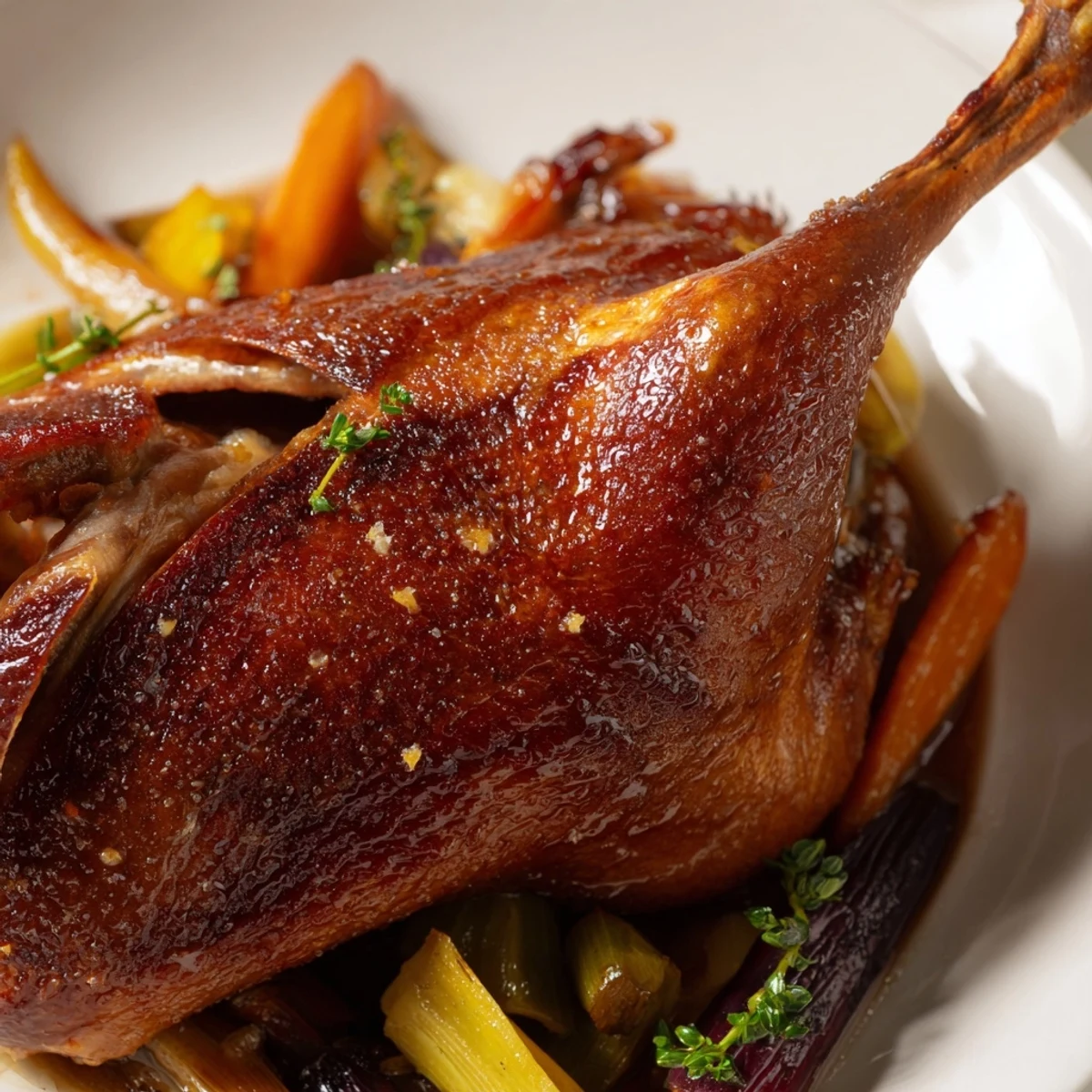
Save Start by patting the duck dry, seasoning inside and out, then sear breast-side down in a heavy pot until the skin is deeply golden to render fat. Remove, saute carrots, parsnips, leeks, onion and garlic, deglaze with white wine, nestle the duck back with stock and herbs, cover and braise gently for 1.5 hours. Finish uncovered at high heat to re-crisp the skin, rest before carving, and serve with braised vegetables and pan juices.
The rain was hammering against the kitchen window the evening I decided to tackle a whole duck for the first time, mostly because the butcher had talked me into it with that quiet confidence of his. The bird sat in my sink looking enormous and slightly intimidating, like a challenge I had not exactly signed up for but was too stubborn to back down from. What came out of the oven two and a half hours later was nothing short of a small miracle, golden crackling skin giving way to meat so tender it barely needed a knife.
I served this to my sister the following weekend and she called it restaurant food, which might be the highest compliment a home cook can receive without suspicion of flattery.
Ingredients
- Whole duck (4 to 5 lbs): Look for a bird with plump breast meat and skin that is intact, as that skin is your ticket to the best texture.
- Kosher salt: Be generous here, duck can handle more seasoning than chicken and it needs every bit.
- Freshly ground black pepper: Freshly cracked makes a noticeable difference when it is the primary seasoning on the skin.
- Carrots: Cut them into chunky pieces so they hold their shape through the long braise without turning to mush.
- Parsnips: They bring a gentle sweetness that balances the richness of the duck beautifully.
- Leeks: Clean them thoroughly, grit hiding between the layers is the fastest way to ruin a silky sauce.
- Yellow onion: Quartered so the pieces caramelize at the edges while softening in the center.
- Celery: An unsung hero that adds aromatic depth without calling attention to itself.
- Garlic cloves: Smashed, not minced, because you want mellow sweetness not aggressive heat.
- Olive oil: Just enough to get the sear started before the duck releases its own magnificent fat.
- Dry white wine: Something you would drink, nothing too sweet, as it forms the backbone of the braising liquid.
- Low sodium chicken stock: Low sodium gives you control over the final seasoning.
- Fresh thyme and rosemary: Woody herbs stand up to the long cook time and perfume everything in the pot.
- Bay leaf: Just one, but it quietly ties all the flavors together.
- Fresh parsley: Entirely optional but a scattering of green at the end makes the dish feel finished rather than merely plated.
Instructions
- Get the oven ready:
- Preheat to 350 degrees Fahrenheit and move a rack to the lower middle position so your Dutch oven sits comfortably without touching the heating element.
- Dry and season the duck:
- Pat every surface of the duck with paper towels until the skin feels almost tacky dry, then season inside and out with salt and pepper, getting into the cavity and around the legs where flavor often gets forgotten.
- Build the sear:
- Heat olive oil in a large Dutch oven over medium high heat until it shimmers, then lay the duck breast side down and listen for that satisfying sizzle that tells you the skin is working its magic.
- Brown all sides:
- Let it sear undisturbed for five to seven minutes until deeply golden, then turn and brown the other side for about five minutes more before transferring the duck to a plate.
- Manage the fat:
- Pour off all but about two tablespoons of the rendered duck fat, saving the rest in a jar because this liquid gold is worth its weight in roasted potatoes later.
- Cook the vegetables:
- Toss in the carrots, parsnips, leeks, onion, celery, and garlic, stirring occasionally for seven to eight minutes until you see color forming on the edges and the kitchen smells impossibly good.
- Deglaze with wine:
- Pour in the white wine and scrape up every last brown bit clinging to the bottom of the pot, letting the liquid reduce by half so the sharp alcohol cooks off and leaves only brightness behind.
- Build the braise:
- Nestle the duck back on top of the vegetables, pour in the chicken stock, tuck in the thyme, rosemary, and bay leaf, then cover with a tight lid.
- Braise low and slow:
- Transfer the covered pot to the oven for one and a half hours, pulling it out halfway through to baste the duck with the surrounding juices so nothing dries out.
- Crisp the skin:
- Remove the lid, crank the oven to 425 degrees Fahrenheit, and roast uncovered for twenty minutes until the skin blisters and turns a deep amber, watching carefully in the last few minutes.
- Rest and serve:
- Let the duck rest for ten minutes before carving, then serve over the braised vegetables with a generous ladle of cooking juices and a shower of parsley if you like.
 Save
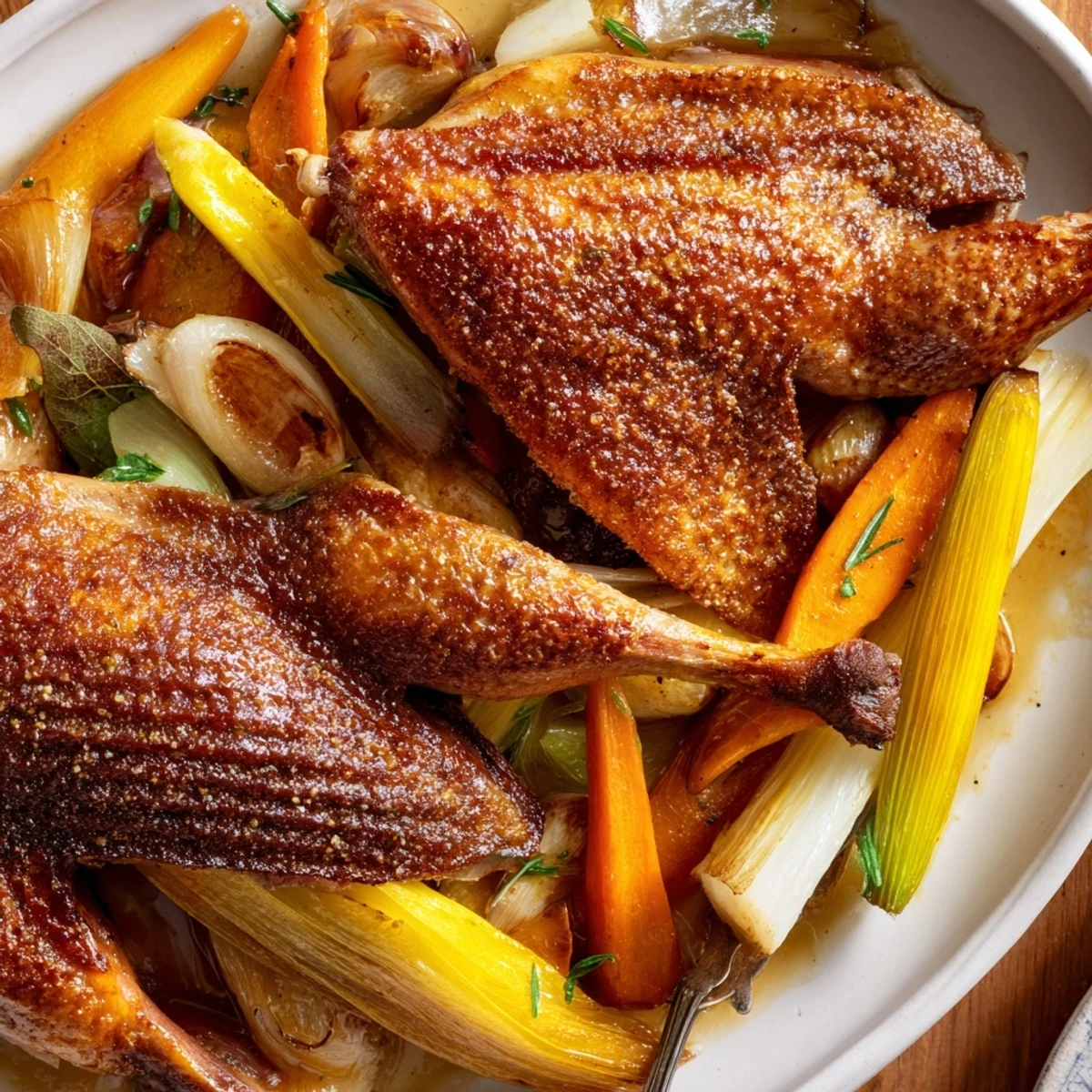
Save The moment this dish transcended dinner and became a tradition was when my neighbor knocked on the door to ask what smelled so incredible, and ended up staying for the entire meal.
Choosing the Right Dutch Oven
A heavy enameled cast iron pot is ideal because it holds heat evenly and the tight fitting lid traps moisture like nothing else I have used. If the lid rattles during braising, weight it down with a foil wrapped brick or the whole exercise becomes an exercise in frustration.
Wine Pairing Thoughts
A Loire Valley Chenin Blanc has the acidity and subtle fruit to stand up to the richness without competing for attention. A light Pinot Noir works equally well if red wine feels more like the mood of the evening.
Making It Your Own
The vegetables are forgiving so swap in turnips, potatoes, or even chunks of butternut squash depending on what the season offers.
- Parboiling the duck for three minutes before roasting pulls extra fat from under the skin and creates an even crisper finish.
- Leftover braising liquid strained and reduced makes an extraordinary base for soup the next day.
- Always double check your chicken stock labels if cooking for someone with gluten sensitivities.
 Save
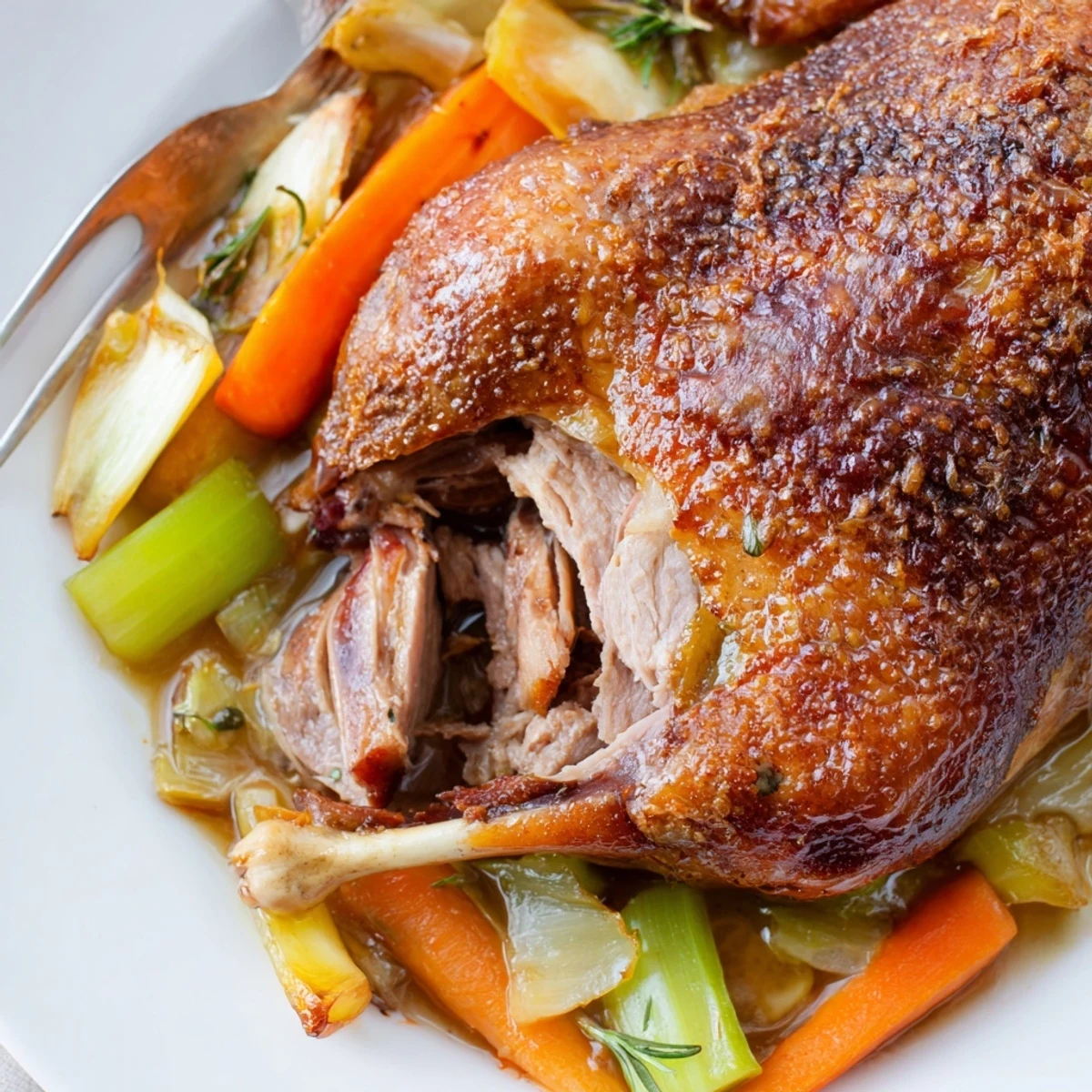
Save This is the kind of dish that reminds you why cooking at home matters, not because it is easy but because the rewards are worth every careful minute.