
 Save
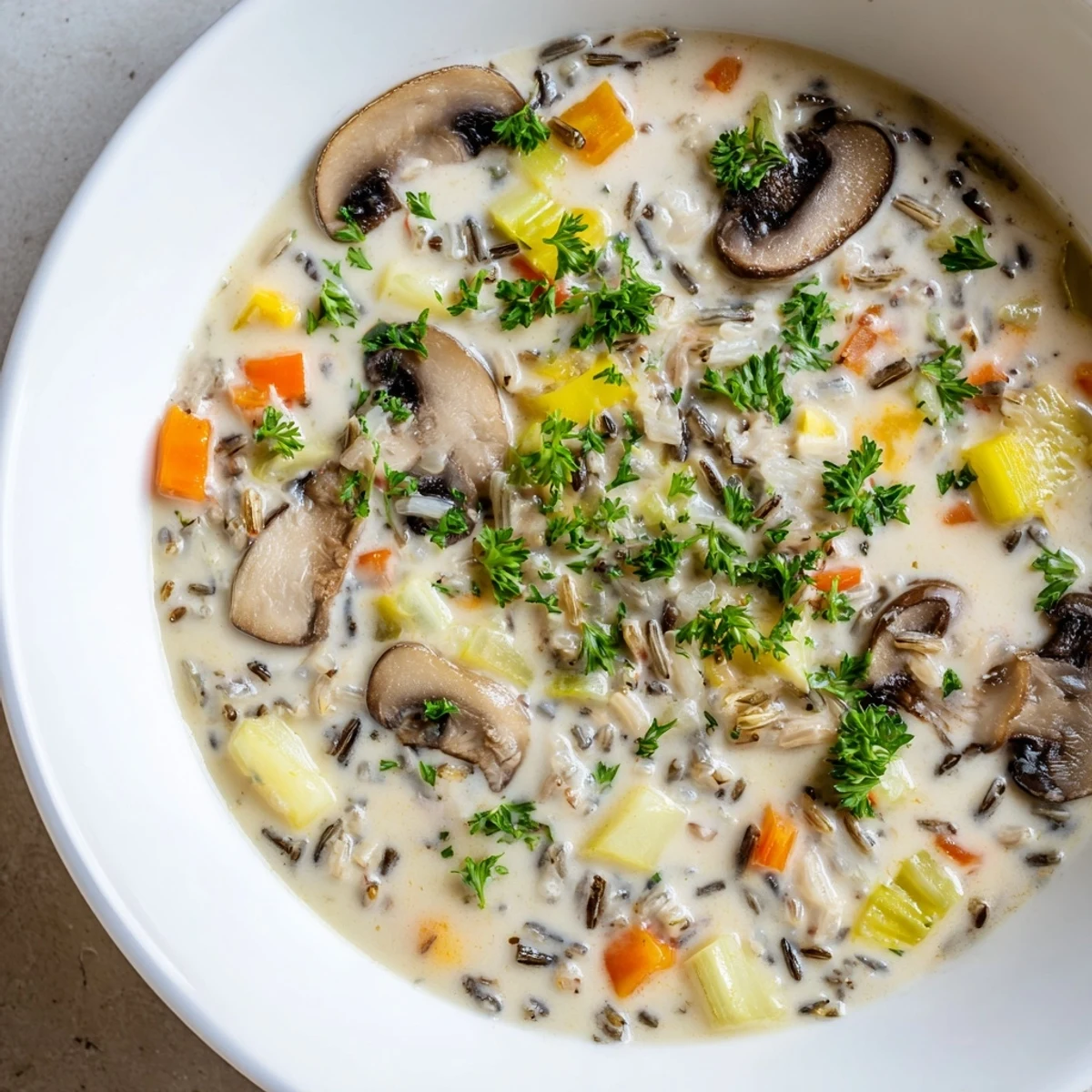
Save This dish brings together earthy mushrooms and nutty wild rice in a rich, creamy base. Sautéed vegetables provide depth and sweetness, while a mix of herbs enhances aroma and flavor. Slow simmering allows the rice to soften perfectly, resulting in a thick and comforting bowl ideal for chilly days. Nutritious and filling, it pairs well with crusty bread and can easily be adapted to plant-based options by swapping dairy elements with non-dairy alternatives. Garnished with fresh parsley, it offers a satisfying and soothing experience.
I discovered this soup on a grey November afternoon when my sister called asking what to make for dinner. She had mushrooms going soft in her crisper drawer and mentioned having wild rice in the pantry. Within an hour, I was talking her through building this velvety masterpiece, and by the time she tasted it, she texted me a photo of the empty bowl with just a heart emoji. That's when I knew this recipe belonged in my regular rotation. There's something about the way earthy mushrooms and nutty wild rice come together in cream that feels both rustic and refined, like you're making something special without any fuss.
I made this for my book club last winter, and it became the thing people asked about more than the actual book discussion. One friend went back for thirds and kept saying she couldn't figure out what made it taste like autumn in a bowl. It was the sage, the thyme, and those mushrooms that had been caramelized just enough to concentrate all their umami goodness. I've learned that soup is one of those dishes where a little patience during the vegetable sautéing stage pays dividends in flavor.
Ingredients
- Olive oil (2 tablespoons): This is your flavor foundation, so don't skip it or use a weak oil. Good olive oil carries the scent of the sauté into every spoonful and helps extract the sweetness from your vegetables.
- Yellow onion, finely chopped (1 medium): The sweetness from slow cooking the onion becomes almost caramel-like. Mince it smaller rather than larger so it melts into the background, creating creaminess naturally.
- Carrots and celery, diced (2 medium carrots and 2 stalks): These are your flavor triangle base. The softer you let them get in step one, the more their essence dissolves into the broth, thickening it beautifully on its own.
- Garlic cloves, minced (3 cloves): Add it early enough that it doesn't burn, late enough that it stays pungent. Thirty seconds is the magic window.
- Mixed fresh mushrooms, sliced (500 g or 1 lb): This is where the magic lives. Use a blend of cremini, button, and shiitake if you can. The mix gives you depth. Don't crowd the pan when sautéing them, or they'll steam instead of brown.
- Wild rice, rinsed (120 g or 2/3 cup): Rinsing removes debris and some starch, helping the rice absorb broth more evenly. Wild rice takes longer than you think, so don't skip the full 35 minutes.
- Vegetable broth (1.2 liters or 5 cups): Low-sodium is key because you're adding cream and will be reducing the liquid slightly. Your seasoning control depends on starting with a clean canvas.
- Whole milk and heavy cream (1 cup milk and 1/2 cup cream): Whole milk alone tastes thin. Heavy cream alone tastes heavy. Together they're silky. If you're plant-based, use full-fat coconut cream with unsweetened oat milk for the closest match.
- Dried thyme and sage (1 teaspoon each): These are the soul of autumn in this soup. Crush them slightly between your fingers before adding to wake them up. Fresh herbs are beautiful at the end, but dried herbs need time to bloom.
- Black pepper and salt (1/2 teaspoon pepper, 1 teaspoon salt): Taste as you go. Different broths have different sodium levels, and you might need more. Salt at the end, too.
- All-purpose flour (2 tablespoons): This is your thickener. Coating it in the hot oil first (step 4) cooks off the raw flour taste and helps it integrate without lumps. If you need gluten-free, cornstarch works just as well.
- Fresh parsley, chopped (2 tablespoons for garnish): A small handful of bright green at the end breaks the richness and makes the soup feel finished. It's not optional if you want the dish to look like someone cared.
Instructions
- Build your flavor base:
- Pour the olive oil into your largest pot and let it shimmer over medium heat. Add the onion, carrots, and celery together. This is the moment where you're not rushing. Let them soften and turn slightly golden at the edges—about 5 minutes. You'll notice the pot smells sweeter. That's vegetables releasing their natural sugars. Stir occasionally so nothing sticks.
- Wake up the garlic:
- When the vegetables are soft, add your minced garlic. Here's the thing about garlic in soup: it needs just enough time to stop being raw and sharp, which is about 30 seconds, maybe 45 if you like it mellower. Any longer and it tastes burnt, even if it doesn't look it. You'll smell the moment it's done—that fragrant, slightly sweet smell of cooked garlic fills the kitchen.
- Coax the mushrooms:
- This step takes 8 to 10 minutes, and it's the most important one. Add your sliced mushrooms and let them sit. Don't stir constantly or they'll steam in their own moisture instead of browning. After a minute or two, stir them. You're looking for them to release liquid first, then for that liquid to evaporate and the mushrooms to turn golden at the edges. You'll hear them sizzle differently when they're truly caramelizing. That's when they taste earthy and rich instead of like cooked vegetables.
- Create a paste:
- Sprinkle the flour over the hot vegetables and mushrooms and stir until everything's coated in a light, paste-like coating. Cook it like this for 1 minute—you're cooking off the raw flour taste. The mixture should smell a bit nutty now, not raw and wheaty.
- Build the broth:
- Pour in your vegetable broth and use a wooden spoon to scrape up any browned bits stuck to the bottom of the pot. Those brown bits are flavor gold. Add the rinsed wild rice, thyme, sage, salt, and pepper. Stir until the rice is distributed evenly. The pot should smell herbal and warm now.
- Simmer the rice low and slow:
- Bring the soup to a rolling boil—you'll see big bubbles breaking the surface. Then reduce the heat to low, cover the pot, and let it simmer for 35 minutes. The rice will plump up and get tender. Don't peek more than once or twice because you'll lose steam and heat. You're not doing anything here but letting time and moisture do their work.
- Cream it to perfection:
- After 35 minutes, the rice should be tender and the broth should taste rich from all the vegetable and mushroom solids. Stir in the milk and cream. This is the moment the soup transforms into something luxurious. Don't boil it now—simmer uncovered for 5 to 10 minutes, stirring occasionally. You're not looking for it to thicken a lot, just enough that a spoon drawn through it leaves a slight trail. The soup will continue to thicken as it cools.
- Taste and adjust:
- Dip a clean spoon in and taste. This is your moment to add a pinch more salt or pepper or even a squeeze of lemon if it needs brightness. Trust your instincts here.
- Serve with intention:
- Ladle into bowls and top with fresh parsley if you have it. Serve immediately while it's steaming and creamy.
 Save
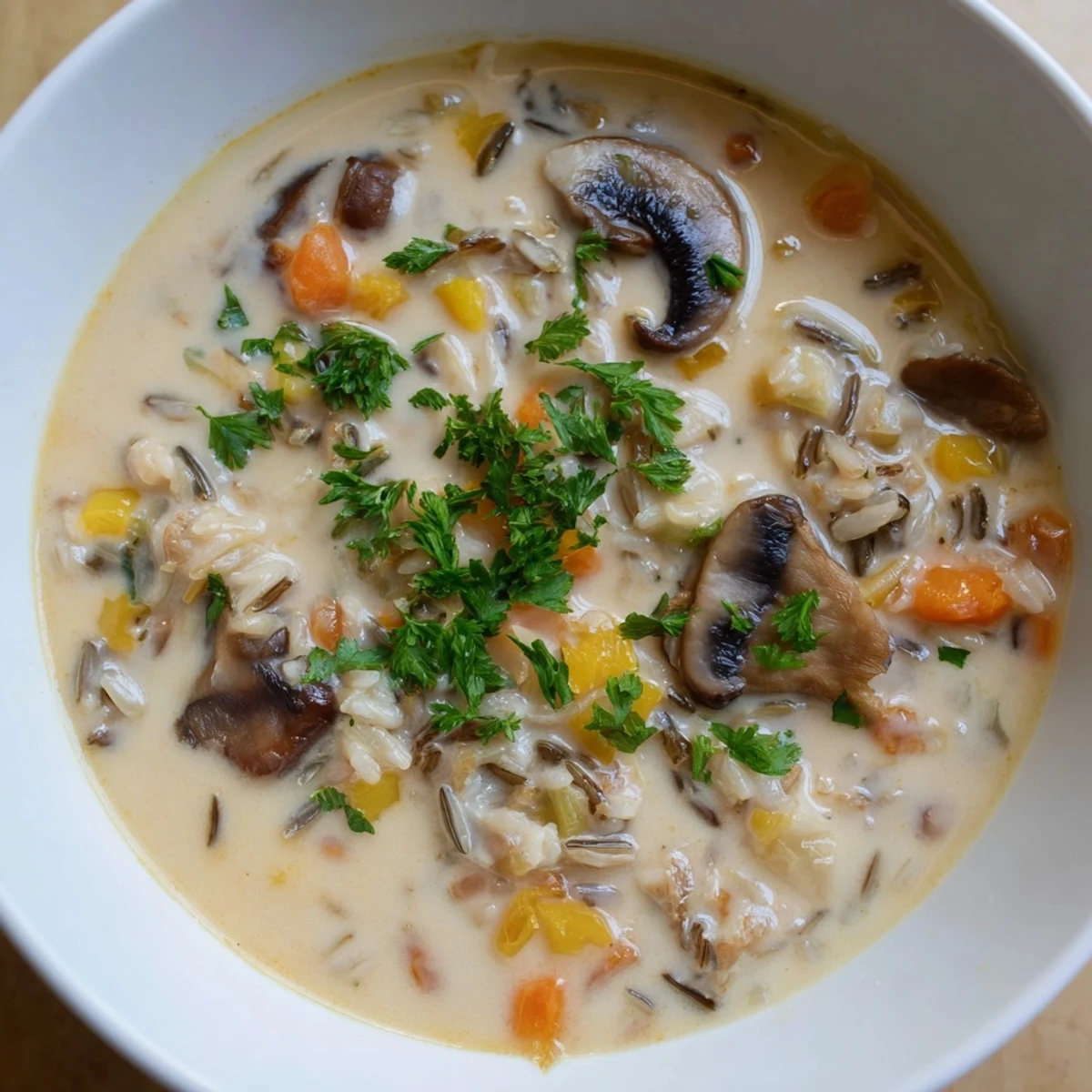
Save This soup became the thing I make when someone I care about is going through something hard. There's something about bringing a pot of creamy, mushroom-studded warmth to someone's door that says what words can't quite reach. It's nourishing without being heavy, special without being complicated, and it genuinely tastes better the next day.
Why This Soup Deserves Your Time
Some soups exist as quick weeknight solutions, and that's fine. This soup exists as a small celebration of good ingredients and patient cooking. It's the kind of recipe where you realize that taking an extra few minutes to let mushrooms brown or letting rice simmer fully actually makes a measurable difference in how delicious it becomes. There's comfort in that slowness. In a world of shortcuts, this soup reminds you that sometimes the best things in life are worth not rushing.
Adapting This Soup to What You Have
The frame of this recipe is flexible even though the foundations aren't. You can swap your mushroom varieties based on what looks good at the market. You can use a wild rice blend if straight wild rice is hard to find, though you might need to adjust the cooking time down slightly. You can substitute the heavy cream with full-fat coconut cream if you need it dairy-free, and the soup will taste different but still beautiful. What you shouldn't skip is the initial vegetable sauté, the mushroom browning, and the full rice cooking time. Those are the non-negotiables that make this soup taste like itself.
Serving Suggestions and Second Day Glory
Serve this with something that gives you texture—a piece of crusty bread for dunking, or a grilled cheese sandwich on the side. The soup is creamy and soft, so that contrast is magical. One thing I love about making this soup is that it genuinely improves after a day in the refrigerator. The flavors meld together, the rice absorbs more of the broth, and it becomes even creamier as the solids break down. When you reheat it, add a splash of fresh broth or milk if it's thickened too much. It freezes well too, though if you freeze it, add the cream when you reheat rather than before freezing.
- Pair it with a simple green salad dressed with lemon vinaigrette to cut the richness
- Top it with crispy sage leaves fried in butter for crunch and extra herbaceousness
- A sprinkle of toasted breadcrumbs right before serving adds texture in the best way
 Save
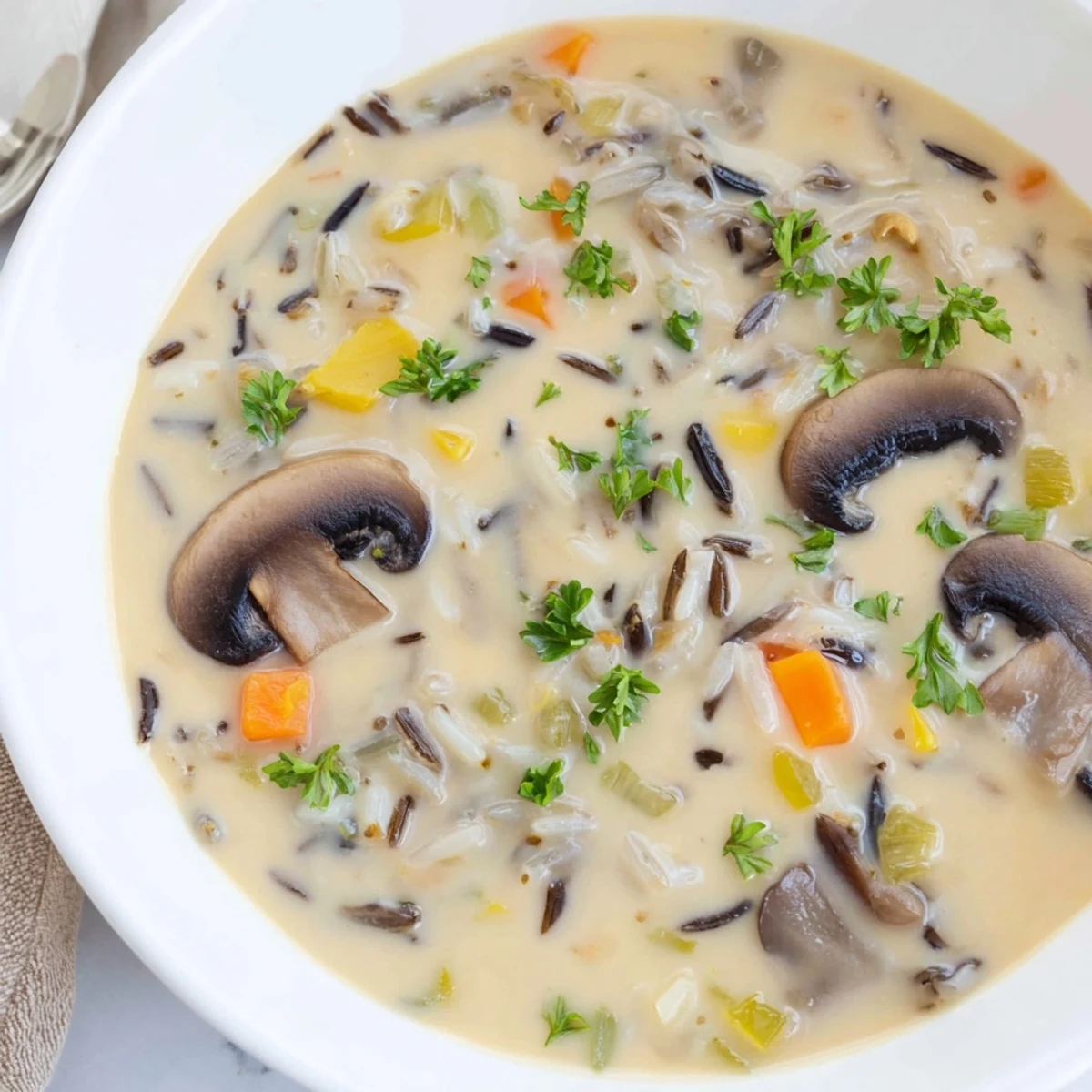
Save This is the soup I return to again and again. It never disappoints, and it always tastes like someone who loves food made it with care.
Recipe FAQs
- → Which types of mushrooms work best for this dish?
-
A mix of cremini, button, and shiitake mushrooms provides a rich, earthy depth and varied texture.
- → Can this be made vegan without sacrificing creaminess?
-
Yes, using plant-based milk and coconut cream maintains the creamy texture while keeping it vegan.
- → How long should the wild rice simmer for optimal tenderness?
-
Simmer the wild rice for about 35 minutes until it becomes tender but still holds its shape.
- → What is the purpose of adding flour in the cooking process?
-
Flour acts as a thickener, helping to achieve a smooth and velvety consistency.
- → Are there any suggested garnishes for enhanced flavor?
-
Chopped fresh parsley adds a fresh, herbal touch that complements the creamy base.