
 Save
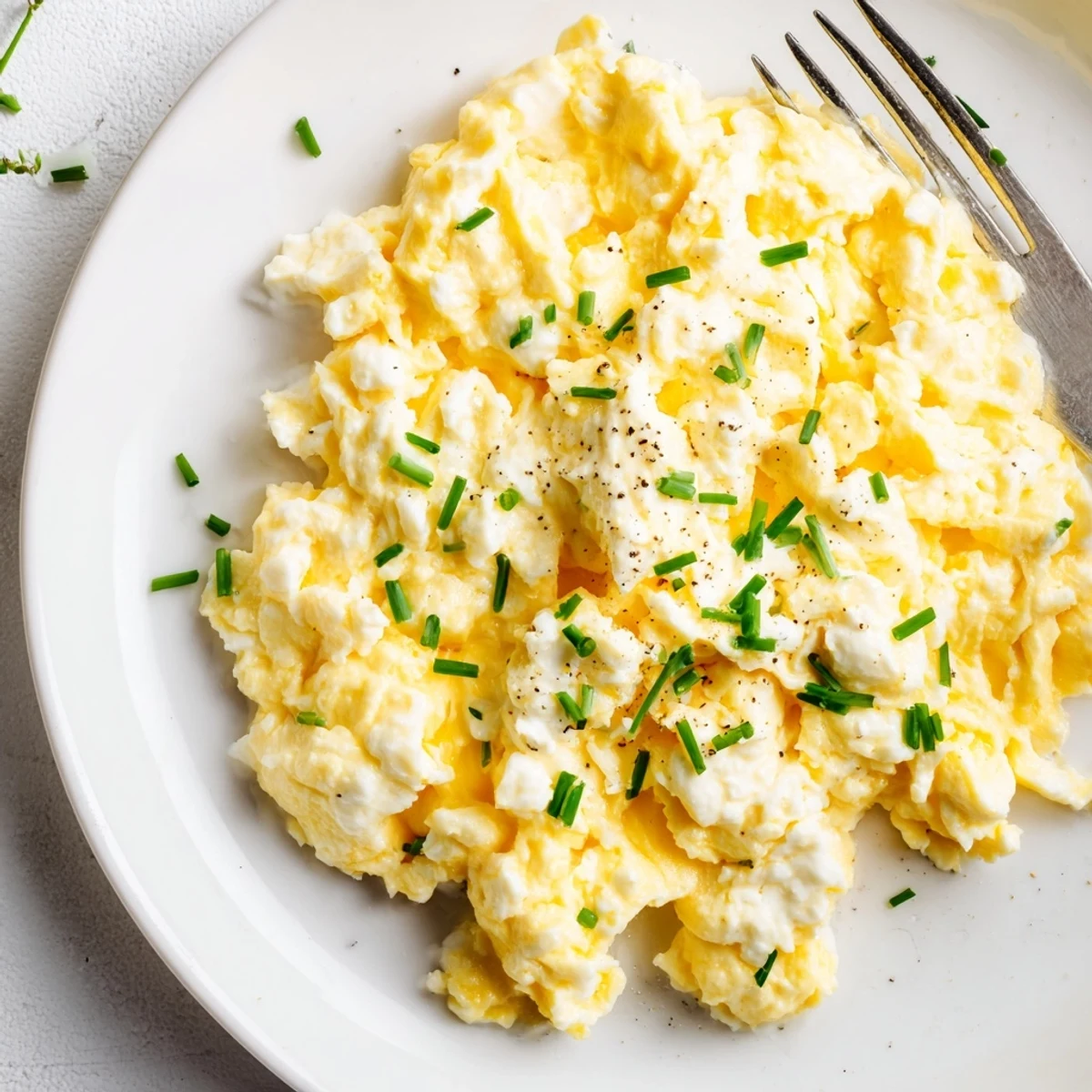
Save Whisk eggs with salt and pepper, fold in cottage cheese and half the chives for moisture and tang. Cook slowly in butter over medium-low heat, stirring gently until custardy curds form, then remove while still slightly soft to finish with residual heat. Finish with remaining chives and serve hot alongside toasted sourdough or smoked salmon for extra richness.
My roommate in college swore by cottage cheese in her scrambled eggs and I thought she was absolutely unhinged until the morning I finally tried it and stood at the stove eating straight from the pan because I could not stop myself.
I started making these for my sister during her visits and now she refuses to leave without having them at least twice, which I take as the highest compliment coming from someone who usually survives on black coffee until noon.
Ingredients
- 4 large eggs: Room temperature eggs whisk more smoothly and cook more evenly than cold ones straight from the fridge.
- 1/2 cup cottage cheese: Full fat gives the creamiest result but low fat works beautifully if that is what you have on hand.
- 1 tablespoon unsalted butter: Butter adds a nutty richness that olive oil simply cannot replicate here.
- 2 tablespoons fresh chives, finely chopped: Their onion sweetness cuts through the richness and brightens every forkful.
- 1/4 teaspoon salt: Seasoning the eggs before cooking distributes flavor more evenly than salting at the end.
- 1/8 teaspoon freshly ground black pepper: Freshly cracked makes a noticeable difference compared to pre ground.
Instructions
- Whisk with intention:
- Crack the eggs into a medium bowl, add salt and pepper, and whisk until the yolks and whites are fully blended with no streaks remaining.
- Fold in the cheese:
- Gently stir in the cottage cheese and half the chives so the curds stay intact and create those wonderful creamy pockets.
- Melt and wait for the foam:
- Heat the butter in a nonstick skillet over medium low heat and wait until it stops bubbling and goes slightly quiet before pouring in the eggs.
- Stir low and slow:
- Use a flexible spatula to gently sweep the bottom and edges, creating soft curds while leaving enough liquid egg to keep everything lush and velvety.
- Pull the pan early:
- Remove from heat while the eggs still look slightly underdone because they will finish cooking on the warm plate and you will thank yourself for not overdoing it.
- Finish with green:
- Scatter the remaining chives across the top and serve immediately while steam is still rising and the eggs gleam.
 Save
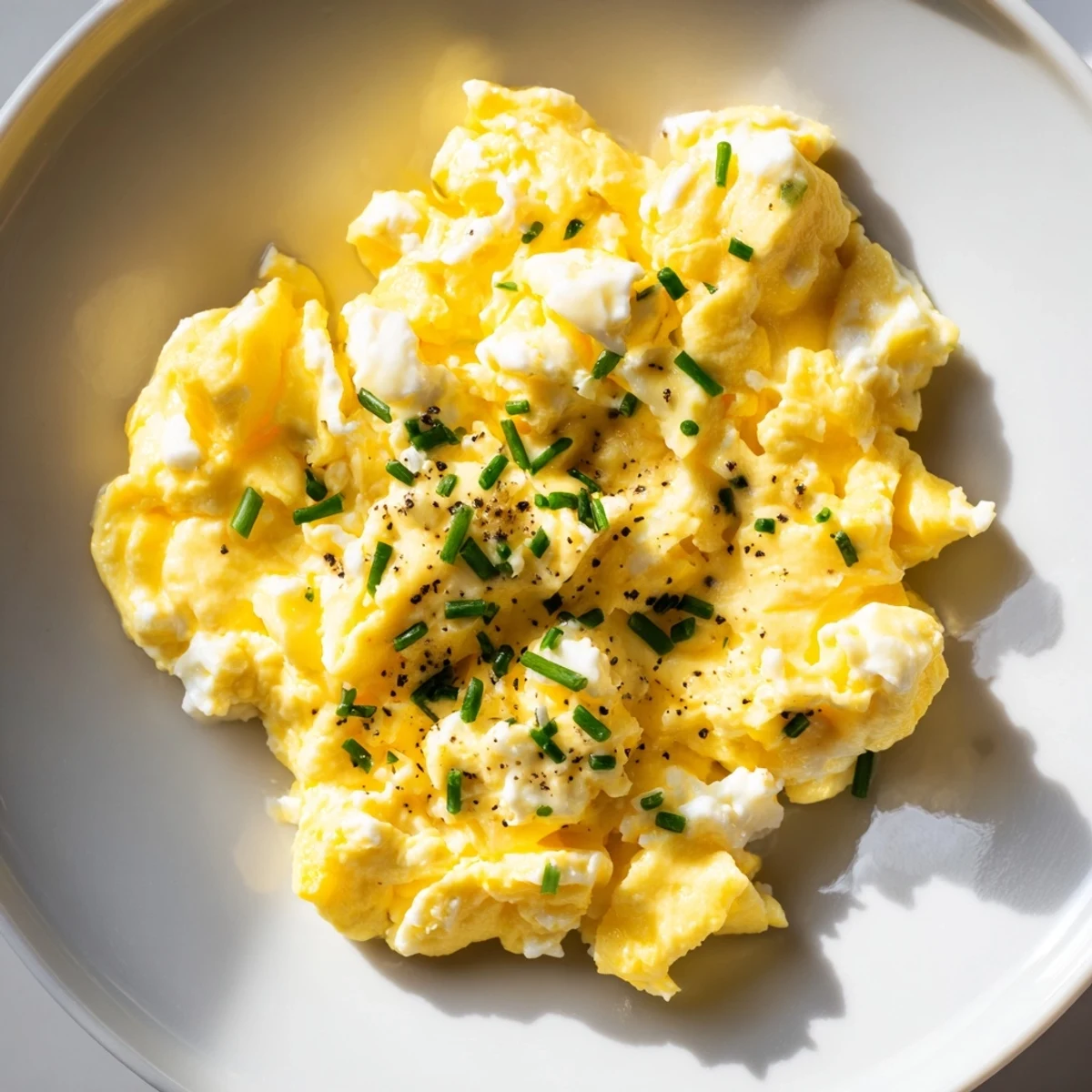
Save These eggs became my Sunday morning ritual, the one meal where nothing else matters except standing at the stove with coffee in one hand and a spatula in the other.
Delicious Ways to Change It Up
A handful of baby spinach wilted into the eggs turns this into something closer to a proper meal, and thin ribbons of smoked salmon folded in at the end makes it brunch worthy without any extra effort.
What to Serve Alongside
Thick slices of sourdough toasted until golden and rubbed with a cut garlic clove are the ideal vehicle for scooping up every last bit of creamy egg from the plate.
Getting the Texture Just Right
The trick is patience more than anything else because medium low heat sounds too gentle but it is exactly what gives you that soft, pillowy scramble.
- Use a truly nonstick pan because eggs will cling to everything else and you will lose the delicate curds.
- A silicone spatula gets into corners better than any other tool.
- Taste and adjust salt at the very end because cottage cheese is already seasoned.
 Save
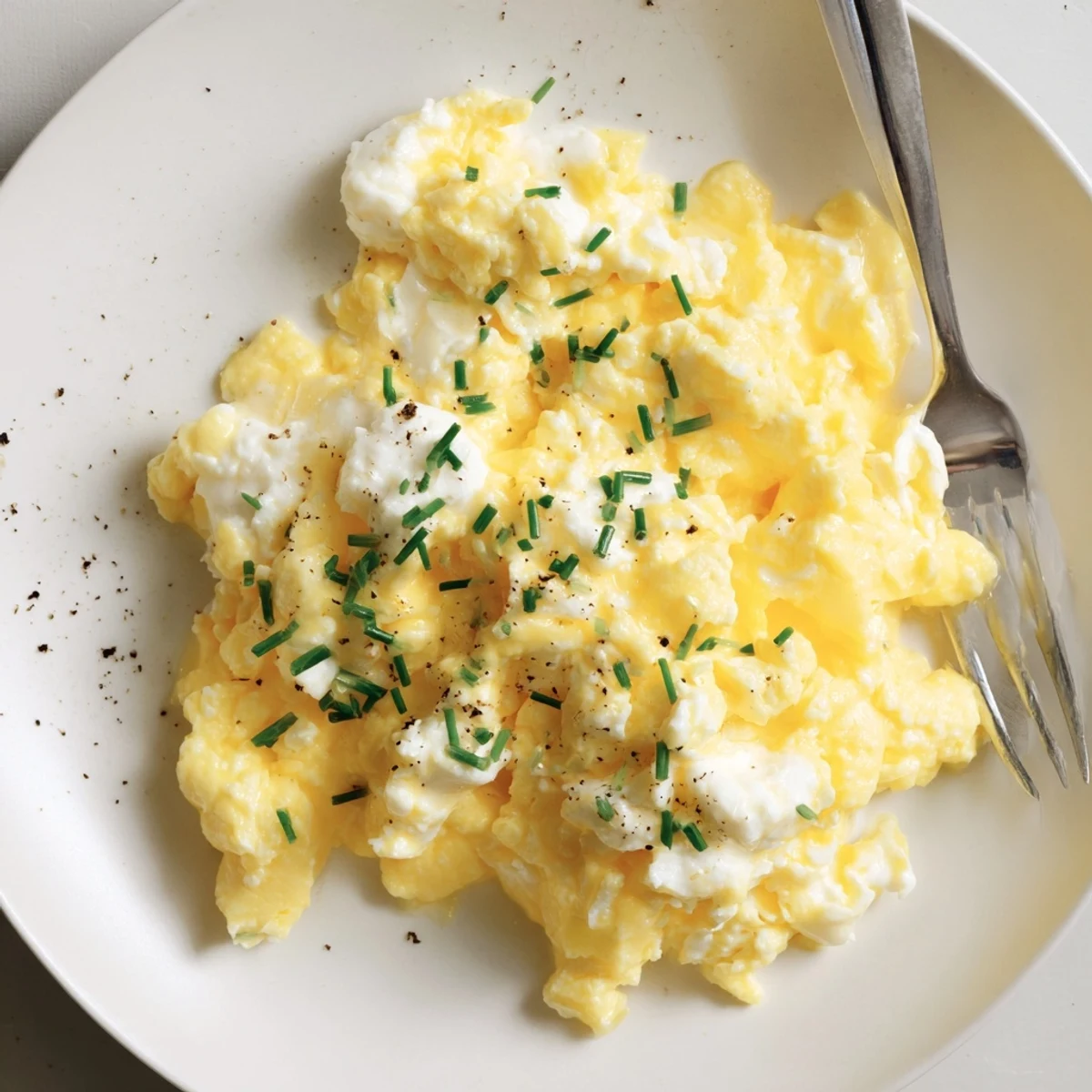
Save Keep this recipe in your back pocket for mornings when you want something warm and satisfying without thinking too hard. It is proof that the simplest dishes are often the ones worth returning to again and again.
Recipe FAQs
- → How do I achieve a creamy texture?
-
Use medium-low heat and stir gently so small, custardy curds form. Fold cottage cheese in before cooking and remove the pan while the eggs are still slightly soft so they finish cooking off the heat.
- → What can I substitute for cottage cheese?
-
Ricotta is a good swap for a milder creaminess; full-fat Greek yogurt can work but drains slightly more moisture. Adjust salt and cook a touch shorter if the substitute is wetter.
- → What’s the best cooking temperature?
-
Cook over medium-low heat so the eggs set slowly; high heat yields dry, rubbery curds. Gentle heat keeps the texture tender and creamy.
- → How can I vary the flavor?
-
Fold in chopped spinach, smoked salmon, or grated cheese for richness. Brighten with lemon zest or a pinch of chili flakes and finish with extra chives or herbs.
- → How should leftovers be stored and reheated?
-
Cool and refrigerate in an airtight container up to 48 hours. Reheat gently in a nonstick skillet over low heat with a splash of water or cream to restore creaminess, or microwave at low power in short bursts.
- → Can I scale this for more servings?
-
Yes—scale eggs and cottage cheese proportionally. Cook in smaller batches if needed to avoid crowding the pan, which helps maintain the soft texture.