
 Save
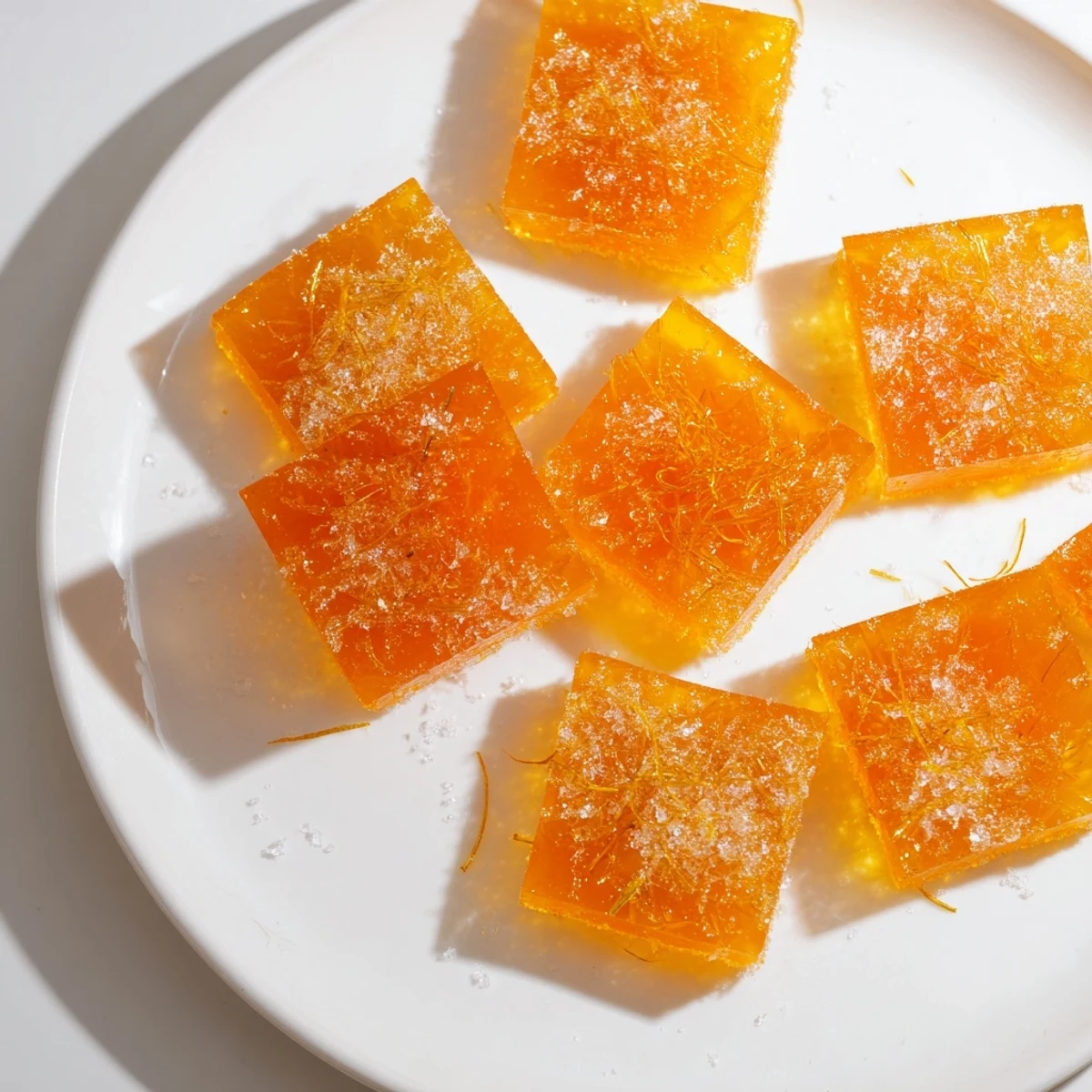
Save Start by combining fresh orange juice and zest with granulated sugar and corn syrup, then bring the mixture to the soft‑ball stage (240°F/115°C) over medium heat. Bloom powdered gelatin in cold water and whisk into the hot syrup until fully dissolved. Pour into an oiled, parchment-lined 8×8 pan and allow to set 2–3 hours. Once firm, cut into small squares, roll in extra granulated sugar, and store airtight. For a vegetarian option, substitute agar‑agar and adjust setting technique; add a drop of natural orange coloring for deeper hue and pair with black or green tea for balance.
The sharp, sweet aroma of simmering orange caught me off guard one rainy afternoon when a storm knocked out my internet and forced me off my laptop. With nothing but time and my grandmother's half-used bag of oranges, I started experimenting in the kitchen, squeezing and zesting until my hands tingled. By the time the mixture cooled, the whole apartment smelled like a citrus grove after a sun shower. These orange candies were an accidental burst of creativity that have since become my favorite way to brighten anyone's day.
I first brought a box of these homemade orange candies to a neighbor's rooftop picnic, and by dusk, there were only sticky fingers and laughter left behind. The sight of grown-ups trading candy pieces like children remains one of my happiest kitchen victories.
Ingredients
- Freshly squeezed orange juice: Only real juice gives these candies their bright vibrancy and authentic tang, and straining it for pulp helps keep the texture smooth.
- Orange zest: The zest deepens the flavor and adds those unmistakable aromatic oils—be sure to use untreated or organic oranges and avoid the bitter white pith.
- Granulated sugar: It does double duty as sweetener and helps set the classic chewy candy texture, but stir gently to avoid crystallization.
- Light corn syrup (or glucose syrup): This keeps the sugar from turning grainy and ensures every bite is perfectly soft and chewy, not brittle.
- Water: Divided for both the syrup and hydrating the gelatin—use cold water for blooming gelatin, it helps create that tender chew.
- Powdered gelatin (or agar-agar): Gelatin is the secret to achieving that satisfying, gummy bite; agar-agar is a solid substitute if you're keeping things veggie—just adjust for the setting power.
- Extra granulated sugar for coating: Gives these candies their sparkling, classic finish; coat just before serving to keep the crunch.
Instructions
- Prep Your Pan:
- Line your square baking pan with parchment and lightly oil it—even the corners—so the set candy lifts out like a dream.
- Bloom the Gelatin:
- Sprinkle gelatin over cold water and let it stand; watching it thicken and soak up every drop always feels quietly magical.
- Create the Orange Base:
- Combine orange juice, zest, sugar, corn syrup, and water in a saucepan, stirring until everything smells syrupy and the sugar has melted away.
- Boil to Perfection:
- Turn up the heat and boil until your thermometer reads 240F; the mixture will bubble, hiss, and turn glassy on top.
- Mix In the Gelatin:
- Quickly stir in your bloomed gelatin while the syrup is hot—the steam rushes up and you can feel the kitchen fill with orange mist.
- Pour and Set:
- Pour the mixture into your prepped pan and take a moment to marvel at its molten glow; leave it undisturbed for at least 2 hours until firm.
- Cut Into Pieces:
- Run a sharp knife under warm water and cut the slab into neat squares or playful shapes—resist sampling until you coat them!
- Sugar Coat for Sparkle:
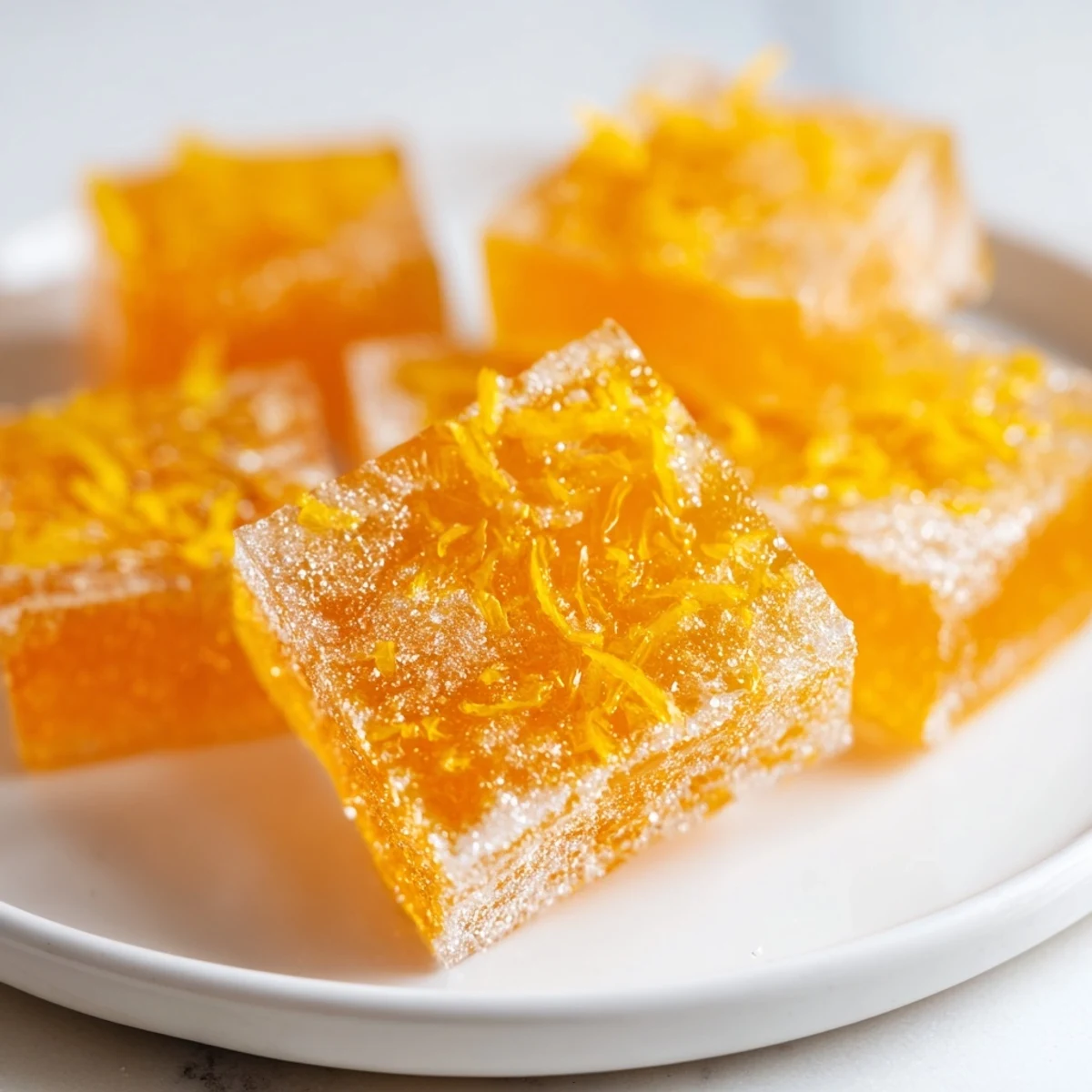
- Tumble each candy piece in extra sugar so they glisten; serve them right away or tuck into boxes for gifting.
 Save
Save One snowy morning, I shared a plate of these candies at a bustling train station with a stranger while waiting for delayed arrivals, and that unexpected moment of sweetness turned into a kind conversation I'll never forget.
Tweaking Flavors for Fun
Experimenting with grapefruit or lemon instead of orange opened up a whole citrus rainbow in my kitchen—each variation has a personality all its own.
The Magic of Texture
The key to that classic bite is balancing gelatin (or agar) and syrup—too much of either and you lose just the right snap when you chew.
Sharing and Keeping These Candies Fresh
These sweets are perfect for tucking into lunchboxes or wrapping as quick gifts, but stacking them with parchment in airtight containers keeps them peel-apart perfect for days on end.
- Wait until candies are fully cooled before cutting.
- Refresh with a light toss in sugar if they're stored more than a day.
- Humidity can make them sticky, so keep the lid tight.
 Save
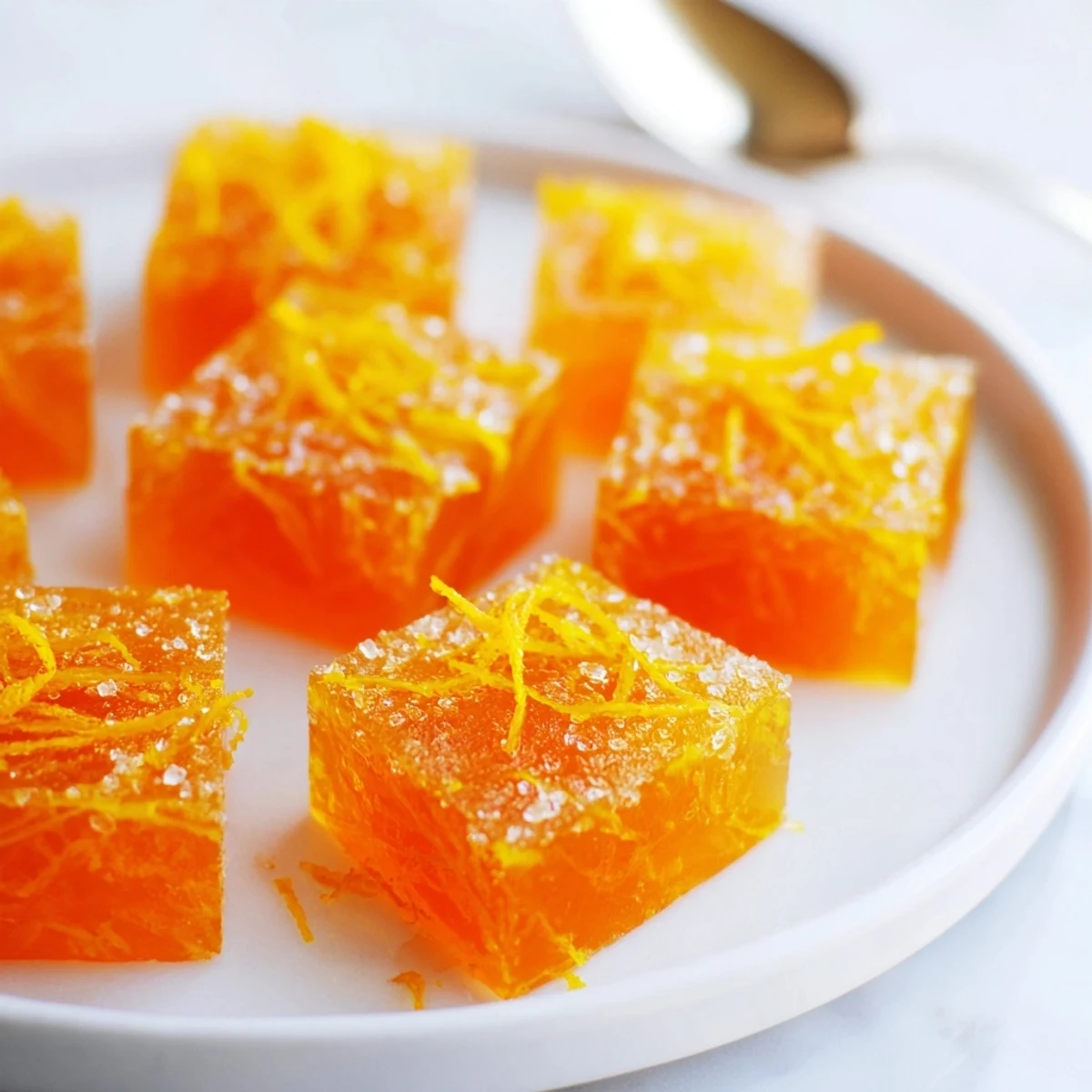
Save There&apost;s something special about handing someone a piece of homemade orange candy—almost like passing along bottled sunlight. I hope these bring a little brightness to your own kitchen adventures.
Recipe FAQs
- → What temperature is needed for the correct texture?
-
Cook the sugar-orange mixture to the soft‑ball stage, about 240°F (115°C). That temperature gives a chewy, set texture when gelatin is added and cooled.
- → Can I use agar‑agar instead of gelatin?
-
Yes. Agar‑agar sets differently: dissolve and simmer per package directions, then pour and chill. Expect a slightly firmer, less elastic bite than gelatin.
- → How do I prevent candies from sticking together?
-
Toss cooled pieces in extra granulated sugar and store in a single layer or layered with parchment. Keep in an airtight container at cool room temperature to reduce stickiness.
- → Is corn syrup necessary and are there alternatives?
-
Corn syrup helps inhibit crystallization and gives a smooth texture. You can use glucose syrup or light golden syrup as alternatives; adjust sweetness and consistency as needed.
- → Any tips for cutting clean squares?
-
Chill the set slab until fully firm, then use a sharp knife or candy cutter lightly oiled or dusted with sugar. Wiping the blade between cuts keeps edges neater.
- → How can I vary the flavor or color safely?
-
Swap some orange juice for lemon or grapefruit for different citrus notes. Use a drop of natural orange or carrot-based coloring for a brighter hue without altering flavor significantly.